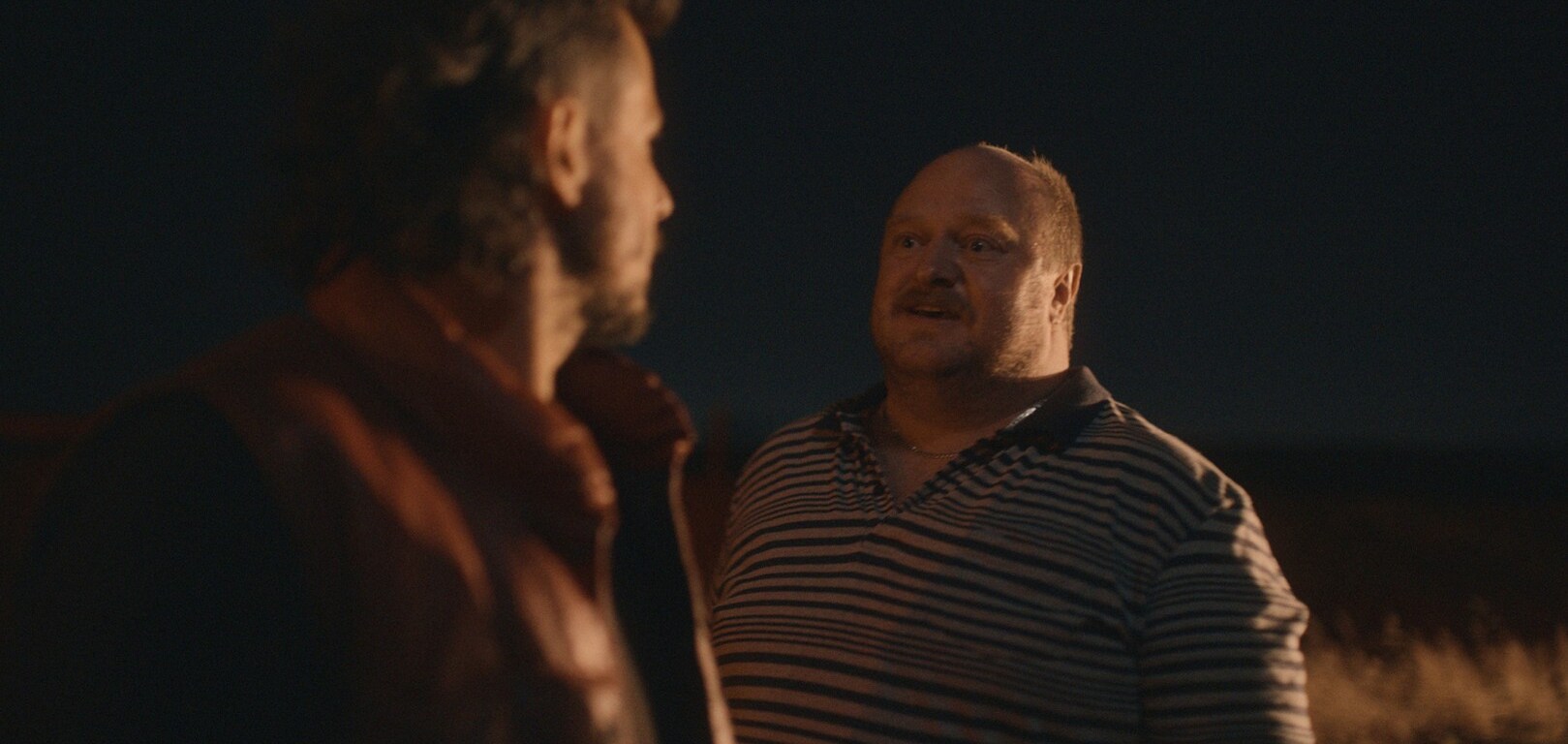
From Cannes to the Academy Awards, South African filmmaker Dian Weys discusses the extraordinary international journey of his Oscar-qualified short, the realities of South Africa’s fiercely competitive towing industry, and why the instinct for self-preservation may be one of the most troubling questions facing society today.
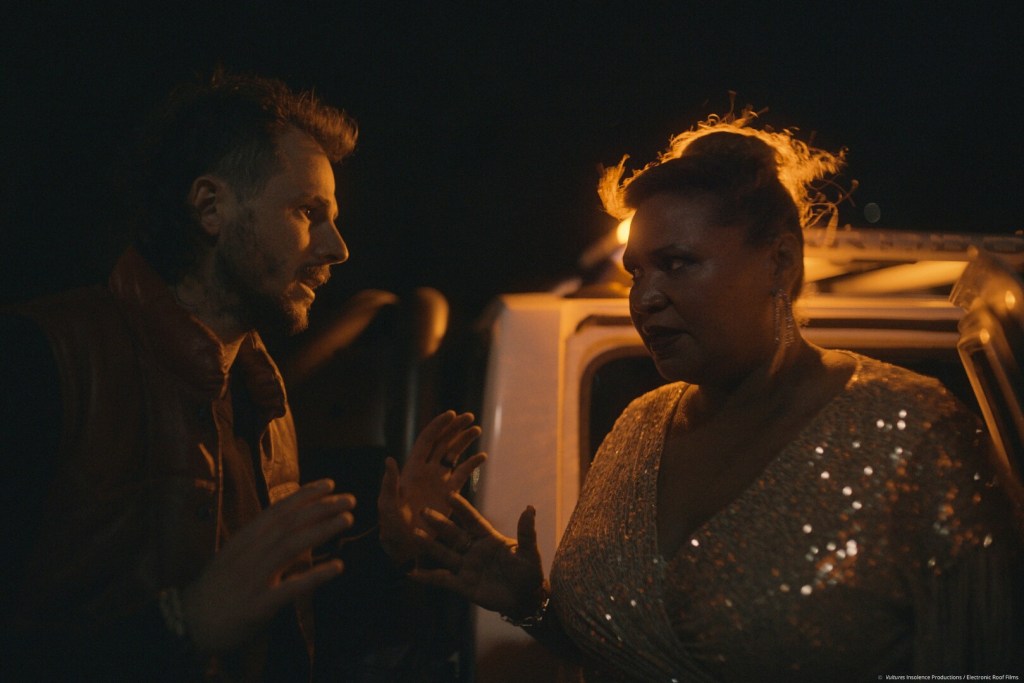
How far would you go to protect your own livelihood, and at what point does survival become selfishness? It is a deceptively simple question at the heart of VULTURES, the gripping South African live-action short from writer-director Dian Weys, whose remarkable international journey has taken the film from the Official Short Film Competition at the 78th Cannes Film Festival to the Academy Awards race following an Oscar-qualifying win at HollyShorts Film Festival.
With more than 100 international festival selections, including Clermont-Ferrand, Flickerfest and Odense, and the prestigious Unifrance Short Film Grand Prix at Cannes, VULTURES has emerged as one of the compelling international shorts competing for recognition during this year’s awards season. Yet beyond its extraordinary festival success lies a deeply unsettling examination of human behaviour, economic inequality and the uncomfortable reality that one person’s misfortune can become another person’s opportunity.
Set in the volatile minutes following a road traffic accident, before emergency services or authorities arrive, VULTURES follows a desperate tow truck driver who fiercely protects his claim to a wrecked vehicle. As tensions escalate, the situation spirals dangerously beyond his control, exposing the fragile boundaries between compassion, desperation and self-interest. The premise is rooted in a distinctly South African reality, where tow truck drivers compete aggressively to reach accident scenes first, often relying on insurance-related business to support themselves and their families.
For Weys, the inspiration came directly from his own experiences. “I’ve been in car accidents before, and in each case, while we were still gathering our senses, tow truck drivers appeared out of nowhere and vied for our patronage,” he explains. After witnessing tow truck drivers fighting over who would recover his vehicle, Weys began investigating the industry, visiting towing companies and speaking with the people whose livelihoods depended on securing this work. What he discovered challenged his initial assumptions. “None of the tow truck drivers I spoke to were villains, but simply people trying to make a living and care for their families.”
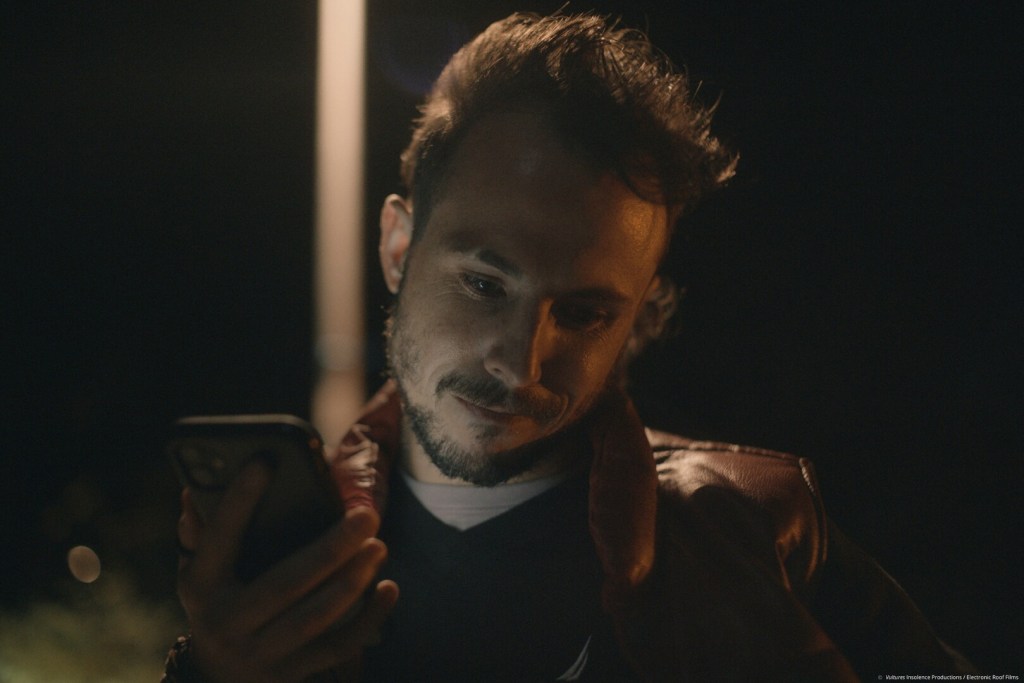
This realisation became fundamental to the film’s moral complexity. Rather than portraying its characters as straightforward antagonists, VULTURES examines how ordinary people can become trapped in systems that reward competition over compassion. Weys describes the underlying economic contradiction as a form of capitalism in which one vulnerable person’s emergency becomes another desperate person’s financial opportunity. It is an observation that extends far beyond the towing industry.
Although VULTURES is deeply embedded in contemporary South African society, its themes resonate with audiences internationally. Against a backdrop of unemployment, financial insecurity and extreme inequality, the film asks whether human beings can continue to act compassionately when their own survival is threatened. For Weys, the accident itself carries a much broader political and historical meaning. “In Vultures, the car accident is a metaphor for post-Apartheid and how our elite government officials cared only about their own enrichment at the expense of the poor.”
He believes the metaphor also reflects the economic systems governing societies around the world, where competition and financial transactions increasingly shape human relationships. “Once again, one person’s need becomes another’s gain.” It is this willingness to confront uncomfortable realities without offering easy answers that makes VULTURES particularly relevant. At a time when economic pressures, political divisions and growing inequality dominate international headlines, the film raises a question that extends beyond national borders: what responsibility do we have towards others when helping them may come at a personal cost?
Weys acknowledges that the tension between self-preservation and responsibility is something he confronts in his own life. “I frequently notice this inclination in myself to look out for myself. To ensure the well-being of myself and those I love.” But he recognises that protecting ourselves can sometimes come at the expense of someone else. “Am I willing to place my own well-being at risk to help someone else?” Rather than telling audiences what to think, Weys wants viewers to recognise their own capacity for both generosity and selfishness. His characters are deliberately morally ambiguous, reflecting his belief that people can simultaneously be shaped by difficult circumstances and remain responsible for their actions. “We can be both victims and perpetrators.”
One of the film’s most striking creative decisions is its tightly contained narrative, unfolding in the immediate aftermath of an accident. Instead of offering audiences a conventional cinematic overview, Weys restricts their experience to the unfolding events, forcing them to confront the uncertainty and discomfort of being physically present. “My aim is to make the audience feel like witnesses,” he explains. For Weys, contemporary film, television and social media often create the illusion that viewers can observe events from an all-knowing perspective. In reality, human experience is far more limited. His filmmaking approach deliberately challenges that convention. “So I want to create a type of cinema that returns spectators to their bodies.”
The result is an intense and immediate experience in which audiences must interpret actions, relationships and moral choices without the reassurance of an obvious hero or villain. The film’s escalating tension also depends on its carefully constructed characters. During the writing process, Weys spent considerable time establishing the motivations behind every decision, ensuring that even the most troubling actions emerged from recognisable human needs. “No one is simply ‘evil’; each character believes they are right.” Working with his cast during a focused two-day rehearsal, the director concentrated on physical movement, character objectives and the relationship between the performers and the camera. The approach reinforces the film’s central idea: desperation does not necessarily create monsters, but it can expose how fragile our moral boundaries become when something important is at stake.
For Weys, VULTURES represents far more than an individual festival success. Its international recognition follows years of persistence, disappointment and determination. The filmmaker remembers receiving the life-changing call from Cannes while standing in an underground parking lot. “The journey has been absolutely surreal,” he recalls. “After seven years, three other short films, frustrating festival runs, and countless rejections, the selection at Cannes finally felt like a dream came true.”
The film’s selection for the prestigious Official Short Film Competition marked a significant breakthrough, followed by its Unifrance Short Film Grand Prix victory. Yet Weys is quick to acknowledge that a Cannes premiere does not automatically guarantee an effortless international festival journey. Despite the initial attention, the team still needed to secure distribution support, appoint a festival agent and navigate months of further rejections before the film began gaining momentum.
The eventual international response was particularly meaningful because Weys had initially worried that audiences outside South Africa might struggle to understand the specificity of its subject. During development, a script mentor encouraged him to embrace precisely those details rather than dilute them. “What if people don’t understand it? But my script mentor taught me that the more specific you are, the more universal your story becomes.” That advice proved invaluable. By concentrating on the characters’ actions, the film’s central conflict and the consequences of each decision, Weys discovered that an intensely local story could connect with audiences across cultures.
The Cannes recognition also opened an important door for his future as a filmmaker, enabling him to apply for La Résidence du Festival de Cannes to develop his first feature film and subsequently pitch the project at the festival. For Weys, that opportunity represents one of the most valuable outcomes of the film’s success: the possibility of continuing to tell stories.
If Cannes marked a breakthrough, the film’s Academy Award qualification at HollyShorts Film Festival introduced an entirely new chapter. Weys admits that he never expected to win, particularly given the strength of the international competition. He was back in Cape Town when he discovered the news. “But when I woke up in Cape Town on Monday morning and checked my phone, I saw that we won. It was surreal.”
The significance of entering the Academy Awards race is deeply personal. Growing up in South Africa, Weys was fascinated by the Oscars, regularly waking in the middle of the night to watch the ceremony live. “Since I was a teenager, I’d wake up at 02:30am to watch the live Oscar telecast (South African time), even if it meant I’d be yawning the rest of the day at school.” To now have his own film qualify for consideration is an extraordinary moment for a director who has spent years developing his craft through independent short filmmaking.
But Weys also hopes that VULTURES will contribute something meaningful to the wider conversation surrounding this year’s international Oscar contenders. For him, its examination of self-preservation speaks directly to the political and economic forces shaping contemporary life. “Whether politicians or CEOs, countries or companies, too many are placing their own well-being at a premium while having others pay the cost.” It is a provocative observation, particularly in an awards landscape where short films increasingly tackle urgent social and political questions through intimate, character-driven storytelling.
Weys’ distinctive approach to filmmaking is informed by both practical experience and academic research. He holds an MA in Film Studies, awarded cum laude by the University of Cape Town, and is currently a PhD candidate at the University of Groningen. His previous shorts have screened at major international festivals including Clermont-Ferrand, Palm Springs ShortFest, Tampere and ZINEBI Bilbao, while BERGIE received the Tanit d’Argent for Best Short Film at the Carthage Film Festival.
For Weys, filmmaking and academic research are closely connected. “Film theory gives me the language to talk about cinema and informs my filmmaking style; my filmmaking style challenges and develops my theoretical and philosophical ideas about cinema.” That intellectual curiosity is evident in VULTURES, which refuses to reduce its complex subject to a simple moral lesson. Instead, the film asks audiences to examine their own instincts, assumptions and responsibilities.
Having initially viewed short films as a stepping stone towards feature filmmaking, Weys has also developed a profound appreciation for the artistic possibilities of the format itself. “Some stories are only suited for a short film. The format also enables you to push and expand the medium; some of the most original work I’ve seen has been from short films.” It is an important reminder that short cinema is not simply a training ground for emerging directors, but a powerful artistic medium capable of exploring urgent and challenging ideas with extraordinary precision.
What makes VULTURES especially compelling is its refusal to offer the comfort of moral certainty. Its characters are neither entirely innocent nor entirely guilty. They are ordinary people operating within extraordinary pressures, making decisions that expose the uncomfortable relationship between economic necessity and human compassion. The film challenges audiences to consider whether the systems we inhabit encourage us to place our own interests above the wellbeing of others, and whether we are prepared to accept responsibility for the consequences.
Through its distinctly South African setting, Weys creates a story that speaks to something much larger: a world in which competition is increasingly normalised, survival can become a transaction, and another person’s vulnerability can represent financial opportunity. From its acclaimed Cannes premiere to its Oscar-qualifying HollyShorts victory, VULTURES has demonstrated the international power of storytelling that is culturally specific yet profoundly universal.
As the film enters the Academy Awards conversation, Weys offers more than a tense and accomplished thriller. He presents audiences with a deeply human moral dilemma that continues long after the screen fades to black. When survival demands sacrifice, whose humanity are we willing to compromise — our own, or someone else’s? And perhaps the most disturbing question of all is whether, under the right circumstances, any of us might become the vulture.
VULTURES is written and directed by Dian Weys and stars Edwin van der Walt, Jill Levenberg, Albert Pretorius, Oscar Petersen, Ndoni Khanyile, David Isaacs, Gershwin Mias, Dean Balie and Frank Opperman. The film is produced by Émilie Dubois, Anaïs Bertrand and Le Roux Fourie, with cinematography by Pierre de Villiers. Following its premiere in the Official Short Film Competition at the 78th Cannes Film Festival, where it won the Unifrance Short Film Grand Prix, VULTURES qualified for consideration in the Best Live Action Short Film category at the 99th Academy Awards following its win at HollyShorts Film Festival.

