The filmmaker talks Melissa Leo, motherhood, embracing limitations and finding light in the darkness
When Suzi Yoonessi’s Mother Wolf makes its world premiere at the Woodstock Film Festival on Saturday, October 17 at 3:00 PM, it will be a fitting homecoming for a fiercely independent film made in the Hudson Valley with Academy Award winner Melissa Leo at its centre.
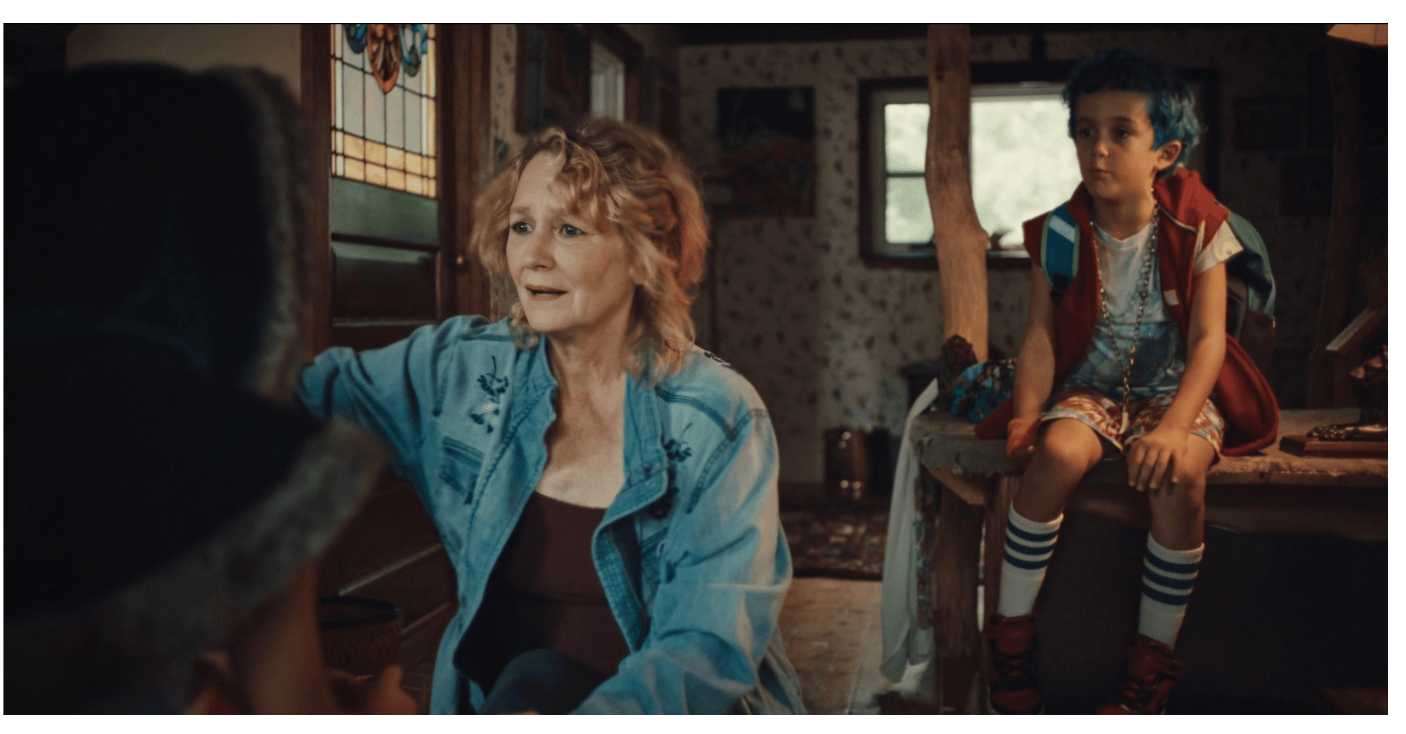
Leo stars as Babs, a retired teacher whose plans for freedom are upended when she is tasked with caring for her free-spirited daughter’s children. Also starring Kat Cunning, Arian Moayed, Jodi Long, Mary Stuart Masterson and Matt Walsh, the film explores motherhood, family responsibility, reinvention and how far a mother might go to protect her “cubs.”
For Yoonessi, the story began during one of the most difficult periods of her career, following the cancellation of a studio film she had spent five years working on. “I felt this growing panic and fear, almost like I was losing a child,” she says. “At the same time, I was terrified about very practical things: How would I provide for my kids? What would happen with health insurance, braces, all the ordinary responsibilities of being a parent?”
Yoonessi had been travelling constantly and spending long periods away from her family. Then, during a red-eye flight, Babs began to emerge — a grandmother inspired in part by Yoonessi’s own Iranian mother and the resilience, determination and devotion she associated with her.
“Whenever the fear around my own life crept in, I found myself retreating into Babs’ story,” Yoonessi says. “What began in darkness became a way of finding light. I started asking myself, what happens when a mother’s love alone can’t solve the problem? How far would she go? …And how far would I go?”
That question became central to Mother Wolf. Rather than presenting maternal love as purely nurturing, Yoonessi wanted to explore what happens when a parent is pushed beyond the conventional ways of protecting a family. “Maternal love can be tender and nurturing, but it can also be ferocious, irrational, embarrassing and even transgressive,” she says.
From the beginning, Yoonessi imagined Melissa Leo as Babs. The pair have been friends for more than 20 years, first meeting when Yoonessi was at graduate film school at Columbia, and previously collaborated on Unlovable, which won a Special Jury Prize at SXSW.
“Over the years, I’ve seen her resilience, kindness, ferocity and grit. Those qualities became part of Babs’ DNA,” Yoonessi says. “There was never really a version of Babs without Melissa.”
Leo was involved before there was even a screenplay. Yoonessi called her on the day her studio project was cancelled, and she and her husband and co-writer Spencer Crossland subsequently wrote the script in around four months. “It came out like a fever dream,” she says.
Leo ultimately joined the film as a producer as well as its star, opening both her home and her Hudson Valley community to the production. Her house became Babs’ house, while local friends and artists became part of the film. “Melissa was simultaneously our lead actor, producer, host and, in many ways, the gravitational center of this strange little family we created.”
The house itself, filled with stained glass, stone, woods, mosaics and handmade objects — became central to the film’s distinctive visual identity. Yoonessi and production designer Cassie Miggins stayed there while preparing the film, using its textures and surrounding landscape as inspiration for the world of Babs.
“We wanted to approach some very real and potentially dark subject matter through the imagination of a modern fairytale,” Yoonessi explains. “For me, heightened imagery and humor are ways into complex emotions. The world can feel playful and strange without making the feelings any less real.”
The director was equally determined to give Leo a character rarely afforded to women of Babs’ age. Babs is maternal and vulnerable, but also angry, funny, sexual, curious and capable of reinvention. “You keep living as you get older,” Yoonessi says. “Your sexuality doesn’t disappear. Your curiosity doesn’t disappear. Your desire for adventure, reinvention and play doesn’t disappear.”
Later-life female sexuality consequently became an important part of Babs’ journey. What initially begins through financial necessity develops into something far less predictable. “What begins as a hustle becomes a form of play, curiosity and self-discovery,” says Yoonessi. “Something potentially humiliating becomes unexpectedly liberating. Her world gets bigger.”
The wider ensemble was chosen for its ability to navigate that same balance between darkness and humor. “I wanted actors who could let the humor and pain exist in the same moment, because that tonal tension is the language of the movie,” Yoonessi says. “They can be incredibly funny without breaking the emotional reality of a scene, and heartbreaking without making the film feel heavy.” Kat Cunning, who plays Willow, also wrote and performed the original song “Mother Wolf” for the end credits.
The production itself became intensely personal. After years spent travelling for work, Yoonessi wanted her own children with her while making the film, ultimately casting Iris and Quinn as Babs’ grandchildren. That gave the production one immovable deadline: filming had to finish before school started in September.
“We were making a film about the responsibilities of motherhood inside the very real constraints of my own,” she says. Leo had known the children since they were babies and had even made Iris a blanket when she was born. “That history exists on screen in ways I could never have directed. The movie has become a time capsule of our family at this particular moment.”
For Yoonessi, those limitations ultimately became one of the strengths of the film. Shooting in Leo’s home began partly as a practical solution but became fundamental to its visual identity. “Again and again, the things we thought would restrict us forced us toward choices that made the movie more specific, handmade and alive.”
That handmade quality reflects Yoonessi’s longstanding relationship with independent cinema. Her debut feature, Dear Lemon Lima, premiered at the Los Angeles Film Festival, while Unlovable won at SXSW. Her career has also taken her into television and major animation studios, including five years developing and directing an original animated feature at Walt Disney Animation Studios, and she is currently a director at LAIKA.
Yet independent filmmaking connects her to something that predates her career behind the camera. “I grew up playing in a Riot Grrrl punk band, and independent filmmaking scratches that same DIY impulse: make something, find your people, don’t wait for permission,” she says. “Limitations are an invitation to become more creative.”
Mother Wolf also received a US in Progress post-production award at the American Film Festival, which enabled the team to work with Black Photon on the film’s color grade and push its modern fairytale aesthetic further. For Yoonessi, such initiatives provide independent filmmakers with more than financial support. “Making an independent film right now is incredibly complex, and programs like US in Progress create something that money alone can’t provide: community.”
That sense of community is what makes the film’s October 17 world premiere at Woodstock particularly meaningful. Mother Wolf was made with a small Hudson Valley crew, and Yoonessi says the distinction between cast, crew, friends, family and neighbours soon began to disappear. Local artists became actors, her children joined the cast and people stepped into whatever roles were needed.
“There’s something wonderfully circular about bringing the finished film back to Woodstock first,” she says. “We made a film about the lengths to which we go for family, and somewhere along the way the people making it became a kind of family.”
As Mother Wolf begins its festival journey, Yoonessi hopes the film will now find distribution and connect with audiences who have experienced their own unexpected reinventions.
“Success would be seeing Mother Wolf find anyone who has ever had life knock the future they imagined sideways and had to invent another one,” she says. “My work has always been about finding light in the darkness, and that’s what Babs does.”
“I hope it finds people who love complicated women, dark humor, a little transgression, and stories that can make you laugh and break your heart.”

