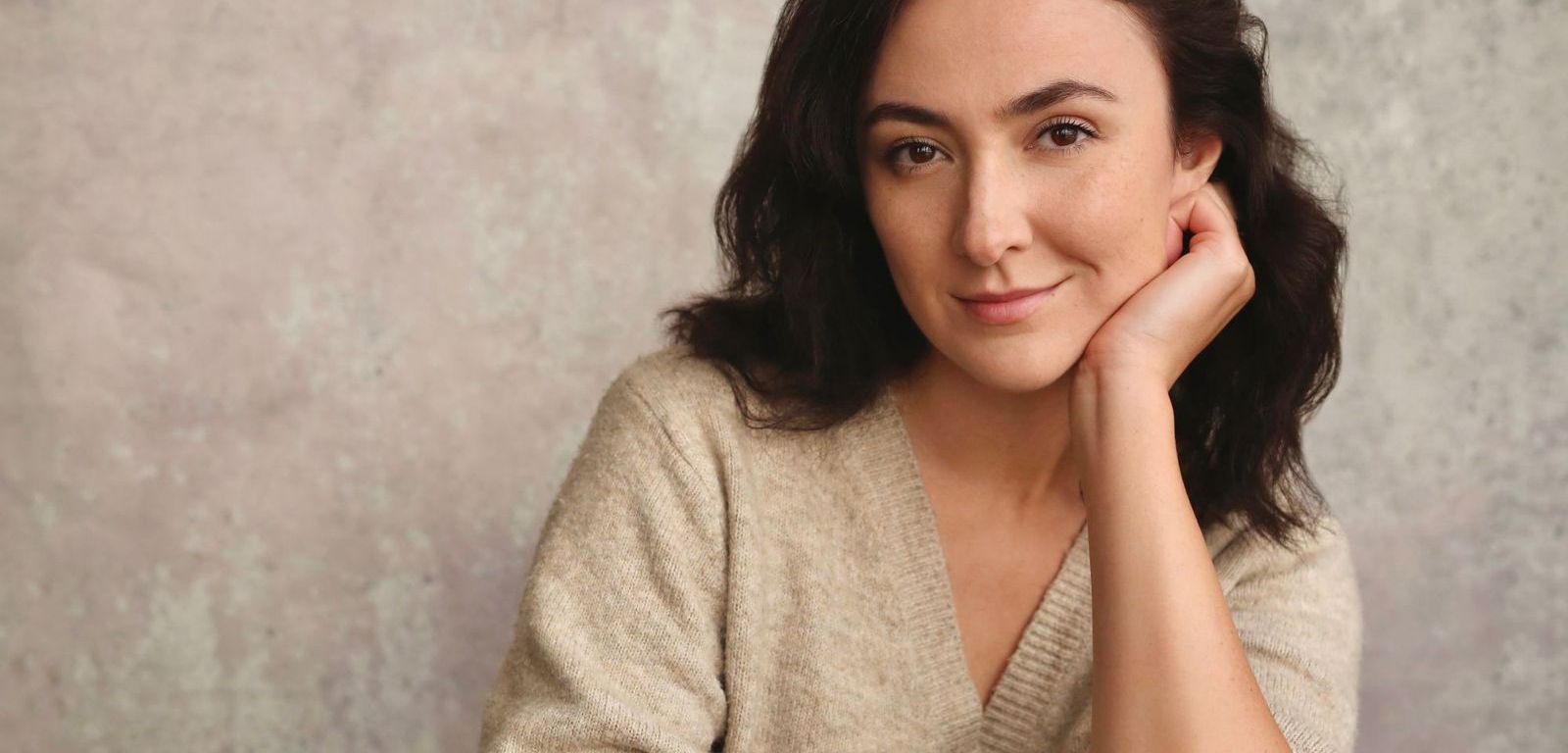
The producer behind the Oscar-qualified short talks school distress, neurodivergence, the hidden reality facing families and bringing Anna Maxwell Martin on board for her executive producing debut
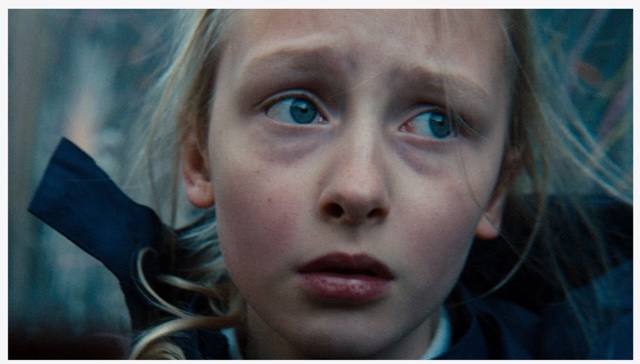
Oscar-qualified short film Unauthorised Absence takes an intensely personal look at a crisis facing families whose children are struggling to attend school, asking what happens when the systems they turn to for support respond not with understanding, but punishment. Developed and produced by Natalie Lauren, written by Jo Clayton and directed by Georgia Parris, the 15-minute drama follows Anna, a mother desperately trying to protect her nine-year-old neurodivergent daughter, Thea, as she experiences severe school distress. Caught between her daughter’s needs and attendance demands she cannot meet, Anna finds herself pushed towards breaking point and ultimately facing a financial penalty for her daughter’s absence.
For Lauren, the decision to make the film came almost immediately after reading Clayton’s screenplay. With an extensive background working with children outside mainstream education, she was already familiar with some of the challenges surrounding education, but the script exposed her to another side of the experience. “I knew I had to make the film from the moment I first read the script,” she says. “It was so clear, so intensely personal, and full of tiny sensitive details that you just knew it wasn’t just a story, it was real life.”
Lauren worked with Clayton to shape and condense the screenplay, creating something that would reflect the intensity experienced by its central character. At its heart was a mother desperately trying to support her daughter while caught in an impossible situation dictated by education policy, at the same time struggling to understand what was happening to her child. “I was horrified at how families like hers were being treated, and on such a massive scale that, once I knew about it, I couldn’t not do something about it.”
The timing also felt important. Parent-led organisations, charities and researchers have worked for years to bring school distress into wider public awareness, helping families put language around experiences they may previously have struggled to explain. For Lauren, film offered an opportunity to take that conversation beyond those already directly affected and allow a much wider audience to understand emotionally what families can experience.
NEED BEFORE PUNISHMENT
Rather than approaching the subject through statistics, legislation or political argument, Unauthorised Absence places audiences directly alongside Anna and Thea. Through fragmented chronology, intimate framing, restrained performances and immersive sound design, the filmmakers attempt to make audiences feel the experience rather than simply understand it intellectually. Fluorescent lights, traffic signals, overlapping voices and other apparently ordinary sounds are pushed forcefully into the foreground, transforming familiar environments and offering a glimpse into Thea’s sensory experience while simultaneously reflecting Anna’s mounting emotional strain.
That approach also allows the film to explore one of the central misunderstandings surrounding school distress: the enormous difference that can exist between the child others see at school and the child their family sees at home. “You can’t possibly know what a family’s reality is behind closed doors unless you’ve seen it yourself,” Lauren explains. “There is so much blame and shame around it, precisely because people don’t appreciate what’s happening at home.”
The disconnect becomes fundamental to Thea’s story. A child may appear to be coping in one environment while experiencing considerable distress elsewhere, leaving parents struggling to communicate the reality they are witnessing. “Too often they are being judged only in one context, without appreciation given to any other,” says Lauren. “This dichotomy between outside and inside the home is at the heart of the film and, in some ways, why Thea gets lost through the cracks and her mother is not taken seriously.”
The filmmakers also wanted to challenge the assumption that absence from school necessarily reflects either poor parenting or a child simply refusing to cooperate. During development, the team examined research and personal accounts surrounding school absence and became increasingly aware of the disproportionate representation of neurodivergent children. But the issue extends further, encompassing special educational needs, mental health, grief, poverty, parental mental health, accessibility, illness and unsuitable educational placements.
“What’s missing is nuance,” Lauren says. “School absence can actually be interconnected to many other systemic issues, and is very rarely a case of not trying hard enough. Yet the current attendance system responds to that distress as if it were defiance.”
It is here that Unauthorised Absence arrives at one of its most important ideas: looking at need before punishment. For Lauren, the phrase represents a fundamental shift away from a system that attempts to fit complicated human circumstances into predetermined categories. “We should first try to understand the person standing before us, their needs and circumstances, perhaps why they aren’t behaving as we expect them to, before we reach for how to classify them and the instrument to punish them with.”
ANNA MAXWELL MARTIN JOINS THE FILM
The project also marks an important first for two-time BAFTA winner Anna Maxwell Martin, known for Motherland, Line of Duty and Ludwig, who makes her executive producing debut on the film and also lends her voice to a role. Bringing Maxwell Martin on board took considerable persistence. Throughout development, people repeatedly suggested that the filmmakers contact the actress because of the way she has spoken publicly about barriers to learning and the detrimental impact fines and prosecutions can have on families.
After several unsuccessful attempts through conventional channels, a chance connection offered to text Maxwell Martin directly. Her response was almost immediate. “She replied almost immediately along the lines of, ‘Oh, yes! How can I help?’ and we’ve not looked back since,” Lauren recalls.
Maxwell Martin joined as executive producer several months before filming and became actively involved, contributing suggestions on the screenplay and casting while helping with practical aspects of the production, from sourcing equipment to planning the film’s release. Her voice performance was never originally scripted. The idea emerged during the edit when the filmmakers were considering how to make the emotional impact of the attendance fine unmistakable. Lauren contacted Maxwell Martin at short notice asking whether she might record several lines, and a recording arrived via WhatsApp within hours.
“It was absolutely perfect: the kind of perfect you can only get from someone who really gets it,” Lauren says. “Whatever we need, despite whatever she’s juggling, she always shows up with an offer of how to help.”
Maxwell Martin joins an accomplished team that includes BAFTA winner and Golden Globe nominee Cathy Tyson, BAFTA-nominated Alix Wilton Regan and 2026 BAFTA winner Jennifer English, alongside BAFTA-winning editor Zeb Achonu and BAFTA-nominated colourist Greg Fisher.
PUTTING LIVED EXPERIENCE ON SCREEN
Authenticity runs throughout Unauthorised Absence. The story was born from lived experience and shaped by the testimonies of hundreds of families, influencing everything from its performances and locations to the filmmaking choices behind the camera. Listening to parents consequently became one of the film’s defining themes, particularly the experience of repeatedly raising concerns about a child only to feel those concerns are being dismissed.
“The parent voice feels repeatedly undervalued in these conversations and interventions, and yet they have essential knowledge of their child,” Lauren says. “The film really serves as a warning for what can happen when those voices are ignored.”
For the filmmakers, cinema offered something statistics, headlines and policy papers could not: the opportunity to put audiences emotionally inside another person’s experience. “What film does, perhaps better than any other medium, is offer audiences the chance to really get inside a story and experience something for themselves: to empathise, perhaps even understand an issue more deeply.”
That approach already appears to be resonating. Lauren says the team has received hundreds, if not thousands, of responses from parents, professionals and young people who have recognised their experiences in the story. When a 30-second clip was broadcast on regional television in the UK, messages arrived from people around the world saying the moment felt as though it had been taken directly from their own lives.
“It’s not necessarily one response that stayed with me, but the sheer number and the similarity across them,” Lauren says. “We hoped it would resonate. We hoped we had done a good enough job of making something that felt authentic and real, but for that to be validated so early on, and in such a small clip, has been incredibly moving for us all.”
More than 20,000 people are now following the film’s journey, including parents, professionals and allies. Particularly meaningful to the filmmakers are messages from young people who have experienced their own version of the story and are now getting in touch because they want to help.
FROM A PERSONAL STORY TO THE OSCAR RACE
The film’s Oscar qualification has consequently taken on a significance far beyond awards recognition for its creators. Behind Unauthorised Absence sits a much larger movement of families, campaigners, charities and researchers who have spent years trying to bring school distress and barriers to education into public consciousness.
“There have been countless petitions, rallies, panels, workshops, support groups, organisations, initiatives and collective efforts for more than 10 years in this space,” Lauren says. “Parents have been screaming into a void, struggling with some of the most tragic and painful circumstances any family can go through, asking for help and campaigning for change.”
For a story representing those experiences to now enter the Oscar conversation is something Lauren admits is difficult to put into words. “To now have something that represents that with a chance at the biggest recognition in the world, so publicly, so internationally, it’s not a dream come true — it’s beyond what we could have dreamt.”
The filmmakers initially wanted to create something that would help parents feel seen while enabling those without direct experience to understand what families can be going through. Its growing response outside the UK has demonstrated just how widely those themes resonate.
The film also arrives at a significant moment in the wider debate. Anna Maxwell Martin and Natalie Lauren are due to join parent campaigners at Downing Street on October 20 in support of a petition signed by more than 300,000 people calling for the abolition of school attendance fines. Unauthorised Absence will then screen in the capital as part of the London Breeze Film Festival, running October 21–25, as its awards-season journey continues.
For all the policy questions and wider conversations surrounding the film, however, Unauthorised Absence remains focused on the intimate relationship at its centre: one mother, one daughter and a parent desperately trying to communicate that her child needs help.
If the film can change one thing, Lauren hopes it will encourage people to look beyond attendance figures and ask why school has become impossible for a particular child. “It’s broader conversations about how we can best understand why school feels impossible for that child, even when they are struggling to understand it, or perhaps even articulate it, for themselves. What might we not be seeing?”
Behind the two administrative words of its title, Unauthorised Absence ultimately asks audiences to see the human story: a child in distress, a parent asking to be heard and a system that may need to listen before it punishes.
Margaret Brown

