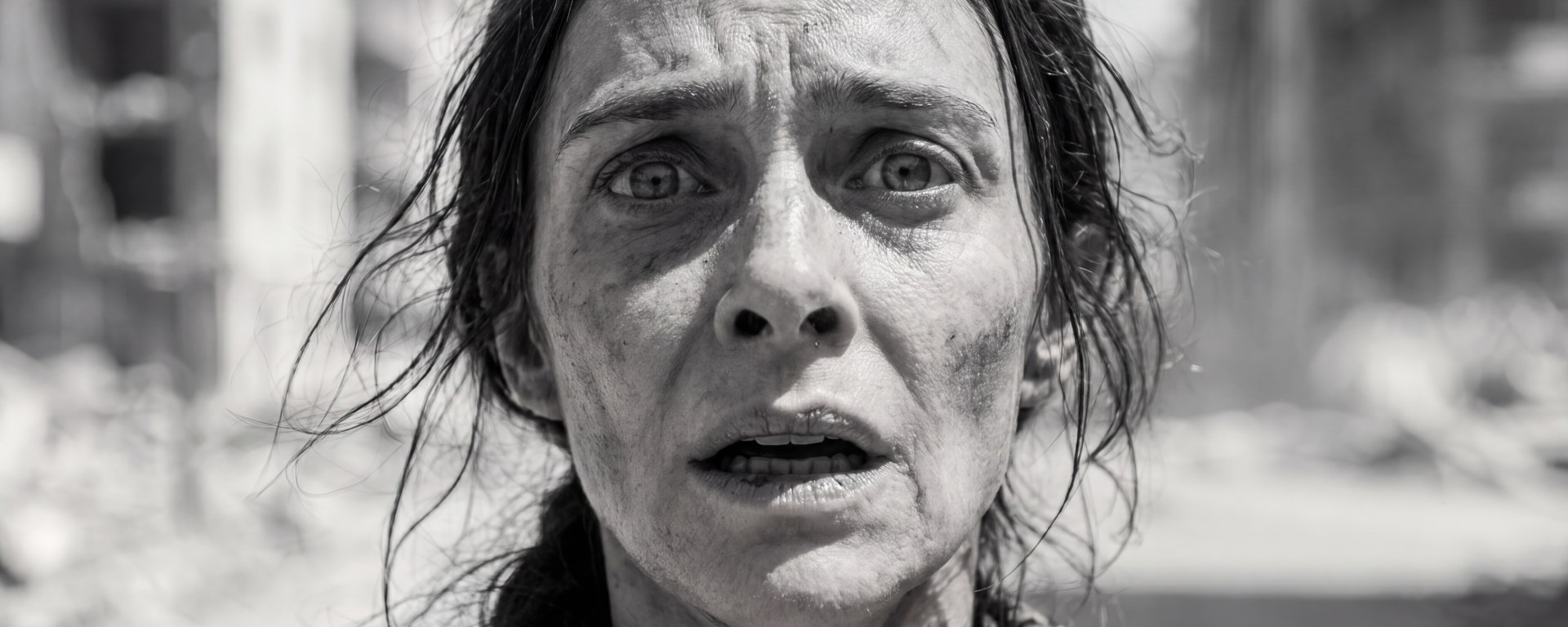
Oscar-qualified filmmaker Ahmad Alameldeen draws on 12 years on the humanitarian frontline to deliver a deeply affecting film, painstakingly hand-drawn before being brought to life through AI animation.
At a time when artificial intelligence in filmmaking continues to divide opinion, SAFE ZONE offers a fascinating example of how technology can serve human creativity rather than replace it. Written and directed by Ahmad Alameldeen, this powerful Oscar-qualified animated short explores one of the most devastating realities of modern warfare: the use of hunger as a weapon against innocent civilians.
What makes SAFE ZONE particularly remarkable is the extraordinary human effort behind its creation. Every frame was painstakingly drawn by hand before the artwork was brought to life using artificial intelligence. Rather than asking AI to invent the film’s characters, imagery or emotional world, Alameldeen and his team created the visual foundations themselves, using technology to animate their original artwork.
The result is a film that feels profoundly human. There is something particularly moving about knowing that every image began with an artist’s hand, especially when the story itself concerns people whose humanity is so often overlooked.
A Story Born from Real Humanitarian Experience
Alameldeen brings an authenticity to SAFE ZONE that few filmmakers could claim. Before turning to cinema, he spent 12 years working on the humanitarian frontline in countries including Iraq, Syria, Libya, Somalia and Nigeria, with organisations including the United Nations, the International Committee of the Red Cross and Médecins Sans Frontières.
That experience gives the film an emotional weight that goes far beyond its striking animation.
Rather than focusing on one particular conflict, SAFE ZONE confronts a universal tragedy: families trapped in war zones, children deprived of food and clean water, and civilians left desperately waiting for humanitarian assistance that may never arrive.
It is an uncomfortable subject, but an essential one. Alameldeen understands that the true horror of war is not always found on the battlefield. Sometimes it is found in the quiet desperation of a family struggling simply to survive.
Hand-Drawn Humanity in an AI World
Perhaps the film’s greatest achievement is its approach to animation. At a time when AI-generated imagery can feel increasingly impersonal, SAFE ZONE demonstrates the importance of the human artist.
Alameldeen and his team carefully developed individual compositions and hand-drawn imagery before introducing AI to create movement. Interestingly, the technology struggled with some of the film’s most distressing imagery, particularly scenes involving suffering children, reinforcing just how essential the original artwork was to the storytelling.
This creative process deserves recognition in its own right. **AI may have helped
★★★★★ — Five stars. Margaret Brown

