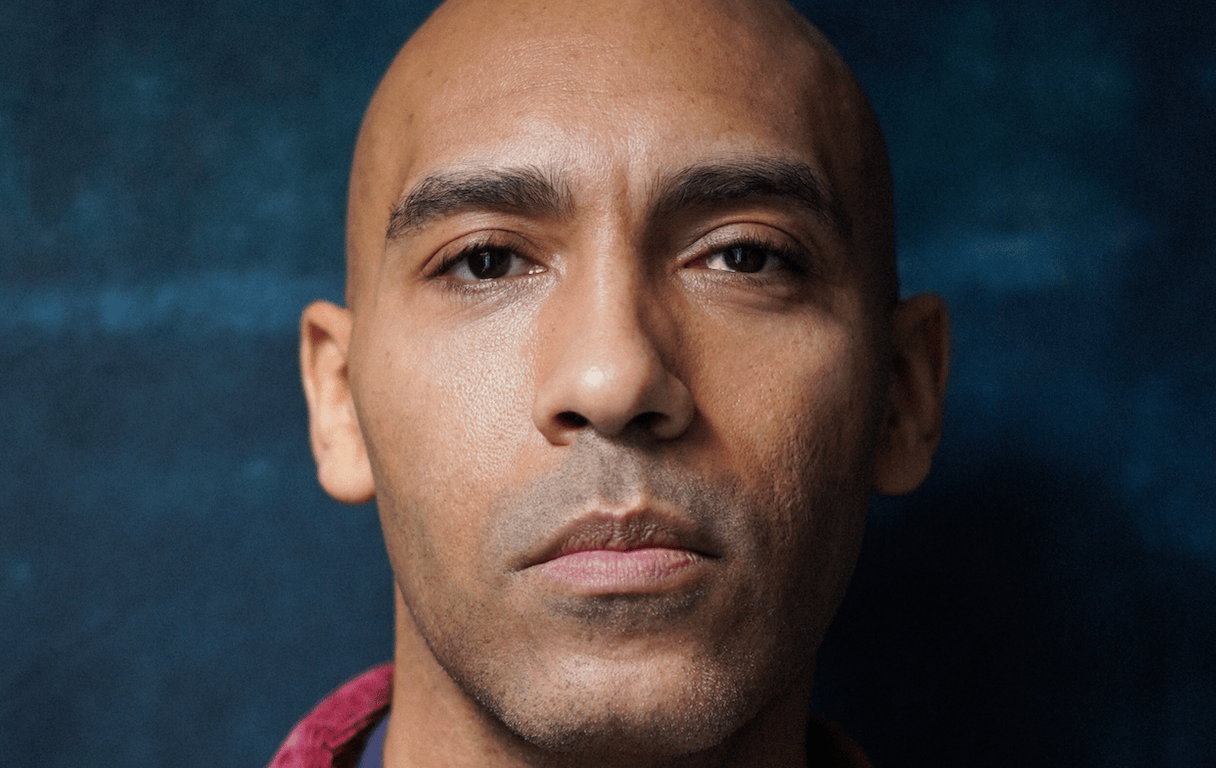
The writer-director behind the Oscar-qualified drama explores male mental health and childhood trauma with an acclaimed British cast led by Ashley Walters and Leo Gregory.
Main photo by David Buttle
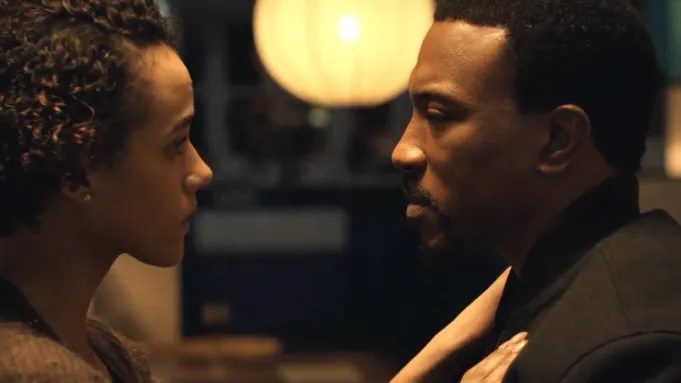
For Alex Lanipekun, ECHOES began with conversations among male friends about something deceptively simple: why men can find it so difficult to say they need help. Those discussions became more personal when Lanipekun spoke to his father about his own mental health journey. His father recalled that, in his generation, a man experiencing those struggles might simply have been considered weak. The conversation stayed with Lanipekun and became the catalyst for a film examining not only men’s mental health, but where some of those struggles begin.
Written, directed and produced by Lanipekun, ECHOES stars Ashley Walters, Leo Gregory, Nathalie Emmanuel and Emmett J. Scanlan and follows Andre (Walters) and Robert (Gregory), two men unexpectedly brought together by a shared boarding-school past. As experiences buried since childhood begin to resurface, the film examines male friendship, abuse, trauma and the different ways men learn to conceal pain.
Lanipekun believes the timing of that conversation is significant. Society has become more willing to discuss mental health, and particularly men’s mental health, in ways previous generations often did not. For him, that creates an opportunity not simply to identify the problems associated with masculinity, but to challenge inherited perceptions and consider the possibility of healing.
“We talk a lot at the moment about toxic masculinity, about the crisis of masculinity, and these are all really important conversations,” he says. “But for me, there’s another conversation, which is: what’s underneath all of that? What happens before all of that, when we are young?”
FINDING ANDRE AND ROBERT
The relationship at the centre of ECHOES was particularly personal for Lanipekun because he and Leo Gregory have known each other since school. That shared history gave Gregory an unusually close connection to the material and made the process of creating Robert both emotionally demanding and cathartic.
Lanipekun describes the experience as vulnerable and, at times, difficult, with the two men leaning on one another throughout the production. What emerged was a performance he sees as a testament not only to Gregory’s ability as an actor but to his bravery, capturing a character who is at once delicate, fractured and layered.
Ashley Walters came to the project differently. Lanipekun knew him socially but had not worked closely with him and initially had no idea whether the actor would respond to the screenplay. Walters did, and despite an extremely busy schedule, remained determined to find a way to make the film.
What particularly interested Lanipekun about Walters’ performance as Andre was the contrast between the character’s exterior and what lies beneath it. Andre possesses the confidence and apparent success of someone functioning comfortably in the world, but that outward acceptability becomes a veil for something unresolved.
Bringing Walters and Gregory into the same emotional world was central to Lanipekun’s approach as director. Before filming, he held sessions with each actor individually and then brought them together to discuss the screenplay, their characters, the emotional journey and their own responses to the material. It was less about prescribing performances than establishing a shared understanding before arriving on set.
Lanipekun wanted preparation without sacrificing spontaneity. Film still depends, he believes, on those unexpected moments of “capturing lightning in a bottle.” His job was to map enough of the territory beforehand that his actors could take risks once the cameras were rolling.
As he puts it, one of the fundamental jobs of a director is simply to “make sure everybody’s in the same film.”
FROM ACTOR TO DIRECTOR
Lanipekun arrived behind the camera with almost two decades of experience in front of it. A RADA graduate, his acting career has included Homeland, 24, Spooks: MI5, Domina and The Rising, giving him an education in filmmaking from an unusual perspective.
Over the course of an acting career, he has worked with a huge number of directors and observed first-hand how different approaches affect performers. He has seen which methods allow actors to open up creatively, how sets function and how stories change between the written page and the finished screen. When he began directing his own work, it was therefore working with actors that felt most instinctive.
Writing had also been part of his creative life long before ECHOES. He wrote raps when he was younger before moving into plays and screenplays, accumulating, he jokes, a drawer full of scripts “that the world will never see.” Meanwhile, years of reading scripts professionally gave him an increasingly instinctive sense of structure and rhythm.
“You read so many scripts that, by osmosis, you start to feel the rhythm of stories working through you,” he says.
That combination of writing and acting gradually made moving further into the creative process feel inevitable. Rather than arriving towards the end of the journey to interpret somebody else’s story, Lanipekun increasingly wanted to be there when those stories were conceived and built.
BUILDING REBEL ISLAND WITH NATHALIE EMMANUEL
That ambition also led Lanipekun and Nathalie Emmanuel to co-found Rebel Island, their UK production company.
Both had grown up professionally in an industry that has changed considerably during their careers. For Lanipekun, there comes a point when benefiting from those changes also brings a responsibility to create opportunities for the generation following behind.
“There comes a point when you have to step through the door that’s being opened for you,” he says, “and fill it with your ideas and help change the industry again for the people coming after you.”
Rebel Island grew from that philosophy. Lanipekun and Emmanuel want to contribute to an industry that is more open, inclusive and driven by talent while developing stories that reflect their own creative interests. ECHOES became an important first statement of those ambitions and an opportunity to introduce the company’s creative sensibility to the wider industry.
Emmanuel also appears in ECHOES while producing the film, balancing her performance with responsibilities behind the camera. For Lanipekun, her grounded performance contributes significantly to the emotional heart of the film, while their collaboration as producers reflects the wider ambitions they share for Rebel Island.
THE BUSINESS OF MAKING ECHOES
Making ambitious short films independently has also taught Lanipekun that filmmakers need to become entrepreneurs.
He and his collaborators have largely self-financed their short-form work while raising additional money from peers and supporters of the creative arts. It requires a very different conversation from raising finance for a conventional commercial project. A supporter of a short film may never see a monetary return, and Lanipekun believes filmmakers need to be transparent about that reality.
Instead, they are inviting people to participate in an artistic endeavour and potentially become part of something special.
Accessing conventional industry financing has proved much harder. Lanipekun acknowledges that many filmmakers are competing for a relatively small pool of available funding, but he also questioned whether the stories he and Emmanuel wanted to tell would necessarily attract support through traditional channels.
The solution was not to wait.
“In order to just get your story out there, you have to find another way,” he says. “And that’s what we did.”
That approach eventually helped ECHOES attract an impressive group of supporters and partners, including Mind UK, Brixton Wings, the Giustra Foundation, Armani Beauty and Giorgio Armani.
WHERE FILM, FASHION AND COMMUNITY MEET
The partnerships around ECHOES became about more than simply getting the film financed. Mind and the project’s community partners were able to provide feedback and support around its themes and subject matter, while the relationship with Brixton Wings allowed the production to bring opportunities directly back into the community.
Young people were given opportunities to experience a professional set, shadow departments and take paid roles as runners and production assistants — an important extension of the principles behind Rebel Island.
The film’s relationship with Armani developed through Emmanuel, who has been an Armani Beauty ambassador for several years. Armani Beauty supported the project, while Giorgio Armani provided costumes for the production.
For Lanipekun, the increasingly close relationship between fashion and cinema is a natural progression rather than simply a branding opportunity. Costume is one of filmmaking’s fundamental storytelling tools: audiences begin forming impressions about characters from the moment they see them, often before a word has been spoken.
SHORT FILMS SHOULD BE SHORT FILMS
Despite ECHOES’ high-profile cast and ambitious production, Lanipekun is particularly passionate about resisting the idea that a short film is valuable primarily because of what it might lead to next.
“I feel really passionately that short films should be short films,” he says.
His perspective comes partly from experience. His first filmmaking project was conceived to some extent as a calling card for a larger piece of work. Looking back, he now considers that approach a missed opportunity.
Travelling with ECHOES and watching the breadth of work being produced by filmmakers on the festival circuit has only strengthened his conviction that short film should be regarded as a complete storytelling medium.
His comparison is the literary short story. Writers do not create short stories simply to persuade someone to commission a novel. They write them because the form itself offers a distinctive way of telling a story.
“People don’t write short stories because they want to sell the larger novel,” Lanipekun says. “They write them because they’re a really genuine form of storytelling.”
For him, short film should be afforded exactly the same respect.
ECHOES ENTERS THE OSCAR RACE
That commitment to the form has now taken ECHOES into awards season. Selected from more than 8,000 submissions, the film was nominated for an Oscar-qualifying award at HollyShorts Film Festival and is now officially Oscar-qualified.
For Lanipekun, reaching this point carries particular weight because of how many people committed themselves to the film without knowing what, if anything, would come from it. Cast, crew, partners and financial supporters gave their time, energy and money to something with no guarantee of awards, recognition or return.
“I can’t put into words how much it means to have achieved this stage,” he says.
Rather than treating Oscar qualification as an expected destination, Lanipekun sees each step in the film’s journey as something to appreciate.
“We’re under no illusions about how much they mean, and how many people don’t get the opportunity to experience this kind of moment, no matter how wonderful their work may be.”
The team naturally hopes that awards recognition continues, but Lanipekun is equally focused on what ECHOES can accomplish away from the awards circuit. Working with its partners, the filmmakers want to take the film into communities and use it to encourage wider conversations about childhood trauma, masculinity and mental health.
Ultimately, that takes Lanipekun back to the conversations with friends and family that started the film.
“Men are really not very good at saying they need help,” he says.
His hope is that ECHOES might play some small part in changing that — encouraging men to speak to one another and to the people around them who are willing to listen.
“We need to get better at asking for help, and we need to get better at talking to each other.”
For Lanipekun, that would represent a success extending far beyond any awards campaign.
“If we can, in some small way, add to that conversation, then we’ve really achieved everything we could ever have hoped to have.”
Margaret Brown

