Oscar-qualified filmmaker Tamás Yvan Topolánszky talks independent financing, discovering a remarkable nine-year-old first-time actor, the economics of ambitious short filmmaking and why his latest film asks a deceptively complicated question: who really owns a message?
There is a deceptively simple question at the centre of Topolánszky’s Oscar-qualified short Never Give Up!: Do words belong to the person who says them, or to the person who ultimately gives them meaning? Produced by Topolánszky and Claudia Sümeghy, the film stars nine-year-old Mexican newcomer José María Gómez “Chema” alongside award-winning Dominican actress Ariana Lebrón.
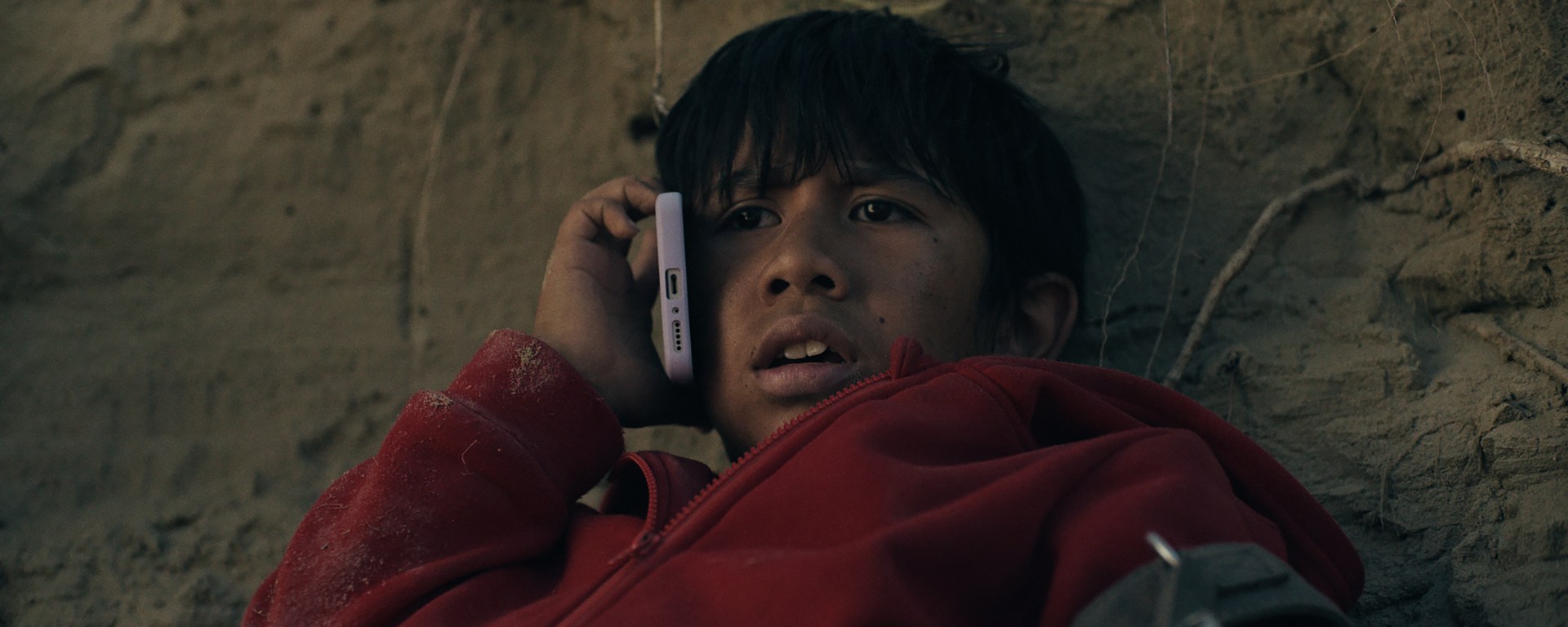
After a young boy is separated from his mother during a deadly border crossing, he finds himself alone in the desert with a damaged phone and the words she taught him to live by: Never give up. As exhaustion closes in, those same words unexpectedly return through an old motivational video. The boy knows nothing about the man speaking them; he simply recognises his mother’s message in somebody else’s voice.
For Topolánszky, that collision between speaker, listener and circumstance became the foundation of the film. The idea began with a motivational speech he discovered from more than 20 years ago and the realisation that the meaning of its words had changed radically with time. It prompted him to wonder what would happen if a message travelled far beyond anything its original speaker intended and reached someone in a life-or-death situation who knew nothing about the person delivering it. In that context, he says, words can develop a “strange afterlife”: once they are released into the world, the question becomes whether they continue to belong to their author or to the person who ultimately gives them meaning.
FROM BUDAPEST TO THE U.S.–MEXICO BORDER
The origins of Never Give Up! stretch back to the 2015 refugee crisis in Budapest. What stayed with Topolánszky most strongly were the children, who were moving through an enormous political event without understanding the politics surrounding them. From their perspective, he explains, the experience was about “fear, exhaustion, their parents, and the hope of getting somewhere safe.”
Years later, the U.S.–Mexico border offered a setting through which he could revisit that idea. The wall provided a physical symbol, but Topolánszky was interested less in the political rhetoric surrounding it than in “what personal stories, struggles and suffering are being hidden behind” such barriers. Choosing a child as the protagonist allowed him to maintain that perspective: the boy has no understanding of executive orders, immigration rhetoric or the symbolic significance of the wall. He is simply thirsty, frightened, grieving his mother and trying to survive. “The audience brings the politics into the film,” Topolánszky says. “The boy brings only his humanity.”
FINDING CHEMA
That creative decision created another challenge: finding a child capable of carrying a largely dialogue-free film. Topolánszky remembers beginning the casting process with the unlikely dream of finding “Miguel from the animated feature Coco in real life.” The difficulty was that the entire production was taking place in Hungary, making the prospect of finding the right nine-year-old Mexican boy there seem almost impossible.
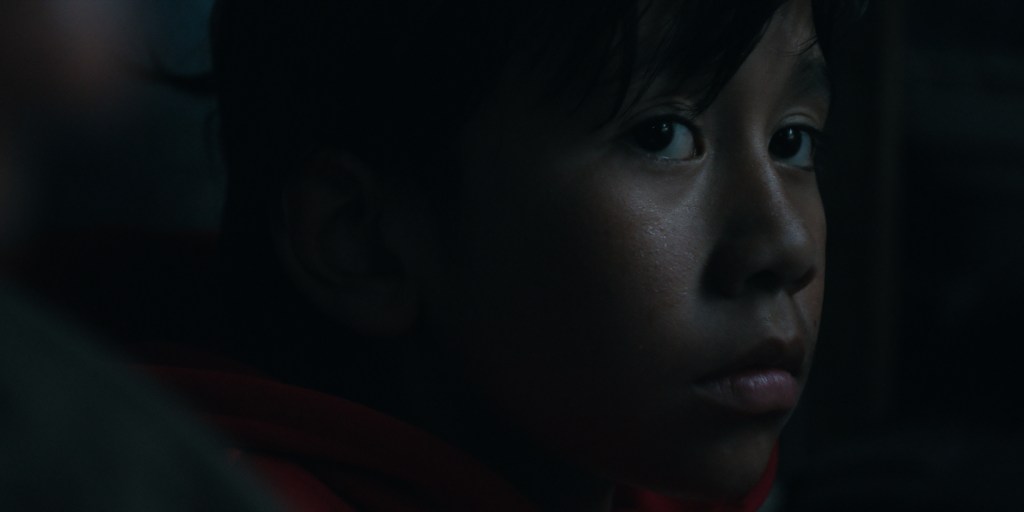
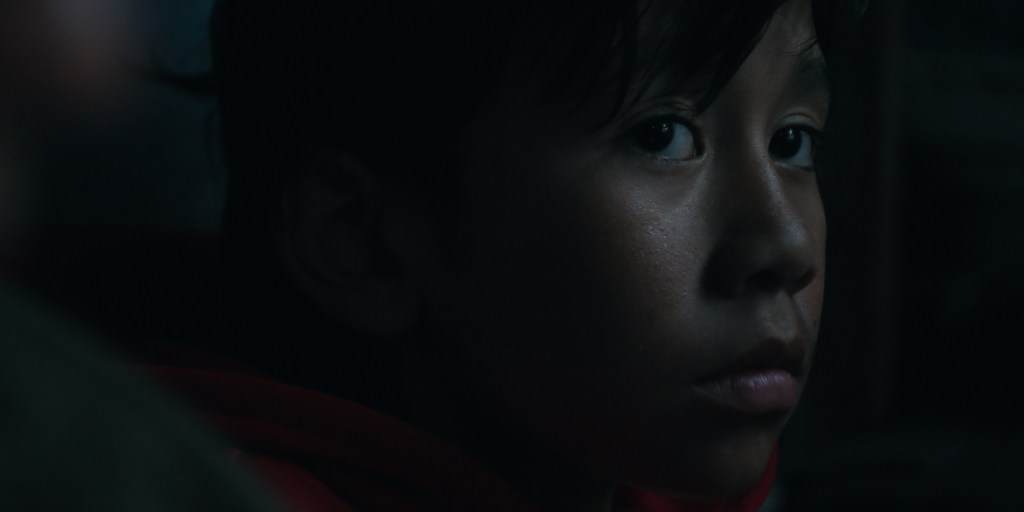
Casting specialist Kálmán Burai eventually discovered Chema, a Mexican boy living in rural Hungary. When he arrived at Topolánszky’s office, he had no acting experience but possessed what the director describes as “sparkling eyes and an extraordinary personality.” More importantly, Topolánszky felt that Chema barely appeared to be acting. With very little conventional dialogue, the role demanded a child capable of conveying an enormous amount emotionally through his face alone. “I needed somebody whose face you would be willing to watch in silence,” he explains, describing Chema’s discovery as “one of the most magical casting experiences of my life.”
Playing his mother is Ariana Lebrón, a graduate of London’s Royal Central School of Speech and Drama whose credits include FBI: International, Flor de Azúcar and The Original. Her performance provides the emotional foundation for a story in which a mother’s words continue to guide her son even when she is no longer beside him.
FINANCING AN AMBITIOUS SHORT
The film’s ambitions presented a considerable financing challenge. Topolánszky says there was never a realistic route to conventional financing in Hungary: the story was not Hungarian, its subject was immigration, and it was being developed during Viktor Orbán’s administration, when immigration had become a defining subject of government rhetoric.
Topolánszky and Sümeghy therefore financed Never Give Up! independently through JUNO11 Pictures, but even that was not sufficient. Filmmakers, friends and crew members stepped in because they believed in the project. For Topolánszky, the experience highlights one of the peculiarities of the short-film economy: “the ambition can be feature-sized while the business model is almost nonexistent.” Locations, actors, visual effects, sound, music and post-production still have to be paid for, yet there is almost no conventional mechanism for recouping that investment. At the same time, he sees freedom in that lack of a traditional business model: “Nobody commissions you to make a film like this. You make it because you believe it should exist.”
BEYOND THE FESTIVAL CIRCUIT
That makes festivals especially valuable. Never Give Up! is now Oscar-qualified and became a Top 10 Live Action finalist at HollyShorts, giving the film an important platform as it moved towards its U.S. awards campaign.
Topolánszky regards festivals as providing a short with legitimacy, attention and, crucially, “a first real life outside the editing room.” They create relationships and momentum while allowing filmmakers to experience their work with an audience and understand what genuinely connects. Oscar qualification can magnify those opportunities, but he believes filmmakers also have to think beyond the festival ecosystem. “Festivals can concentrate attention around a film,” he says; the challenge afterwards is to carry it “as far beyond them as possible.”
STREAMING AND THE DISCOVERABILITY PROBLEM
Topolánszky has already experienced the possibilities of global distribution through his debut feature CURTIZ, about Hungarian-born filmmaker Michael Curtiz during the making of Casablanca. After winning the Grand Prix at the Montreal World Film Festival, the film was acquired by Netflix for worldwide release.
The experience demonstrated both the opportunity and the contradiction created by streaming. A Hungarian first feature could suddenly become available internationally without negotiating access territory by territory, but Topolánszky discovered that removing the distribution barrier created another problem: discoverability. “Being available everywhere does not mean being seen everywhere,” he says. Nevertheless, he still believes in streaming’s original promise that a filmmaker with a distinctive vision can potentially reach audiences around the world regardless of where they come from.
WHAT COMES NEXT
Having worked across features, documentaries and shorts, Topolánszky is continuing to look internationally. He is developing further documentary work under the working title How to Defeat a Strongman alongside his next fiction feature.
He remains attracted to what he describes as timeless issues placed within contemporary environments: questions humanity likes to believe it has resolved, only to discover that it has not. Never Give Up! has also reinforced his desire to make international work without abandoning the perspective that comes from where he began.
“I’m interested in films that may begin in Hungary, Mexico, America or somewhere else entirely,” he says, “but whose emotional language doesn’t require a passport.”
That may ultimately be the idea that best describes Never Give Up! itself. Three familiar words can be a motivational slogan to one person and an empty cliché to another. To a frightened child alone in the desert, however, they can become something altogether different: a connection to his mother, a reason to continue and perhaps even a lifeline.
The speaker may begin the message, but Topolánszky’s film leaves us wondering whether it is the person who receives it who ultimately determines what those words mean.
Margaret Brown

