OSCAR CONTENDING DIRECTOR SPOTLIGHT – The Mourning Of’s Merced Elizondo “I underestimated the power of grief”
Fresh off its Oscar® qualification, The Mourning Of has emerged as one of the most powerful short films of the season, a deeply intimate exploration of grief, healing, and the unspoken rituals that bind families across generations. Written and directed by Mexican-American filmmaker Merced Elizondo, the award-winning film has captivated audiences worldwide with its quiet emotional resonance and cultural specificity, while breaking ground as a rare Latino-led, independently produced contender in the 2026 Academy Awards® race. We sat down with Elizondo to talk about the inspiration behind the film, the personal roots of its story, and what it means to bring such a uniquely intimate vision to the global stage.
The Mourning Of explores grief through a very intimate and unusual lens, a young woman who attends the funerals of strangers. What was the origin of this idea, and what drew you personally to it?
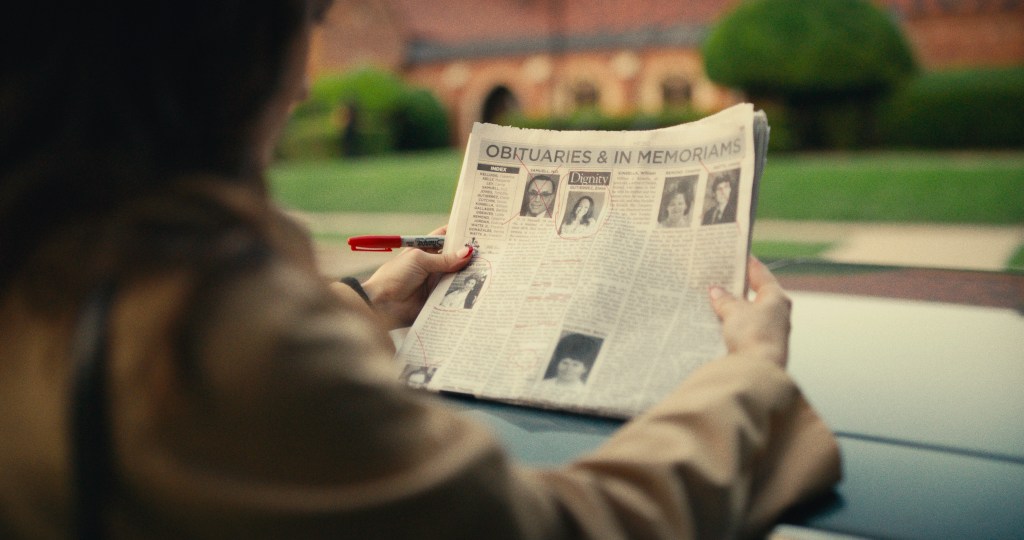
Interestingly enough, The Mourning Of was the first idea of a film that I ever had when I began my journey as a filmmaker back in 2016, but I sat on it for a few years until I felt ready enough to be able to tackle this story. It was inspired by a story that my grandmother told me about a group of professional mourners (usually women) named “plañideras” who were hired to weep, lament, and express grief at funerals. As someone who has been to several funerals, the idea of a stranger getting paid to walk amongst your friends and family on the worst day of their lives fascinated me as much as it did terrify me. And yet, what felt even more interesting to me was the idea of a total stranger breaking bread with your friends and family not because they were getting paid– but because they felt that they had to in order to avoid the possibility of having to move on from the loss of a loved one. How will I move on? Do I have the capacity to do so, or will I be paralyzed in a cycle of guilt for even trying? These are all questions that I’ve asked myself in the past when experiencing loss, and they were certainly questions that I wanted to reflect on-screen through the story of Maribel attending funerals in hopes of finding an answer.
It was inspired by a story that my grandmother told me about a group of professional mourners (usually women) named “plañideras” who were hired to weep, lament, and express grief at funerals.
Grief is both deeply personal and universal. How did your own experiences or cultural background influence the way you approached this story?
I’ve been to quite a number of funerals in the past for both friends and family, so it was obvious for me to tap into those experiences and capture that feeling as best as I could on-screen. Additionally, death is my biggest fear, and I’ve always had a bit of a sour relationship with my fear of death. I’m absolutely afraid of it, but this fear has far less to do with the idea of physical suffering and more to do with the existential dilemma of what happens after we pass away. The notion that our friends and family will one day wake up, attend our funeral, and then start the process of learning how to live in a world where you only exist in their memories is terrifying to me. How will I be remembered, and will I even be remembered at all? On the opposite end of this spectrum is the fear of losing my dearest loved ones and how my grief will manifest itself afterwards. This is a fear of the unknown, and what this devastation could look like when pushed to the limit. Again, what does “moving on” really look like? What awaits me on the other side? Do I even want to move on? The Mourning Of was born out of necessity to answer these questions, both for myself and for those that find themselves at odds with their personal convictions about death and grief. All of these experiences and personal touchstones were very much at the top of my mind when I was writing and making the film.
Death is my biggest fear, and I’ve always had a bit of a sour relationship with my fear of death.
The film captures the “quiet bonds” of family. What did you want to say about family, memory, and generational pain through Maribel’s journey?
Through Maribel’s journey with grief, I think my biggest goal was to create a film that reshapes the perceptions we have about death and the ceremony that’s commonly associated with it. Especially when it comes to family, if you lose somebody you were close to just as Maribel was with her mom, that pain stays with you like a ghost. On some days, you really feel its presence much more than others and it can really weigh on you. On other days, it’ll be a little more quiet and sometimes you won’t even feel it. Regardless, it’s with you whether you know it or not and whether you want it to be or not. But that’s grief, for better or for worse. Ultimately, Maribel flies too close to the sun by imposing this grief onto herself in an unnatural way and is forced to realize that “moving on” is not as easy as just ripping off the bandaid and finally “getting over it”. Rather, it’s something that she’s going to have to learn to live with forever— so she may as well get comfortable.
My biggest goal was to create a film that reshapes the perceptions we have about death and the ceremony that’s commonly associated with it.
Maribel’s journey is an exercise in learning how to resign yourself to the fact that grief is not something you move on from, and it’s certainly not as black and white as she’s making it out to be. You carry with you for the rest of your life, and making this film is a manifestation of me finally giving into this idea in hopes that others can do the same. When it comes down to it, that’s really what I was trying to express with The Mourning Of.
The film is restrained yet emotionally powerful. How did you balance subtlety with emotional depth in your direction and writing?
For me, all of this starts in my writing and naturally influences the choices I make as a director. I tend to really take my time with my screenplays in order to work through the subtlety that you mentioned, and when it came to The Mourning Of, this was critical. Maribel has several moments where she has to be subtle and discreet in order to execute the lies she’s dishing out at these funerals, but at the same time, we also see her alone in several moments where she’s willing to let her guard down and be vulnerable once she’s alone. It’s certainly not an easy thing to balance as a writer, but it’s even harder to have to act when you have to go from one extreme to the other. It was very important for me to capture this in the screenplay as best as I could so I could workshop it with my brilliant actors, Natalia Villegas and Julio César Cedillo, beforehand and then refine it on the day. I like to give everybody the best jumping-off point possible with my screenplays before we go in and make it even better as a team.
Writing is just writing, there’s only so much of it you can try to balance on the page, but the real balance is found once you’re working with the actors and you hear them saying the words and acting the actions. I’ve learned to become less precious with what’s on the page and instead focus more on the moments that are in front of me and my team each day so we can seize them in a very organic way. In the case of this film, we had several moments where we had to work through the trajectory of each character’s emotional state to make sure we’re responding to what feels right. I feel very good about the decisions we made and what we found together.
Writing is just writing, there’s only so much of it you can try to balance on the page, but the real balance is found once you’re working with the actors and you hear them saying the words and acting the actions.
You assembled a remarkable team, from cinematographer Matheus Bastos to sound designer Javier Umpierrez. Can you talk about some creative choices you and your collaborators made that shaped the film’s tone and atmosphere?
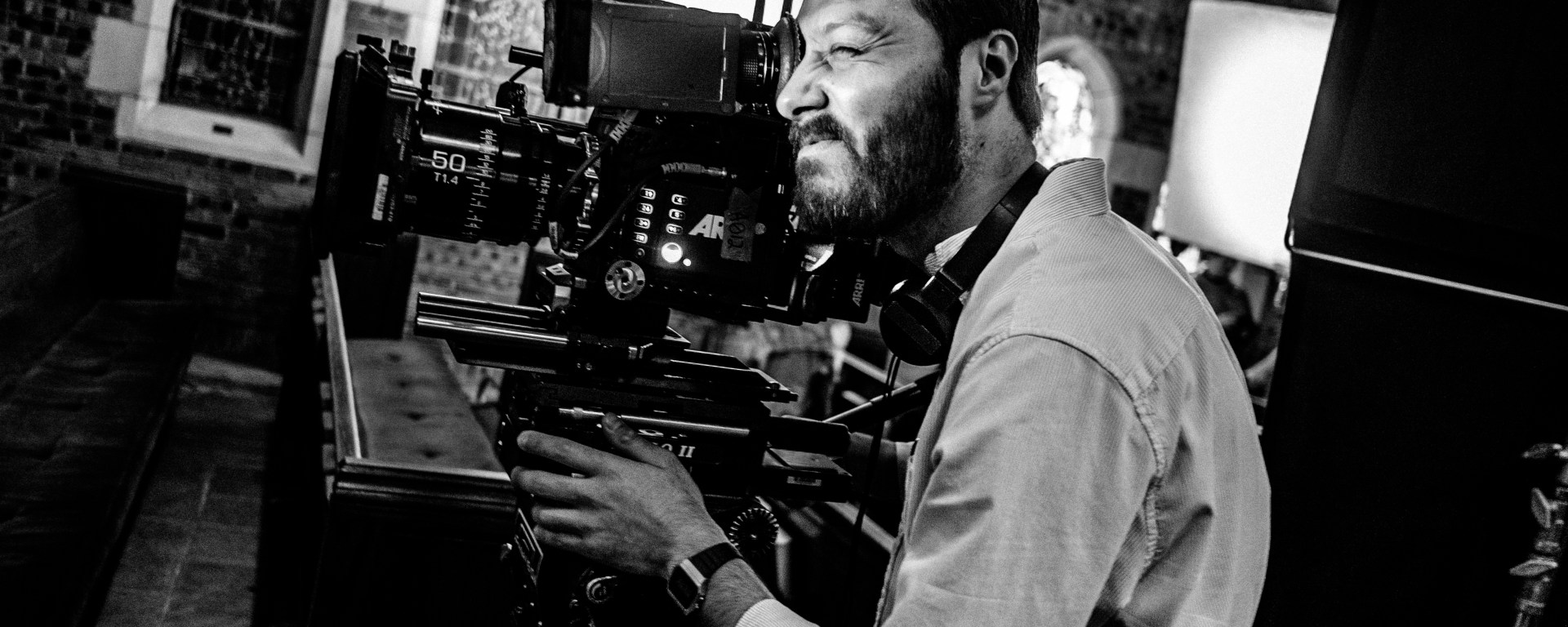
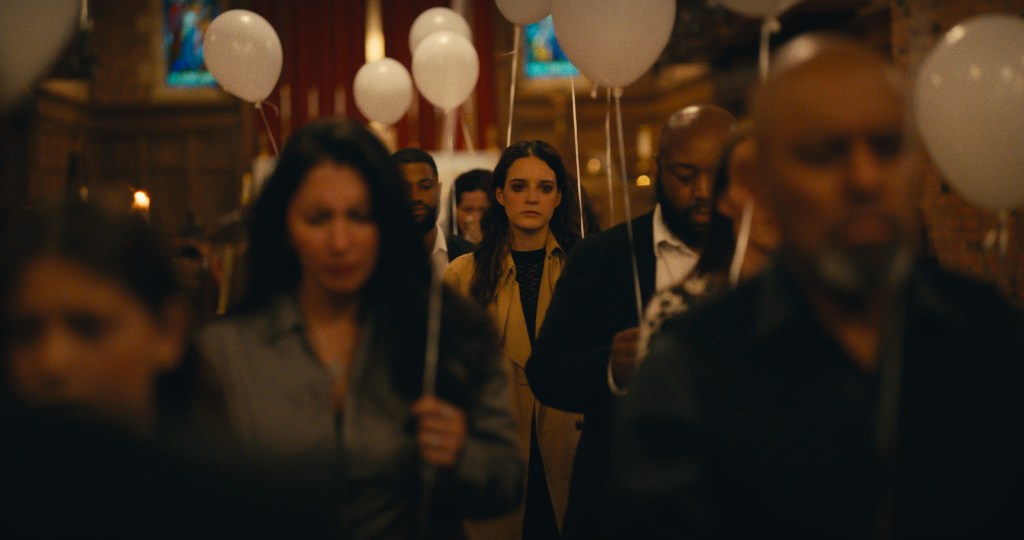
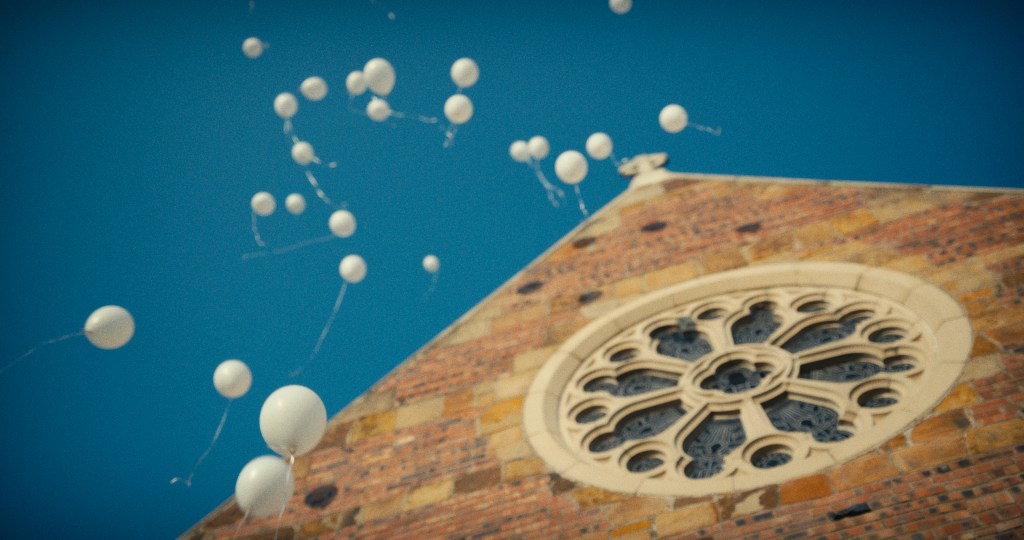
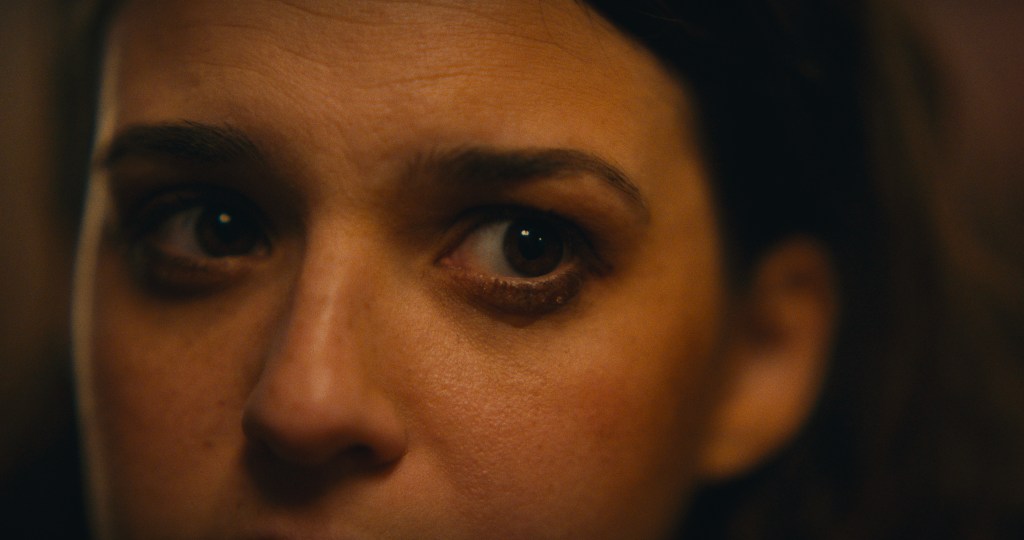
I love the team that we were able to put together for this film, and every single one of them played a pivotal role in shaping what you see (and feel) before you on-screen. It was a very close collaboration between all of my department heads, but for me, it really started with the work that Matheus and I did before production. We decided on a look early-on that felt filmic, textured, and warm but also had lots of density and contrast that worked with the rich colors that surrounded us in the church, house, etc. We wanted to capture these textures, embrace the darkness, and capture a reality that was heightened yet also felt lived in. Throughout the entire film, Maribel is constantly inserting herself into a place where she shouldn’t be. These are spaces with lots of extras and naturally lend themselves to frames that look full, however, they still feel lonely for Maribel. This is what we were aiming to achieve, despite being surrounded by hundreds of people, Maribel is still very much dealing with what’s on the inside more than what’s actually affecting her on the outside. We were also very considerate of Maribel’s eyelines and perspectives, and we constantly found ourselves asking who she sees, who can see her, and whether or not she can see herself.
Once we were able to establish this language and code of operation, everything felt informed by these decisions that we made as a team. From the beautiful sets that our production design team was able to dress, led by Jonathan Rudak, to the clothes that our Wardrobe Supervisor Elizabeth Farrell chose to put our characters in, to the sonic world that our masterful sound designer Javier Umpierrez created, we wanted to create a film that looked big, felt big, yet still felt like an intimate character study driven by Maribel’s grief that felt small and personal.
Music and silence both play significant roles in The Mourning Of. How did you approach sound and score as part of the storytelling?
I write all of my screenplays with sound and music in mind, and I have to give all of the credit to our composer René G. Boscio and sound designer Javier Umpierrez for the extraordinary work they did on this film. From the beginning I knew that this was going to be a film that needed to exist on both sides of the sonic spectrum, from incredibly loud to soft and silent, so the task before us was not going to be an easy one. Maribel’s journey with her grief, at least from a sound/music perspective, is constantly at odds between what she feels on the inside and what she feels on the outside. Internally, Maribel is suffering, and these are the moments where we break from reality and heighten the sound to something that feels loud, heavy, and overwhelming. This is when you hear the full breath of René’s powerful, organ-driven score for the film and also when we hear Javier’s ability to take what Maribel is feeling and turn it into a sonic landscape that affects audiences whether they’re aware of it or not. Every sound and decibel was deliberate and precise. Similarly, there are moments in the film where Maribel is alone as she floats through these funerals and through the lives of these strangers, and this is where the film tends to be a bit more quiet and restrained. In these instances, it was more about coloring the world that she was inhabiting to show just how out of place she really was. These are not her friends nor her family, no matter how hard she pretends they are, and we wanted to represent this through our sound and music by pulling back and letting her (and the audience) feel uncomfortable with what she’s doing.
Eventually, both the inside and the outside eventually converge with one another, and it’s mostly thanks to the delicate dance that our sound and music did with one another throughout the film.
The Mourning Of stands out as a Latino-led, independently produced film made entirely in Texas. Why was it important for you to root this film so deeply in your community?
I make films with my community and about my community, I simply don’t know another way to tell my stories. Because I never went to film school, I really had to lean on the community and the people around me to help build my career, so to say that I’m grateful for their support would be a tremendous understatement. If you ever visit one of my sets, you’ll notice that they very much have a handmade quality to them… from my family helping me with craft services, to friends standing in as background talent for me, to the use of real locations from those in the neighborhood that are curious about what a film production looks like, etc. We have fun, we laugh, and we all feel like one big family right away. Why would I reject that and try something different? This is how I learned to make movies, and this is how I will continue making them. No matter how big my budgets are in the future or where I shoot my next couple of films, I’ll always be an independent filmmaker at heart and carry this community-minded spirit with me wherever I go. It’s so important for me to keep this spirit within me alive in order to maintain the integrity of how I do things and what it can produce for me on the other side if I stick to punk-rocking my way as an indie filmmaker. It’s worked out for me so far, so here’s to keeping it that way.
I make films with my community and about my community.
Latino representation remains disproportionately low in major awards campaigns. What does it mean to you that The Mourning Of is now an Oscar® contender, and what message do you hope this sends to other Latino filmmakers?
I am uniquely aware that this doesn’t happen very often for Latino filmmakers such as myself, let alone one that built their career in Texas and never made the move out to Los Angeles or New York. The reason I didn’t go to film school was because I didn’t see anyone that looked like me or spoke like me making movies, and it seemed so far out of the realm of possibility. I didn’t even allow myself to dream that big because it felt like something that was unrealistic and unattainable if you come where I come from. And yet, thanks to the encouragement and support of my friends and family, I was somehow able to find myself making films at a level that I would have never dreamed of when I first started eight years ago.
I am uniquely aware that this doesn’t happen very often for Latino filmmakers
But what if I hadn’t? What if I really believed that it was impossible and felt discouraged by the nonexistence of people like me in film? My point is this– it’s possible. In fact, nowadays, it’s never been more possible for someone to make a career working in this business, and I want all of my fellow Latino filmmakers to recognize that if I’m able to do it, so can you. I’m Mexican-American, grew up in Dallas, have immigrant parents and don’t have any artists in my family, and I grew up thinking that I shouldn’t be here because of this. If there’s any message I hope my experience and career sends to Latino filmmakers who may be unsure of whether or not they belong, it’s this: you absolutely belong, and your voices are needed now more than ever.
How do you see your Mexican-American identity shaping your artistic voice and the kinds of stories you want to tell?
This is something that I have a lot to say about. For the longest time, I’ve always felt that Hollywood and the industry at-large unfortunately puts Latino and Mexican-American stories in a sandbox, and only certain kinds of stories are able to come out of that sandbox. It’s almost as if all they’re willing to ask of us is “hey you’re an immigrant, tell us bad it is”, and that’s all they’re willing to receive from us.
I’ve always felt that Hollywood and the industry at-large unfortunately puts Latino and Mexican-American stories in a sandbox
This is a part of us, but it’s not all of us, and I vehemently and categorically reject the notion that it’s all we’re capable of on-screen. I believe that it’s my moral and creative responsibility to spearhead a new normal where Latinos can see themselves in stories that go far beyond the limited perception that this business has about us. If I do anything meaningful in my career, then I hope it’s to tell stories in a thought provoking way that have never been seen on-screen before while also creating a narrative that normalizes the integration of Latino characters in dramatic, impactful, and cinematic films.
The Mourning Of is a fully original story that is told through the perspective of a Latina character, and as a filmmaker, I believe our film can serve as a much needed reminder of the idea that stories made by us and with Latino talent can be just as relatable as any film being released with an all-white cast. It’s time for others to see themselves in us as well, and not just the other way around. More than anything, I want all of my films moving forward to be seen as an example for the industry and prove that Mexican-American stories are more than capable of reaching the most celebrated festivals and programs from all over the world. It happened with us, and it can happen with everyone else too. We just have to keep fighting until it becomes as common as every other kind of film that gets accepted by the masses year after year.
The Mourning Of is a fully original story that is told through the perspective of a Latina character
This short has screened at festivals across the U.S. and internationally, from Guadalajara to Cannes Lions. How has the audience response differed in various cultural contexts?
To be completely honest, I was a bit worried that our film wouldn’t resonate anywhere outside of the U.S., so the response from audiences across the world was quite surprising at first. I thought that the premise of a woman attending the funerals of strangers would be too specific and offputting to international audiences, but I have found that they respond just as much to the film (if not more) as anybody else.
I underestimated the power of grief and just how universal this theme really is. Regardless of where you come from or what language you speak, the pain of losing a loved one and watching someone deal with it on-screen is something that anybody can connect with from any corner of the world. Some people in Mexico might understand grief differently than how someone from Europe might see it, but they always seem to find a common ground of empathy for Maribel when watching The Mourning Of. The experience of watching people respond to this film has shown me that the more specific something is, strangely enough, the more universal it becomes.
I underestimated the power of grief and just how universal this theme really is
Winning Best Live Action Short at St. Louis International Film Festival qualified you for the Oscars®. Can you describe that moment when you realized this film had officially entered the Academy Awards® race?
I’ll never forget it. I was in Los Angeles producing a commercial just a few days after having screened the film in St. Louis, and I guess I must have missed the awards ceremony at the festival because I had no idea that our film had won “Best Live Action Short”. When I opened the email and saw all of the winners, I just about jumped out of my seat when I read The Mourning Of on that list.
I don’t make films to win awards, let alone actively try to enter the Academy Awards® race, so it’s a very nice feeling when your work gets recognized in such a special way. I’ve been doing this for about eight years now, and it’s moments like these that validate all of my efforts and remind me to keep going down this path. Having an Oscar-qualifying film feels great eight years in, but I’m far from done yet.
What has been the most surprising or meaningful response you’ve received from someone who has seen the film?
People are usually quick to tell me how much they enjoy the cinematography, sound, and music of the film after having watched it, which I’m very proud of and feels nice. However, I really admire the responses that I get from people who have experienced grief (whether recently or otherwise) and found themselves deeply connecting with the film. This is why I make films in the first place, to create something that resonates with people and touches a part of their soul in a way that had never been tended to before. Grief isn’t easy for anybody, but if my film serves any purpose at all, I hope it’s one that helps people make sense of their journey with grief just a little more. Those are the interactions that I cherish and look forward to the most because they go beyond the aesthetic. If it moves you and stays with you, then it makes me feel very good about the job we did.
I really admire the responses that I get from people who have experienced grief
You’ve previously been recognized with the Ryan Murphy Half Initiative and the NewNarratives Filmmaker Grant. How have these opportunities shaped your path as a filmmaker?
I feel so fortunate to have had these opportunities at such an early point of my career, and I wouldn’t be here talking to you today if it weren’t for Ryan Murphy’s Half Initiative and the NewNarratives Grant.
I was selected as a Directing Fellow for the Half Initiative back in 2022, and it came at a crucial point in my career because it provided me with exposure to a side of the television industry that I otherwise may have never had access to. I got to shadow a working director on a full episode of network television from beginning to end on the set of a major studio, and this experience was so important to me because I got to witness firsthand what it takes to successfully run a massive production at such a large scale. It came just a couple of months before I began production on The Mourning Of, and it proved to be the perfect experience for me to learn from as I was getting ready to prepare for this film, which included a crew of over 25+ people, multiple locations, and over 175 extras across 5 days of production. This opportunity fell into my life at the time when I needed it the most and I truly couldn’t be more grateful.
One month after I got back from participating in the Half Initiative, I received the call that The Mourning Of was being awarded the top prize for the NewNarratives grant with NewFilmmakers Los Angeles and Warner Bros. Discovery. Simply put, The Mourning Of would not have been possible without the support of this grant, and being able to say that our film is a WBD-supported project really helped get it across the finish line. It opened many doors for me back then, and it’s still opening doors for me now.
How does The Mourning Of connect to your earlier work, such as Manos de Oro, and how do you see your artistic evolution across these projects?
I only recently discovered that there’s a throughline between The Mourning Of and the rest of my earlier work, and it’s my everlasting pursuit of the truth. All of the films that I’ve made in previous years revolve around a character’s journey with their truth, and in both life and in cinema, I believe you can learn everything you need to know about someone by placing them in a situation where they must avoid, fight, hide, or accept the truth. The tension of this kind of circumstance reveals so much, and I love exploring the truth through the characters that I write in my films by pointing a flashlight at them emotionally to uncover what ultimately drives them.
In the case of Manos de Oro, we find a character that is completely unwilling to accept the truth that’s in front of him, despite his knowledge about the condition of his body and his efforts to fight it. In The Mourning Of, Maribel does everything in her power to avoid the truth and hides behind the grief of others in hopes that she can emotionally stay frozen. I think the evolution across both of these projects, and even the films I make in the future as well, is one that sees me taking more chances as a director. I’ve written myself into tighter and tighter boxes with each film, and I remain confident that I’ll find a way out of them thanks to my experience and the risks it allows me to take because of it.
I only recently discovered that there’s a throughline between The Mourning Of and the rest of my earlier work
What’s next for you? Do you plan to expand this story into a feature, or are you moving in a different creative direction?
The Mourning Of was made as a proof-of-concept for a feature film, so exploring this character further and her journey with grief was always a part of the plan. My goal is to make the feature film feel much closer to that of a haunting dramatic-thriller where we find Maribel infiltrating strangers’ funerals to prolong her mourning, only to lose herself in a web of lies, borrowed grief, and unraveling identity along the way.
In addition to developing feature film versions of The Mourning Of and my previous short film Manos de Oro, I’m also currently writing what I hope will be my feature film debut, The Thing About Elephants. This is a film about two childhood sweethearts who turn to an experimental therapy retreat in West Texas to address their struggling marriage, forcing them to face some hard truths about themselves they can no longer avoid.
The Mourning Of was made as a proof-of-concept for a feature film