OSCAR CONTENDING DIRECTOR SPOTLIGHT – Iain Forbes on AFTER DARK “How far would I go to help a stranger?”
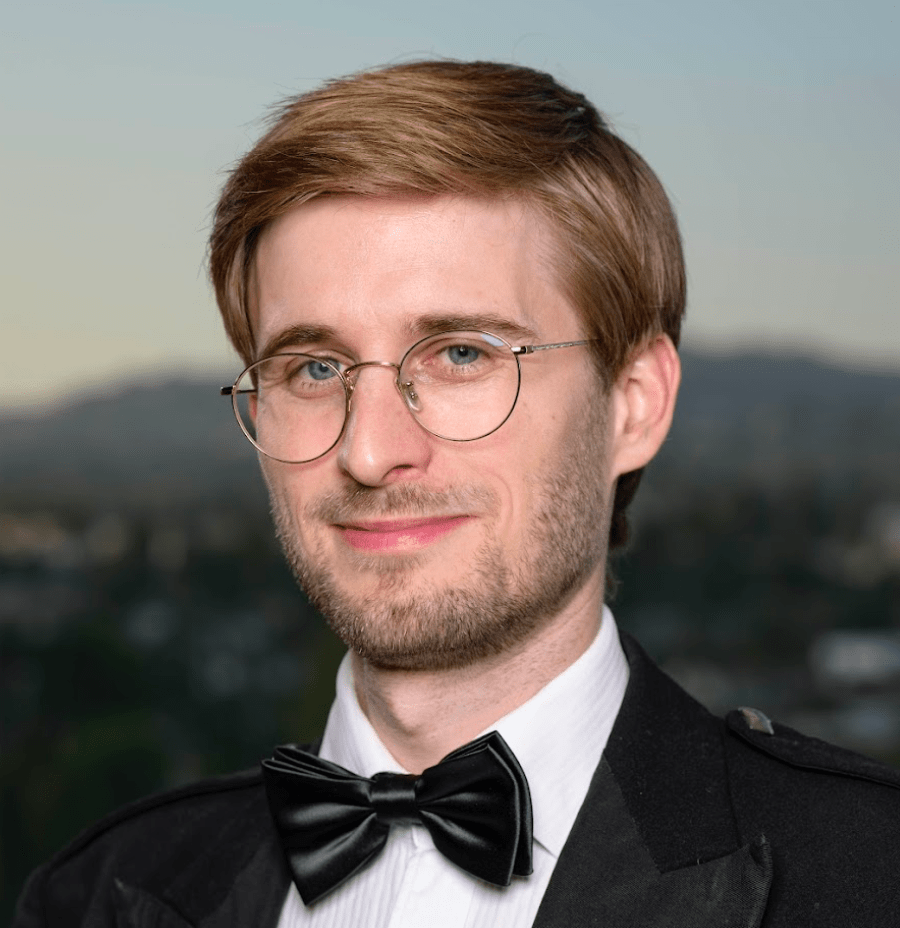
Scottish-Norwegian filmmaker Iain Forbes has quickly emerged as one of Scandinavia’s most compelling new voices, blending taut storytelling with a sharp eye for human complexity. His latest short, After Dark, pushes these instincts to the forefront, unfolding as a tense nocturnal encounter that asks: how far can empathy stretch when shadowed by fear and doubt?
Oscar-qualified after its Best International Short Film win at the Foyle Film Festival, After Dark has travelled widely across the festival circuit, earning accolades and cementing Forbes’ reputation as a director unafraid to probe the contradictions of human behavior. With its intimate scale and unnerving questions, the film confirms Forbes as a storyteller who finds the universal in the most fleeting of encounters.
We caught up with this talented filmmaker to talk more about his impressive film.
After Dark confronts the tension between empathy and fear, where did the idea for this story originate?
The idea originated at a brain storming session between myself and writer Andreas Lübker. We had recently graduated from film school and we were eager to attempt a new collaboration. We spent an afternoon telling each other stories of events we had experienced, and finally it was one of my stories that became the foundation for After Dark.
Were you drawing from any personal experiences or social observations when shaping the film?
The film is heavily based on my own personal experiences, as I had an encounter very similar to Kristian. Late night, alone on my way home, I encountered a young woman who seemed lost and fearful, who asked to accompany me to the central station. The first half of the short film is partly verbatim from our exchange, but from there it deviates. The experience made me realize what I thought I would do in a situation differed from the choices I actually made.
The film is heavily based on my own personal experiences
You’ve spoken before about moral ambiguity in your work. Why does that theme continue to fascinate you as a filmmaker?
I think characters that are difficult to pin down, who play with the audiences sympathies, are the most interesting. Additionally, I feel they force the audience to engage, as they are not served a solution, but must make their own mind up about the character and situation. I find working in this ambiguous field to be very exciting, as it also makes me curious as a filmmaker to challenge my own judgements of the characters and their actions.
How did you approach balancing realism with suspense, given that much of the drama hinges on subtle character shifts?
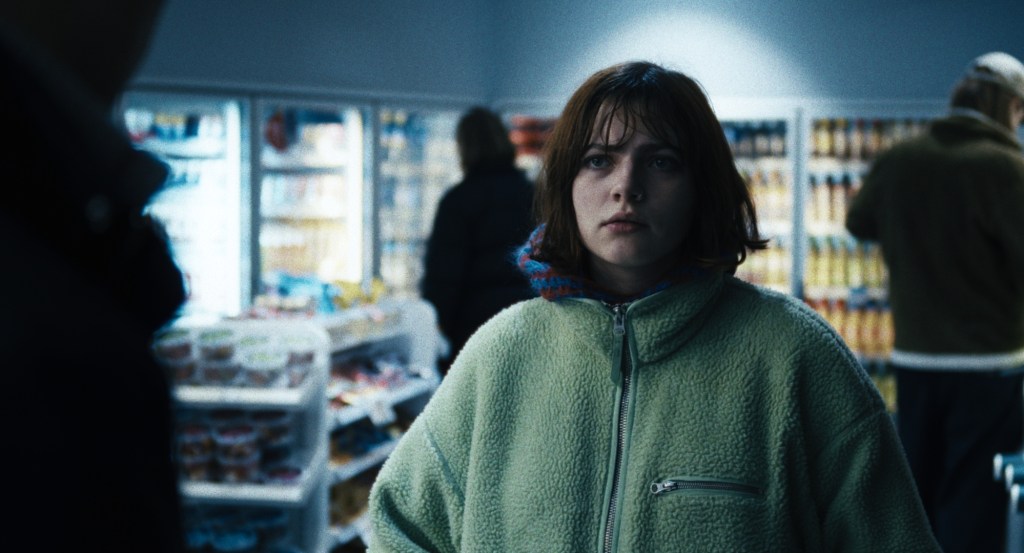
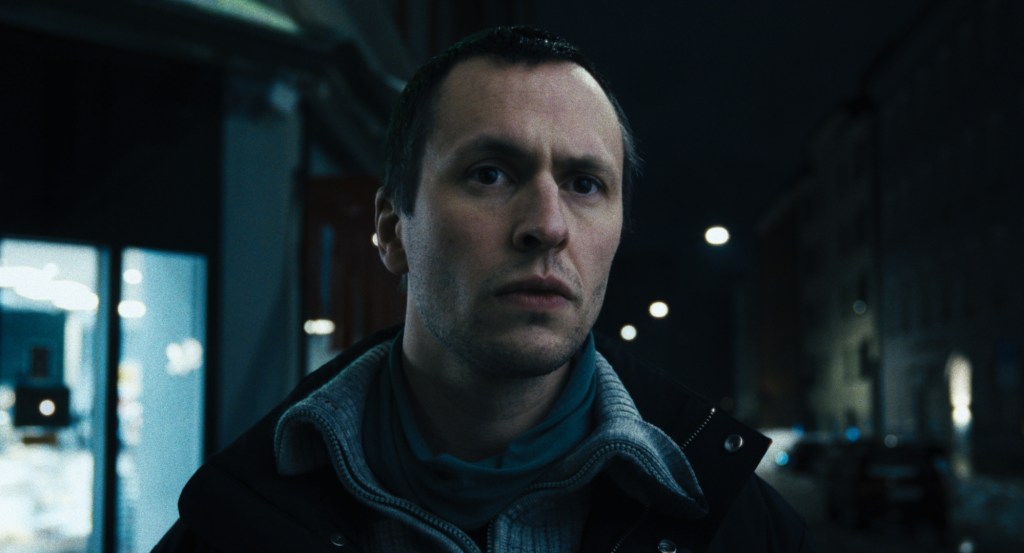
I knew I wanted the acting to feel very realistic, and the relationship between Kristian and Mia was crucial to the believability of the story. So my focus was very much on working with the actors to ensure a toned down and believable style, while still conveying fear. At the same time I knew I wanted to stylize the cinematography by desaturating the image, and focusing on contrasting light and dark to achieve a Nordic noir atmosphere. The camera alternates between observing and being subjective to Kristian, enhancing the thriller aspect and the feeling that the situation might escalate.
What choices did you make in terms of pacing and structure to keep the audience questioning both Kristian’s and Mia’s motives?
The most important choice was how I presented Mia. Her acting style changes subtly, from damsel in distress to more alluring and self assured. Her costume and make up undergoes subtle changes which make her appear different towards the end. Structurally I try to align the audience with Kristian’s immediate impression of the situation, escalating tension when he is under stress and deflating when he starts to believe that he is no longer in danger. Ultimately the film ends with a surprise for him and the audience as we believe, as he does, that he has decoded Mia – only for the truth to be much muddier.
The film has an intimate, almost claustrophobic feel, what were your guiding principles for the visual and sound design?
I wanted to capture Oslo in winter, at its most antisocial. I wanted to isolate Kristian by making all areas of the film feel hostile and unwelcoming. Desaturating the image added to the pale, sickly light reflected in the snow. And the camera absolutely traps you in the situation, with no respite or pauses until the end. The sound design amplifies this concept, painting the city as hostile, with the music creeping in when fear and uncertainty peak. But when Kristian feels assured more common city noises return.
I wanted to capture Oslo in winter, at its most antisocial.
Simen Bostad and Billie Barker bring incredible nuance to their performances. How did you work with them to build that fragile tension?
I knew I wanted to work with Simen off the bat when I started this film, but I spent quite some time auditioning different actresses before I chose Billie. I needed both vulnerability, anger and something mysterious in Mia. After we had worked through the backstory and undergone a table read, we rehearsed the entire film in sequence on location. I feel this really helped all of us understand the situation in its entirety – and from there we just had to stay true to the characters, their goals and the reality of the situation.
Trust between actors seems essential in a story about mistrust, how did you foster that dynamic on set?
We worked at it from a very professional angle, and Simen and Billie are both pros. We had settled everything at the table read, and after that I felt they were ready to give it their all. It also helped that I had the true story as an experience I could draw on for truth – which I believe made it easier also for them to trust in my vision for their characters.
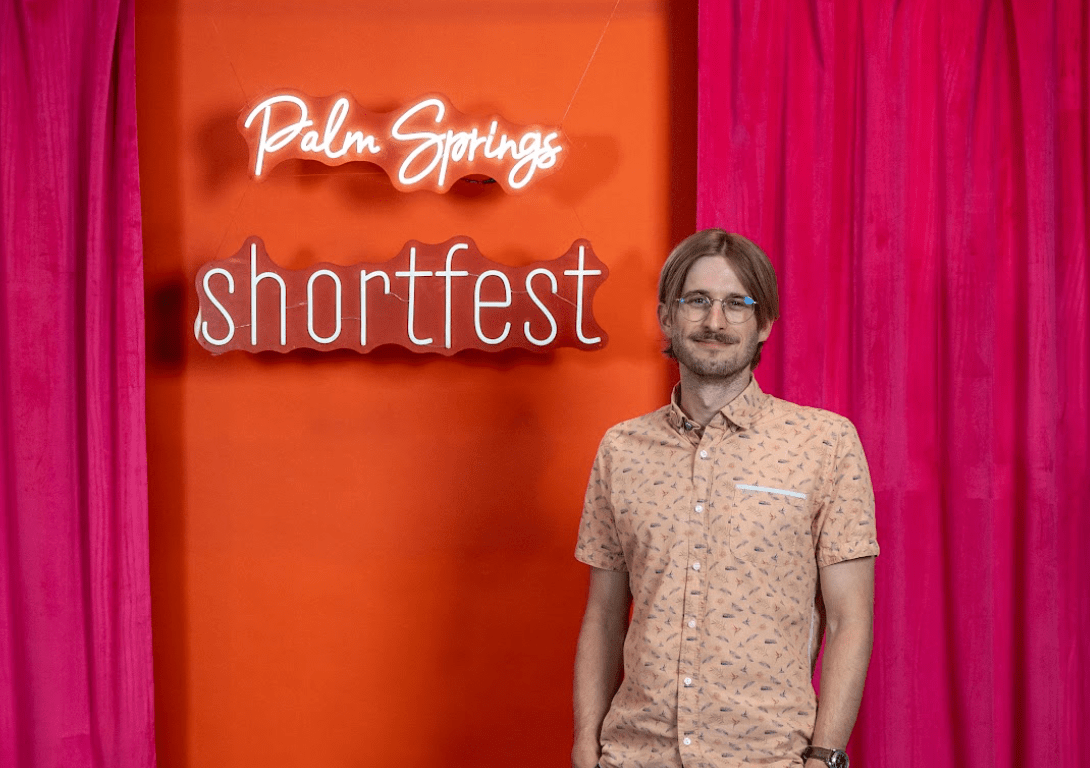
After Dark premiered at Palm Springs and went on to win at Foyle, making it Oscar-qualified. How has the festival circuit shaped your perspective on the film?
We were over the moon about Palm Springs! The writer and I had one ambition with our short: we wanted it to premiere somewhere nice and warm, the polar opposite of our freezing shoot. That premiere also gave me a boost, in terms of renewed confidence in submitting it to even more festivals. One of those was Foyle, and our win there was such a gift, allowing us to get on the Oscar track.
Did the recognition from Foyle and other festivals change how you think about your career trajectory?
I’ve realized I have a knack for working in mystery and thriller, and I feel really drawn to pursue the genre further. And I feel my ambiguity has been recognized and rewarded, which makes me want to retain that also in my future work.
From Snowman to Revisited and now After Dark, your films often sit at the intersection of morality and survival. Do you see this as your signature, or are you looking to explore new thematic directions?
There’s definitely an existential edge to my films, and many center on loss, death and grief. Right now I’m developing an action comedy short about young boys and videogames, and I’m delighted to be working in a much lighter genre for once! But at its heart are many of the same universal fears, of not belonging and ending up alone.
There’s definitely an existential edge to my films
You’ve also worked extensively as a first assistant director on feature films, how has that experience influenced your own directing style?
I’ve learned a ton from my time as a First AD, and I think one of my most important take aways is the fear of starting. Too much time is spent perfecting the first shot at the start of the day, negatively impacting the rest of the schedule. If you’re well prepared, and can get the first setup of the day done quickly, you can set a rhythm which allows a higher level of precision on each individual setup and scene. That’s the gift one gets from watching what happens when another director is under prepared and unsure of what they want.
What’s next for you? Are you already developing a feature project, or do you plan to continue working in shorts for now?
I’m in early pre-production on the previously mentioned action-comedy short, but at the same time I’m on a development track with my first feature. I’m extremely excited to make the jump to features, but shorts are so fun because they have much shorter turnarounds – so I doubt I’ll stop making them anytime soon!
If audiences take away one thing from After Dark, what do you hope it is?
How far would I go to help a stranger, and what kind of strangers would I be willing to help?
How has making this film changed your own view on empathy, fear, and the decisions we make in moments of uncertainty?
Reflecting so much on this episode has made me keenly aware of my own limitations. It’s hard to know if fight, flight or freeze will be your response in a situation fraught with danger and uncertainty. I’m curious to see if I would have acted differently in an encounter with “Mia”. Or if I would have defaulted to the same judgement as before. Hopefully I will be more open, without being naive.