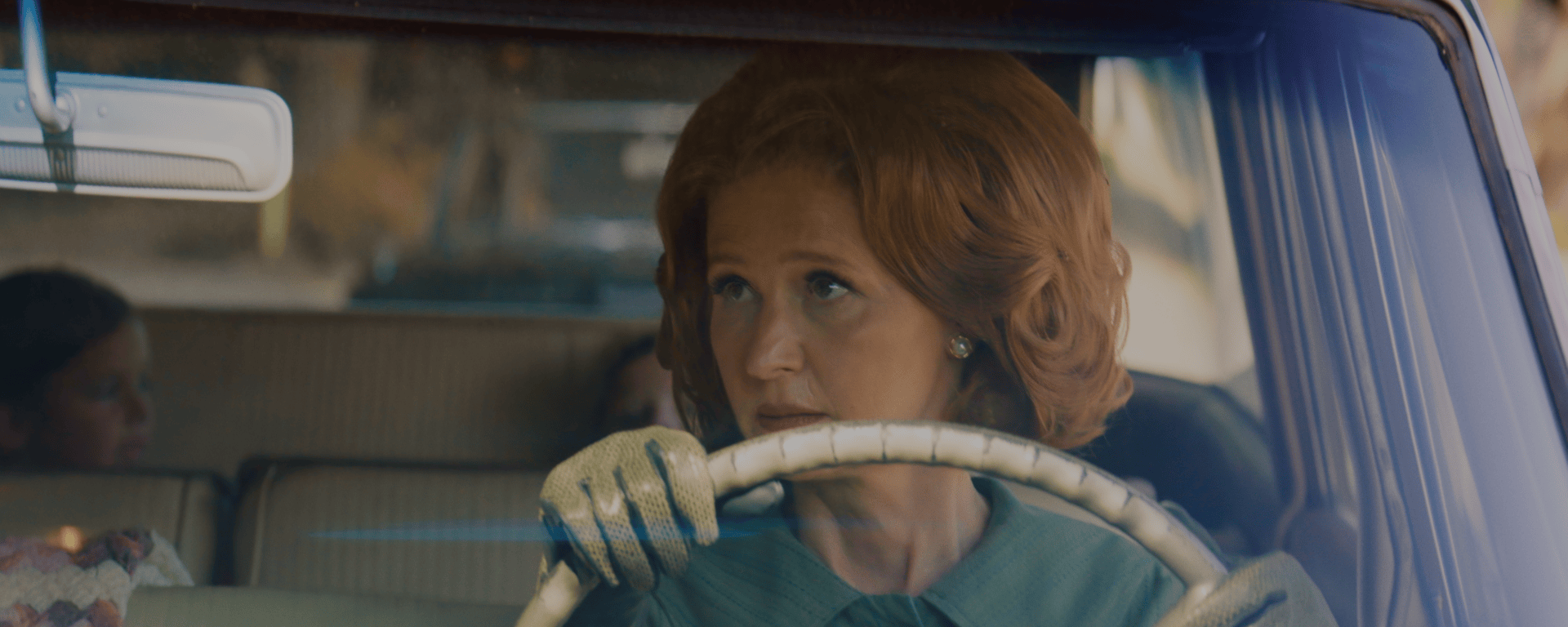
THE DRIVE revisits a little-known episode from one of the most significant moments in American history. Set in November 22, 1963 , the short film follows Liz, a woman driving with her children as news of President John F. Kennedy’s assassination reaches her through the car radio and the world around her. For writer-director David Arrow and lead actress Amber Paul, the film offered an opportunity to explore a deeply personal perspective on a day remembered by generations.
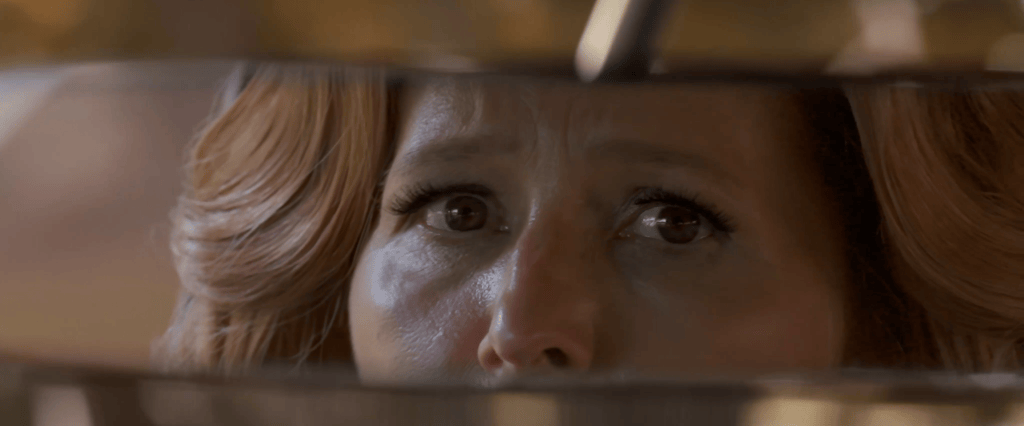
“I’m a bit of a history buff, and it surprised me that this part of the larger story of that day is not really well known,” David explains. “Almost immediately, I thought this would be an interesting short film. I discussed the idea with Amber and she was incredibly encouraging. We felt that this unrepresented part of that momentous day deserved to be shared.”
Amber recalls how David first came across the story while researching his play Kennedy: Bobby’s Last Crusade, about Robert F. Kennedy Sr.’s final campaign in 1968. “No one has ever approached this day in American history from this perspective, and I’m honored to share this footnote to history.”
Finding the Story Within History
Although rooted in a specific historical event, David wanted THE DRIVE to connect with audiences on a more universal level. “We knew we had to be authentic because we were recreating history, and because we felt an obligation to the facts. We believe that these moments in history are important to maintain.”
At the same time, he was conscious that the film was telling the story of one individual. “What I believe grounds our film is that, although these particular circumstances are unique, the emotional experience is very universal. The human experience transcends time and makes it relevant to us now.”
For Amber, that commitment to authenticity extended throughout the production. “Since THE DRIVE is a true story, we and our entire crew worked with great integrity to ensure that every detail was correct to the period. We all did an incredible amount of research during pre-production so that we could honor this moment in American history.”
She adds: “Every detail was exact, from the period cars to wardrobe, hair and makeup, and production design. The crew was incredible and we all worked in unison to recreate this particular day.”
Experiencing Events Through Liz
The film deliberately limits what the audience knows, allowing information to emerge as Liz encounters it. David wanted viewers to share her uncertainty and experience the events from her perspective.
“In constructing the script, I wanted the audience to experience the unveiling of information in much the same way as Amber’s character does,” he says. “She has such limited means of information – in 1963 there were no cell phones – she has only the car radio, and what she perceives around her.”
Liz also has to consider the children in her car. “She has the enormous responsibility to protect the children in her backseat from hearing information that could be extremely upsetting,” David explains. “So, by letting the story unfold the way we did, I believe we were able to add an element of suspense and drama that matches the experience for the characters.”
While the screenplay remained largely unchanged, David says the film’s emotional centre became clearer during production. “The script was very much about plot and the reveals mentioned before, but the emotional journey became way more important as we worked together on set. That was particularly rewarding and is the heart and soul of the film.”
Bringing Liz to Life
Preparing for Liz meant immersing herself in the everyday details of life in the early 1960s. Amber approached the role through research, but also through the character’s progression across the story.
“I approached the role from a place of honesty and integrity. I did a lot of specific research about the time period, which grounded me in 1963. I listened to the music of the day and read the NY Times #1 Bestselling book for women of that year. I also learned about the daily lives of women in the early 1960s, which were quite different from today.”
She also developed an emotional arc for Liz, working closely with David to understand where the character was in her journey. “Once the cameras were rolling, I let go of the research and allowed the moments to be revealed on camera.”
Recreating the Period
The production’s greatest practical challenge was achieving the level of historical accuracy the filmmakers had set out to deliver. David worked with cinematographer Mark Raker to establish a visual approach that reflected the filmmaking of the era.
“The biggest challenge was being accurate to the period,” he says. “I mentioned how important that was to us, so we had to find the correct cars, the correct wardrobe and the correct hair and make up.”
He continues: “In working with my cinematographer, Mark Raker, we decided to shoot the film in a manner that reflected and emulated the filmmaking of the period. Since most of the film is shot in a car, we also had to design our shot selections around the intimate interior of the car.”
For Amber, the experience of making the film was ultimately an exhilarating one. “Because our entire team was so well-prepared, our experience on set was supportive, creative, and rewarding. I didn’t want it to end.”
A Creative Partnership
David and Amber’s collaboration extends beyond THE DRIVE. As partners in both life and work, they are involved in the development of their projects from the earliest stages, while maintaining distinct roles during production.
“We have often said that we are stronger together. That is true in our lives and also in the projects we create,” David says. “We benefit in that we have great respect for each other. Since we know each other so well, we also know when to give the other person space to be creative.”
Their collaboration, he adds, often happens in the most ordinary moments. “Since we’re a couple and spend so much time together, we get the chance to have micro production meetings – over coffee, a subway ride or whenever an idea strikes us.”
Amber describes their working relationship as an equal partnership. “We are equal partners in our company and collaborate extensively during the pre-production phase of our films. Once we’re on set, our roles are clear: David is the director and I’m the lead actress.”
She adds: “It’s a wonderful experience to be directed by my husband – no one knows me better, and each film we do together is a gift.”
A Shared Experience of Mourning
With THE DRIVE now Oscar-qualified and having screened at close to 50 festivals, the filmmakers have encountered audiences with very different relationships to the events of November 22, 1963.
David says the responses have varied considerably, from viewers who remember the day firsthand to those who know very little about it. “It also seems to impact people in different ways and I think that’s one of its finest achievements.”
His hope is that audiences leave with a renewed sense of connection. “I hope people will take away a sense of our common humanity. That the impact and experiences that people had then and have now, may differ in circumstance, but not in our response to them. I hope too that they now have an added perspective of the events of November 22, 1963.”
For Amber, the screenings have often prompted deeply personal recollections. “Whenever we screen the film, audience members come up to me and share the story of where they were that day when they heard the terrible news. They’re often crying and can remember in specific detail the moment that they heard and the stunned reactions of the adults around them.”
She draws a comparison with more recent collective memories: “For a later generation, it’s akin to 9/11 – everyone remembers where they were that morning.”
“For most Americans, the events of THE DRIVE represent the loss of hope and of innocence. The world changed forever in that moment,” Amber reflects. “From a global perspective, people often share the experience of national tragedies in their own countries. It is universal – the human experience of national mourning.”
THE DRIVE is written and directed by David Arrow and stars Amber Paul as Liz. The film has qualified for consideration for the 99th Academy Awards

