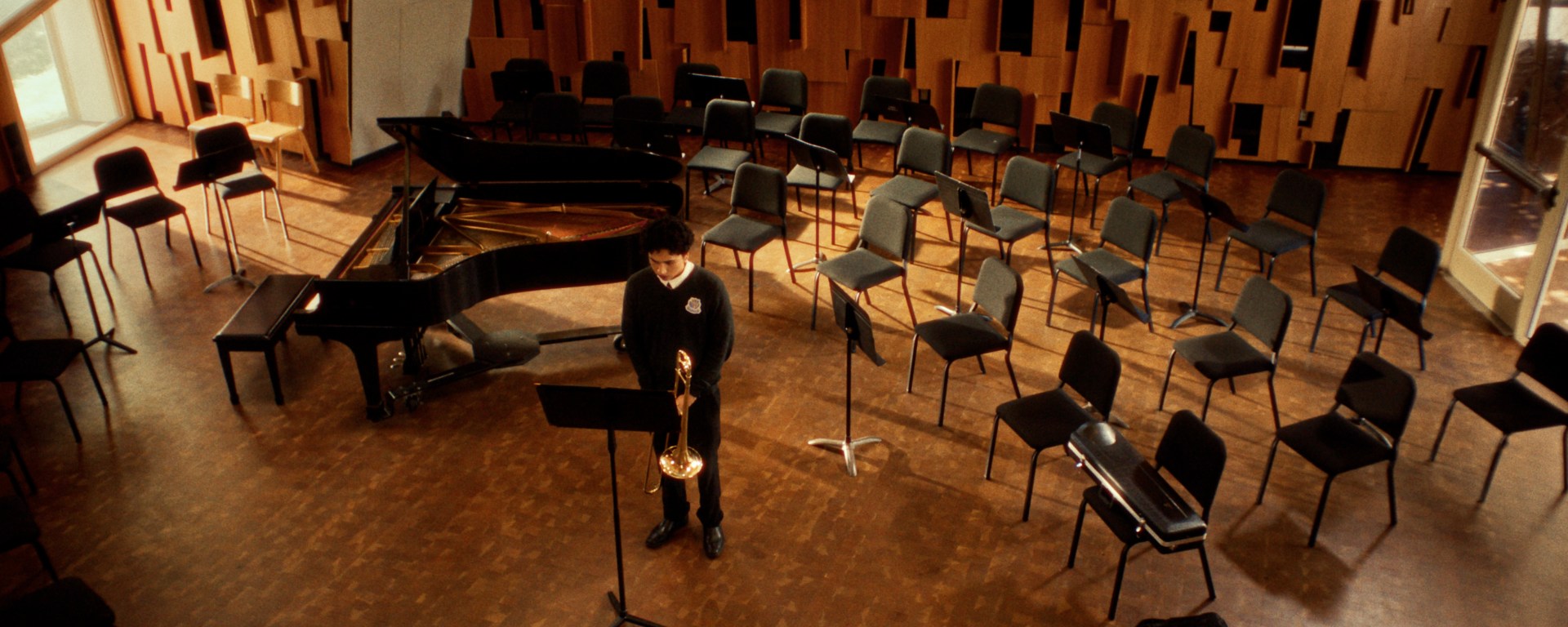
In ¡QUE SUENE LA BANDA!, writer-director Jorge Parra Jr. explores the tension between cultural identity, family and the desire to belong through the story of a young Mexican-American musician beginning to reconnect with the music he has spent years distancing himself from.
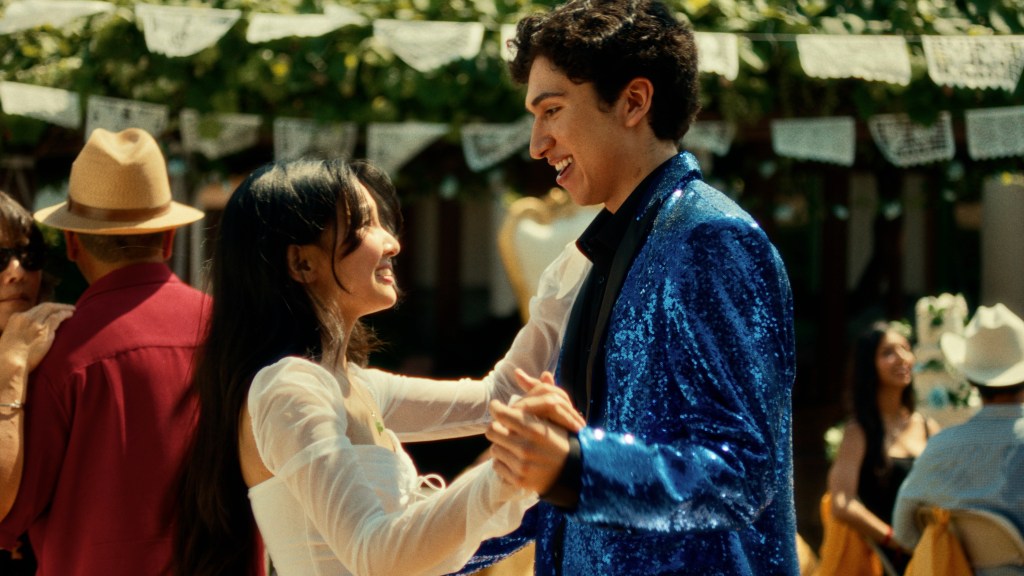
Produced as a MFA thesis film at UCLA’s School of Theater, Film and Television, ¡QUE SUENE LA BANDA! draws on Jorge Parra Jr.‘s own experiences growing up between classical music at school and banda in his community. He wanted to bring a genre of Mexican music rarely featured in US media to the screen, while celebrating a close-knit Mexican-American family in a story centred on joy rather than tragedy.
“I wanted specifically to bring light to this genre of Mexican music that is not commonly featured in US media but is still such an important sound in many of our communities,” Parra explains. “I also wanted to celebrate a close-knit Mexican-American family in a story that isn’t centered around tragedy but ultimately showcases the immense joy found in our community.”
“Especially given the current political climate, while stories about our resilience are very important, it is also important to remember the immense love and power our community has to offer.”
Finding a Place Between Two Worlds
Parra’s own relationship with music began in middle school, when he heard his concert band playing the theme from Jurassic Park at orientation. His love of movies inspired him to pick up the trumpet, eventually leading to an invitation from fellow marching band students to join a banda group in high school.
Initially, banda was something he associated more with his parents than his own musical tastes. But giving it a chance became a life-defining experience.
“At that point, banda wasn’t something I enjoyed or really listened to (similar to Javier’s character), but something more of what my parents listened to. I was hesitant at first but ultimately gave it a shot,” he recalls.
“I’ll never forget the moment people jumped out of their chairs to begin dancing at our first gig, and that’s when I really felt the power music has to move and inspire people. Banda music especially has an energy that can really move crowds.”
That experience became a key influence on Javier, who similarly grows up hearing banda at home but struggles to see it as part of his own identity. At school, his desire to fit in makes him increasingly conscious of the differences between himself and his peers.
“While this is a different environment from where I grew up, I drew from that fear of not being accepted or really wanting to be included by your peers,” Parra says. “When you are in a new space, that struggle magnifies.”
He experienced those anxieties himself when he left El Monte to attend UCLA for undergraduate studies in 2010.
“Despite it being such a welcoming environment, there was always that worry of, ‘Do I fit in here? Is this a place for me?’”
For Parra, that uncertainty is a central part of growing up, and Javier’s journey reflects the process of gradually finding confidence in the parts of yourself that distinguish you from those around you.
The Complicated Relationship Between Father and Son
At the heart of ¡QUE SUENE LA BANDA! is Javier’s relationship with his father, Eladio. Parra wanted to capture the affection within a first-generation household alongside the struggles that can emerge when a young person feels caught between family and the outside world.
“Javier does not hate his father and is not embarrassed of his family when he is at home in his space, but it’s about how that changes when at school, where his differences from his peers become a big sense of stress,” he explains.
Javier is particularly conscious of his father’s position as a janitor at his school and how others might judge his family. He loves his parents but feels compelled to conceal aspects of his home life, constantly navigating the tension between making his family happy and fitting in.
“He doesn’t want to offend his parents but also wants to be more like his peers, so he internalizes the two sides of himself, tippy toing around it all the time,” Parra says.
Rather than treating this conflict as a straightforward rejection of his family, the film explores how Javier’s perceptions shift between school and home, where he is able to experience his family differently.
“This is why we made sure to showcase him both at school and at home with his family, to see how he navigates these different environments and to see how he can really have joy when allowed to exist outside of the limitations he sets upon himself at school.”
Music, Heritage and the Meaning of Prestige
Javier’s musical ambitions are shaped by his love of classical music, which he sees as a pathway towards a future career. Banda, meanwhile, carries a different connotation, associated with his father, his community and a regional musical tradition that he has struggled to value in the same way.
“Banda is his father’s music and Javier distances himself from that genre over time, especially because there is a very different connotation between banda and classical in the eyes of the public, at least here in the United States,” Parra explains.
“Banda is a very specific and regional music from Mexico, so to Javier there is a different kind of prestige placed upon the music and musicians who play it. Javier has a hard time acknowledging the importance of banda in the community and puts classical music on more of a pedestal as a ‘high art’.”
Parra was careful not to diminish Javier’s passion for classical music. Instead, the story asks him to recognise the role his father and his early exposure to live music played in shaping that passion.
“I didn’t want to take anything away from that passion, but it is important for him to realize a big reason why he is a musician in the first place is his father and that exposure to live music from a young age.”
As Javier rediscovers banda, he begins to reconsider his own identity and the assumptions he has made about the music and culture that have always been part of his life.
The Pressure to Be Accepted
The film also examines the pressures young people face in an increasingly digital world, where their identities are scrutinised both online and in person.
“Part of growing up is finding confidence in who you are, and with the rise of social media, that journey has only become more difficult,” Parra says.
“For today’s youth, their digital identity, how they are perceived online, is just as real and important to their identity as how they appear to those they know.”
The permanence of online interactions can make the experience of being different even more difficult, with seemingly harmless moments potentially becoming sources of scrutiny. For Javier, the pressure of being judged in both environments exposes how uncomfortable he has become with the different sides of himself.
“Online, everything that is posted is permanent and subject to so much scrutiny, and something as simple as a friend posting they are proud of you can be used by others to bring somebody down,” Parra explains.
“It is a real source of stress for teens and young adults, and it takes time to become comfortable with being perceived in ways that mark you as different from those around you.”
Bringing the Music to Life
Authenticity was particularly important in bringing ¡QUE SUENE LA BANDA! to the screen. The filmmakers needed to accurately portray the musicians and the specific musical traditions at the centre of the story, which led them to work with Bandeño Mexcaltitan, a real performing group based in Southern California.
“They were incredible to work with both as on-screen musicians and also as the musicians who performed on the soundtrack, and they brought such an important believability to the project that I don’t think we could have reached without them,” Parra says.
Finding the right actor for Javier was equally important. Anthony Gonzalez brought the sincerity, joy and innocence needed to make the coming-of-age story feel authentic, alongside his own experience growing up as a young musician in a family of musicians.
“From the beginning we came to an understanding of what Javier was going through and the kind of journey he was on, and with Anthony’s experience it was natural to let him take a lot of the lead about how to convey those internalized pressures in a real and nuanced way,” Parra explains.
Although Gonzalez is not a trombone player, convincingly performing on the instrument was central to the film. Technical advisor Nathan Culcasi coached him on trombone, while the production also faced the challenges of recording and designing sound for music performed directly on screen.
“Having so much diegetic music performed on screen also made the music recording and the sound design more of a challenge, since it really needed to feel like it was coming from the performers on screen,” Parra says.
An Unexpected Journey Towards the Academy Awards
For a film made as an MFA thesis project, qualifying for consideration for the 99th Academy Awards represents a remarkable milestone. But Parra describes another moment of recognition as particularly meaningful: winning the Jury Award for Best Live Action Short at the New York International Children’s Film Festival.
“We were truly overjoyed when we were notified that we won the Jury Award for Best Live Action Short at the New York International Children’s Film Festival, not only because of the implications of that, but also how validating that was for everyone who worked on the film and contributed in any capacity – a truly great feeling,” he says.
The recognition has reinforced the belief that, while banda is culturally and musically specific, the film’s underlying story has a much broader reach. Audiences have connected with Javier’s journey regardless of whether they share his background, responding to the film’s themes of family, belonging and the search for confidence.
“It also shows that even though banda is so specific, this film has a universal message that can impact audiences from all walks of life in a meaningful way,” Parra explains.
“As a student film this isn’t something we ever imagined being a part of. Having qualified at all is a great honor in itself, and we hope this allows us to bring the film to more audiences.”
He is particularly grateful for the emotional connection audiences have found with Javier’s story.
“No matter where it has screened we find audiences have an emotional connection to Javier’s journey, whether or not they come from the same background. The connection to family and to finding confidence in yourself is so universal and has had really great reactions, which is something we are so grateful for.”
¡QUE SUENE LA BANDA!, written and directed by Jorge Parra Jr., is an MFA thesis film produced at UCLA’s School of Theater, Film and Television. The film has qualified for consideration for the 99th Academy Awards and won the Jury Award for Best Live Action Short at the New York International Children’s Film Festival.

