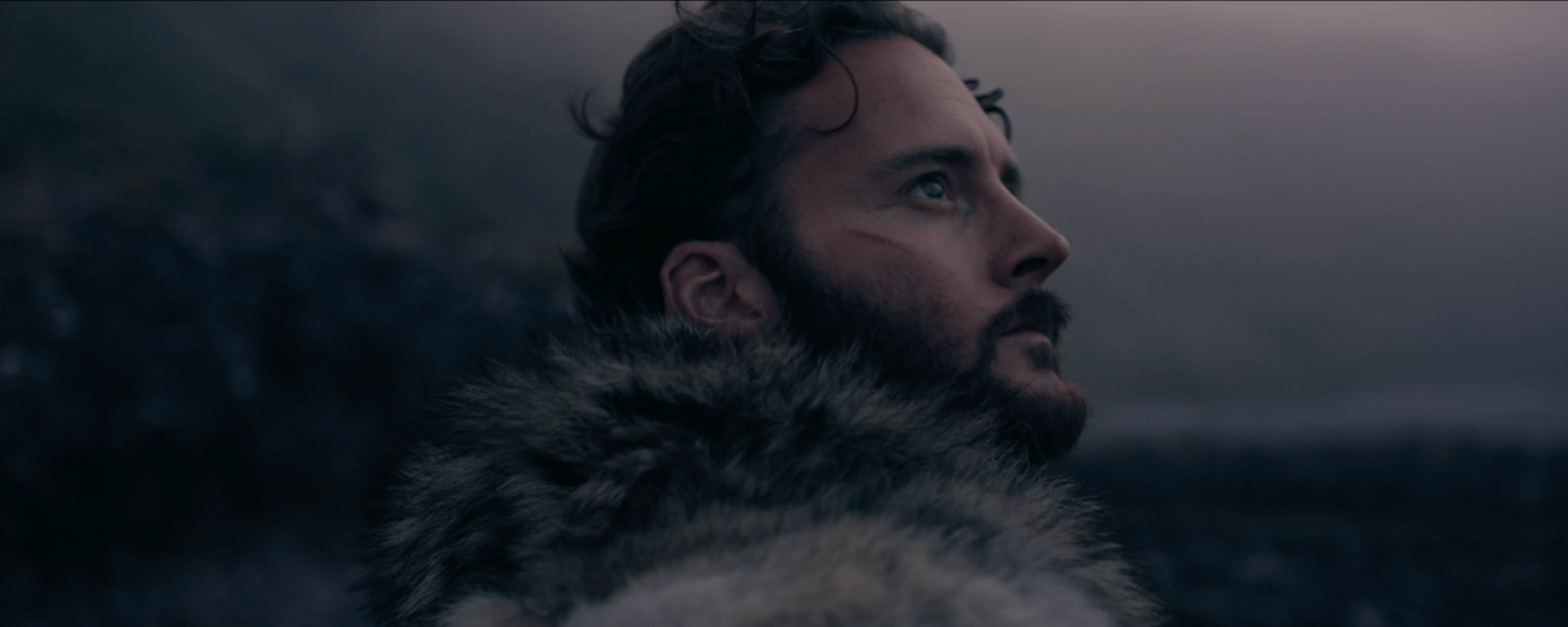
The filmmakers behind the HollyShorts premiere discuss reinventing Shakespearean dialogue for a contemporary audience, building a medieval world inside historic Scottish castles and what happens when the man who defeats a tyrant is handed the crown.
KING OF THE IRON WILL began with an ambitious proposition: tell a story about power, revenge and the consequences of overthrowing a tyrant, but do it through the language and rhythm of Shakespeare.
Co-Written by Liam James Collins and Scott Vickers, with Vickers directing and Collins starring as King Baron, the short centres on two kings whose personal history and conflicting ambitions bring them into an intimate confrontation. Rather than depicting the scale of their medieval world through armies and battle sequences, the film keeps its focus on the two men at the centre of it, using the surrounding world as a reflection of their internal conflicts.
The result is a period drama that uses classical language to explore distinctly contemporary questions about leadership, authority, ambition and the human desire for power. It is also an unusually independent production. Collins personally financed the film, while the filmmaking duo sourced historic Scottish locations, costumes, horses and crew to create the film’s expansive visual world.
Ahead of its World Premiere at the HollyShorts Film Festival, Collins and Vickers discuss the decision to rewrite the film in Shakespearean language, the challenge of making heightened dialogue accessible, their creative partnership and the realities of building a medieval epic in just two days.
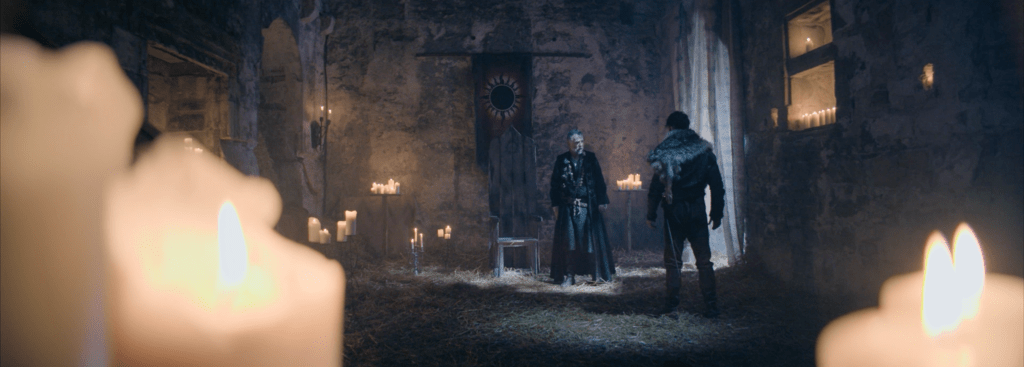
KING OF THE IRON WILL tells an intimate story through the language of Shakespeare. What drew you to telling this modern exploration of power and revenge using classical dialogue, and how did you ensure it remained emotionally accessible for contemporary audiences?
LIAM JAMES COLLINS: When I first created KING OF THE IRON WILL, I created the characters, the story and the world, and wrote the first few drafts entirely in modern-day language.
It wasn’t until Scott came on board as director and co-writer that he suggested rewriting the dialogue using Shakespearean language and iambic pentameter. It was an incredibly bold suggestion, but I trusted Scott completely and immediately understood what he could see in it.
That decision transformed the film.
The characters were the same, the story was the same and their journey was the same, but suddenly the way these two kings communicated had been heightened. It gave the film an identity that immediately separated it from everything else we were seeing in the short-film world.
The challenge then became accessibility. We had a lot of conversations about how strictly we wanted to adhere to iambic pentameter and how heightened we wanted the language to become. We never wanted somebody to watch the film and feel that they needed an academic understanding of Shakespeare in order to know what was happening.
When Shakespeare’s plays were originally being performed in the late 16th and early 17th centuries, audiences weren’t attending the theatre to study Shakespeare. They were going to be entertained. His work was watched across society, including by ordinary working people. It was popular entertainment.
That became important to Scott and me because we are both proudly working-class filmmakers. Shakespearean language and period drama can now carry this perception that they belong to academia, prestigious institutions or a particular social class. We wanted absolutely nothing to do with that idea.
We wanted to take the power, rhythm and beauty of that language while making sure that somebody could sit down, watch KING OF THE IRON WILL and completely understand the characters, the conflict, the emotion and what was at stake without needing to analyse every line.
So we committed to the Shakespearean language, but emotion always came first. If the audience understands what these two men want from each other, what they have lost and what they are prepared to do, then the language stops becoming a barrier and becomes part of what makes the film distinctive.
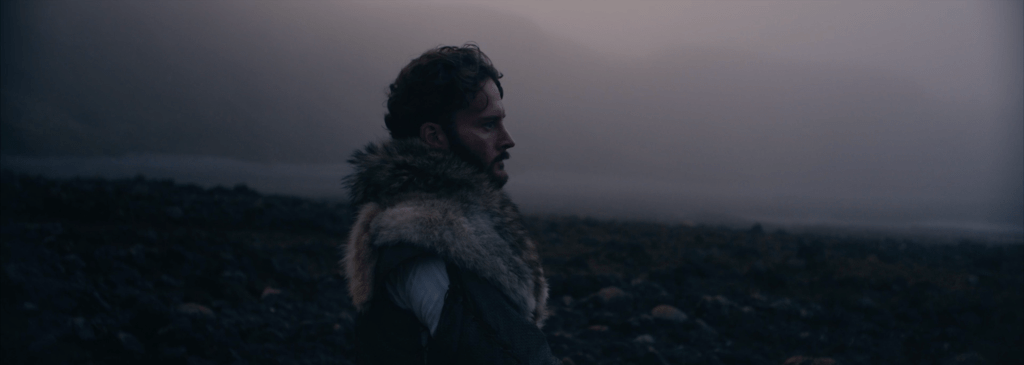
The film asks whether those who overthrow tyranny risk becoming tyrants themselves. Why did that moral paradox feel particularly relevant to explore today?
LIAM JAMES COLLINS: I think it feels particularly relevant today because we are constantly cycling through leaders and projecting extraordinary expectations onto them.
When a new leader emerges, people often view them through rose-tinted glasses. They become the person who is going to fix everything. Then they gain power, reality sets in, compromises are made, decisions disappoint people, and suddenly that same person is demonised. Once they leave, nostalgia takes over and we start remembering them as the great leader we somehow lost.
KING OF THE IRON WILL is interested in what sits underneath that cycle.
Leaders are human beings. They have values, fears, loyalties, ambitions, prejudices and personal histories. They see the world through their own subjective lens, exactly as everybody else does. The difference is that when somebody occupies a position of enormous power, their individual worldview suddenly has consequences for everybody beneath them.
That raises another question that fascinates me: what drives somebody to pursue that position in the first place?
The film explores the idea that people often pursue power, significance, money, recognition or admiration because they believe achieving those things will fill something inside them. But if the pursuit itself is being driven by a void, what happens when you finally achieve the goal? Does the void disappear, or do you discover that the thing you spent your life chasing was never capable of filling it?
That is where the crown becomes such an important metaphor in the film. The moment you put it on your head, you become the person who gets to determine the rules everybody else has to live by. However righteous your intentions were before you reached that position, you are still going to make those decisions through your own values, loyalties and prejudices.
That is the paradox at the centre of Baron’s journey. He has spent his life fighting a tyrant, but when that tyrant is defeated and the crown is finally placed in front of him, he has to confront the possibility that accepting it could turn him into the very thing he dedicated his life to destroying.
For me, the wider message is that we should be extremely careful about surrendering our entire moral compass to anybody who occupies a position of authority. Political, religious, regal or otherwise.
At some point, we also have to look inward and decide for ourselves what we believe is right, what we stand for and what kind of person we want to be.
The film ultimately asks: if you overthrow the tyrant and then put his crown on your own head, how certain are you that the cycle has actually ended?
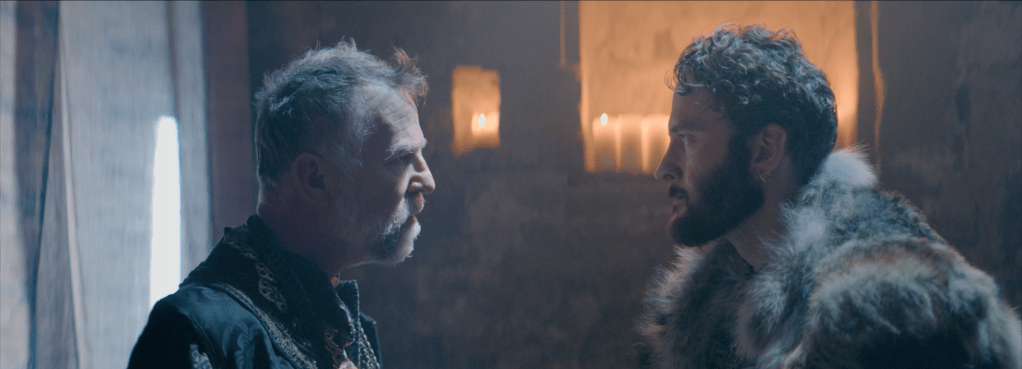
Liam, this project was personally financed and developed from the ground up. How did that level of personal investment shape both the story you wanted to tell and your performance as King Baron?
LIAM JAMES COLLINS: It shaped both enormously.
One thing about me is that I’m very transparent about ambition. I have very little patience for performative indifference, particularly in the arts, where people sometimes feel they have to downplay how much they want something, how excited they are by success, or how deeply they care about their work being recognised.
I don’t feel that way. I can be completely self-assured without needing everybody’s approval, while still wanting the work I create to be appreciated and recognised. Those two things are not contradictory.
KING OF THE IRON WILL began partly because I wanted to create an opportunity for myself as an actor that nobody else had given me. I created the characters and the story, wrote the original drafts, brought Scott on as co-writer and director, produced the film, found the locations, costumes and horses, assembled the team, negotiated the logistics and personally paid for everything, right down to the poster and every festival submission.
So of course that level of investment affected my performance.
We only had two shoot days, and only one of those contained the dialogue inside the castle. That meant I had one day to deliver the performance the film required. If I had walked away from that day unhappy with my work, every pound I had spent and every hour I had invested would have been attached to a film I could never feel completely proud of.
There was no mentality of, “I’ll do better next time.” For me, there might not have been a next time. I would never have personally financed another film if I had walked away from this one feeling that I had failed to deliver as an actor.
So the personal investment raised the stakes enormously. Not simply for Baron as a character, but for me as a performer.
It also shaped the story because when you are committing that much of yourself to a project, you have to protect the reason you created it in the first place. Filmmaking is collaborative and the film became substantially better because of that collaboration, but I still needed to know that we were moving towards the film I had originally set out to make.
That is where Scott became essential. Very early on he said to me that part of his responsibility was to help bring my vision to life, and he did exactly that. He elevated the script, brought his own creativity to the film and, crucially, protected me on set from the enormous number of production responsibilities surrounding me so that when the camera rolled, I could stop being the financier, producer and organiser and simply be Baron.
The film ultimately became far bigger and more meaningful than a vehicle to showcase me as an actor. But I would be lying if I pretended that wasn’t part of the original motivation.
I had invested too much in this film to be casual about the result. I needed to tell a story I believed in, and I needed to give a performance I could be proud of.
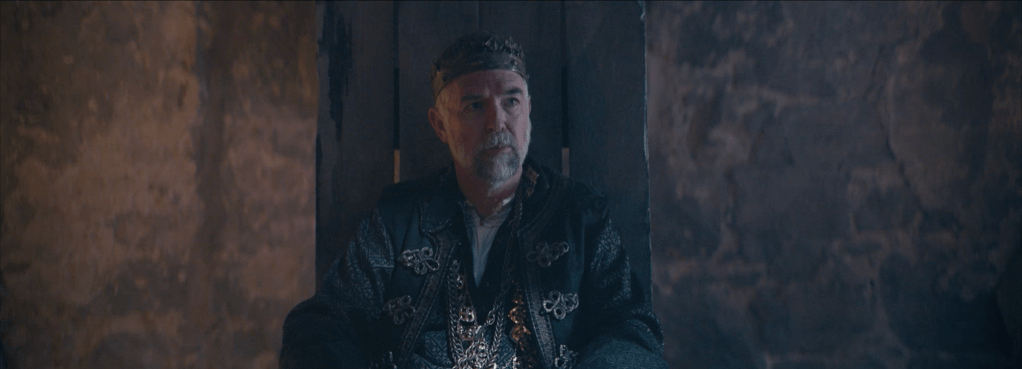
Scott, as both co-writer and director, how did your collaboration evolve throughout the writing and production process, and how did you balance the scale of a medieval epic with the intimacy of a two-character psychological confrontation?
SCOTT VICKERS: The collaboration evolved through a few distinct phases. It started as a writing partnership, building out the backstories together. I took what Liam had created and expanded it outward, adding extra detail and symbolism to the characters he’d originated. And, of course, I brought in the Shakespearean aspect. But at every phase, we both brought our own unique additions to the script; we were always in partnership.
From there we moved into production design, where we each took ownership of different specialities. Liam led on costumes; I led on the visual world-building: the throne, the art design, the Draven sigil, the Red Son sigil. We were closely aligned throughout, which made it feel less like negotiation and more like a genuine creative partnership.
Eventually that shifted into a pure director-actor relationship, where the work became about getting inside every moment: the delivery, the energy, exactly where Liam’s character was emotionally at any given point.
As for balancing the scale, the medieval backdrop, two kings and their armies at war, is never shown directly. Everything in the film is symbolic, a reflection of each character’s internal journey. We used flashbacks, glimpses of Baron’s past, to suggest that epic scope without showing it literally.
Ultimately, this world was forged by these two men, and everything the audience sees is the consequence of the people at the top. So the film stays locked on those two people.
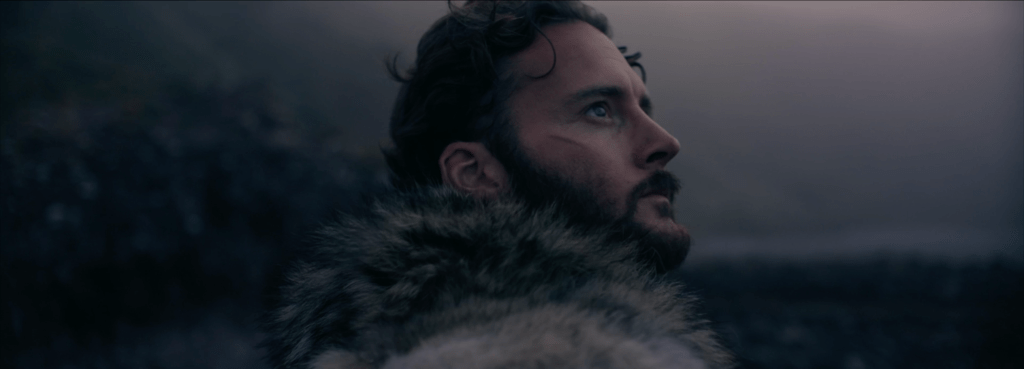
The performances rely as much on silence and restraint as they do on heightened Shakespearean dialogue. What conversations did you have with Charlie Creed-Miles and the cast about finding that balance?
SCOTT VICKERS: The great thing about Charlie is that he understood exactly what we were trying to achieve from the moment he read the script.
In this case, the script was the reason he said yes. He described it as big, bold and brave, and he said something that stayed with me: “Most short films are set at a bus stop.”
I knew exactly what he meant. A lot of short films understandably play things much safer in terms of scale, location and ambition. We were trying to create something medieval, heightened and visually epic, while still making the centre of the film an intimate character study about revenge, power, grief and fulfilment.
So Charlie understood the tone from the beginning.
What is interesting is that we never actually sat down and had a specific conversation about silence and restraint. We talked extensively about the dialogue, the subtext, what particular lines meant and what these two men were trying to achieve from each other in each moment.
But the silences themselves were discovered during the performance.
Once Charlie and Liam were opposite each other, listening properly and carrying the history of these characters into the scene, those pauses and moments of restraint happened naturally. They came from Baron and Draven processing what had just been said, what they were refusing to say, and the enormous amount of history sitting between them.
These are two men who have spent their lives affecting one another without having stood face-to-face since Baron was a boy. So when they finally share a room, not every moment requires another line of dialogue.
Sometimes the most important thing happening between them is what neither man is prepared to say.
That balance between the heightened Shakespearean language and the stillness around it was something we found organically by trusting the script, listening to each other and allowing the performances to dictate the rhythm.
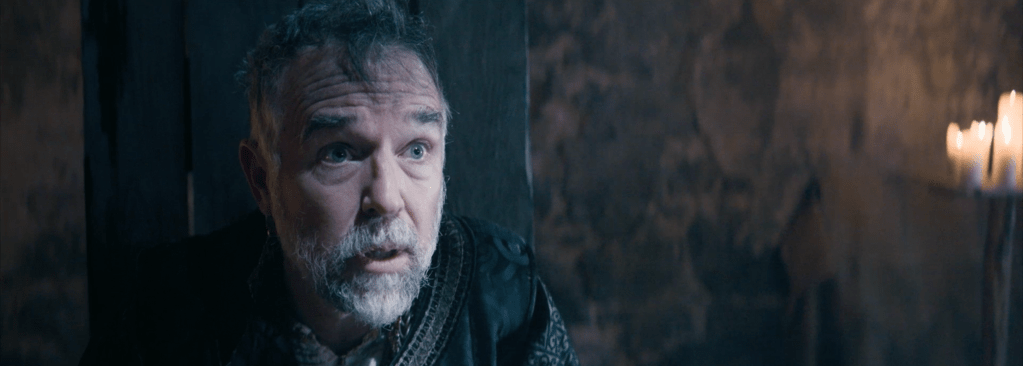
The film explores themes of class, leadership and power while being set in a medieval world. How important was it that audiences recognise parallels between the historical setting and contemporary society?
SCOTT VICKERS: I think it’s important that audiences recognise the parallels, but not because we are trying to make direct comparisons between the medieval world and specific people or events today.
What matters to me is that human nature transcends time.
Love, revenge, power, tyranny, loyalty, family, ambition, grief, fear, status, these things have existed for as long as human beings have existed, and they will continue to exist for as long as we do.
So you can set a film inside a genuine Scottish castle, place it in the aftermath of a medieval war and make the central characters two kings, but if the emotional truth is there, the audience will still recognise themselves in it.
They understand what it means to want revenge. They understand what it means to want power, to feel betrayed, to protect somebody, to hide what they’re feeling, to say one thing while meaning another. None of those things belong to a particular century.
That is where the contemporary relevance comes from for me. I don’t want to force the audience into thinking, “This king represents this politician,” or, “This situation represents this event.” I want them to watch the film, enjoy the world and the scale of it, and then recognise something deeply human underneath it.
That is also why I’m much more interested in two people sitting opposite each other than I am in showing an enormous battle. Battles, explosions and spectacle can become white noise to me unless I care deeply about the people involved.
But two enemies breaking bread, with the entire outcome of their relationship hanging on a word, a pause, a look or something left unsaid, that can feel far more dangerous.
So for me, the scale is medieval and epic, but the drama is completely human. That is what allows the film to belong to both its own world and ours.
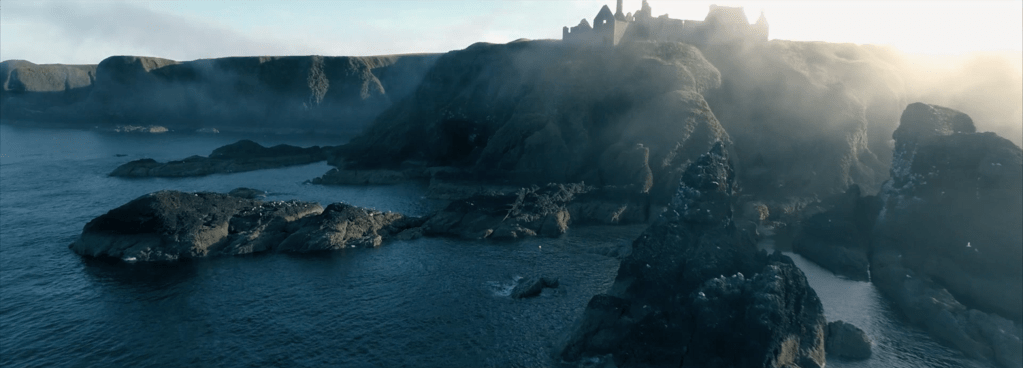
Shooting inside historic Scottish castles gives the film a remarkable sense of authenticity. How did the locations influence your visual storytelling, and were there any particular creative or logistical challenges that came with filming there?
LIAM JAMES COLLINS: I love this question because the castles are not simply locations in the film. They are characters in their own right, and they shaped both the visual storytelling and the practical reality of making the film.
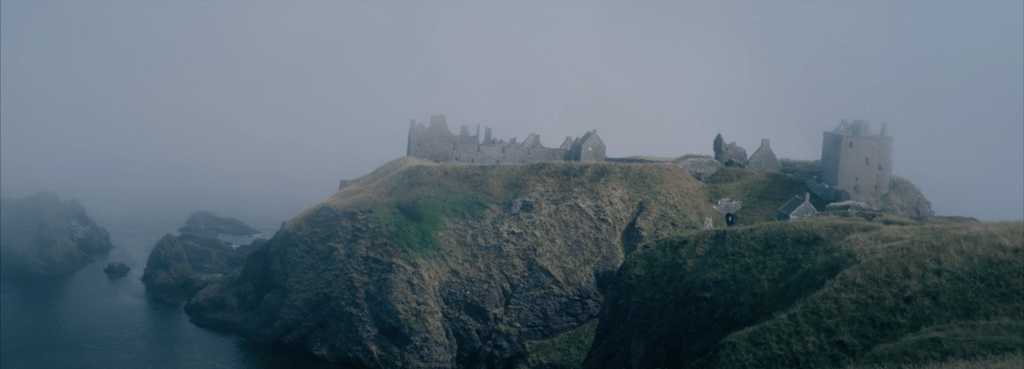
The first seed was planted years ago when I came across an Instagram account called Castles of Scotland. I saw this incredible drone footage of Dunnottar Castle, accompanied by music that immediately transported me back to films like Braveheart, and I remember thinking: if I ever make a medieval film, I have to shoot there.
So I simply started asking.
I called the castle, spoke first to an administrator, then a manager, and eventually the owner. He connected with what I was trying to create and helped us make the location possible within an independent budget.
Visually, Dunnottar gave us something we could never have manufactured. The cliffs, the sea, the scale of the ruins, the isolation of the landscape, it immediately made the world feel bigger than the resources we had available.
But logistically, it was extremely restrictive.
We could shoot around the exterior, but not inside. The castle remained open to the public, so we had to construct shots carefully to avoid tourists appearing in the background. Access involves an enormous number of steps, we couldn’t bring the horse into large parts of the site, and there weren’t even basic production facilities such as toilets immediately available to us.
Then Dundas Castle was almost the complete opposite.
It cost considerably more, but it gave us the Auld Keep, a genuine 14th-century castle interior, while also giving us accommodation, catering, rooms for equipment, space for the crew and even a squash court that we could use to rehearse fight choreography.
So the two locations served completely different purposes. Dunnottar gave us the epic exterior world and forced us to become extremely resourceful. Dundas gave us the historical authenticity of the interiors while also providing the infrastructure required to shoot an entire dialogue-heavy day properly.
The whole film was shot across only two days, one day of exteriors at Dunnottar and one day of interiors at Dundas, so those locations dictated far more than how the film looked. They dictated how we had to make it.
And I think that limitation ultimately helped us. Instead of trying to imitate a medieval world, we placed the actors inside the real thing and allowed the locations to do an enormous amount of storytelling for us.
The film marks its World Premiere at HollyShorts. What conversations do you hope audiences leave the cinema having after experiencing KING OF THE IRON WILL, and what does this premiere represent for both of you as filmmakers?
LIAM JAMES COLLINS & SCOTT VICKERS: We are incredibly proud that KING OF THE IRON WILL is having its World Premiere at HollyShorts.
I recently heard somebody describe HollyShorts as the “World Cup of short films,” which I thought was a fantastic way of putting it. Then a publication highlighted just eight must-watch films from more than 430 screening at the festival, and KING OF THE IRON WILL was one of those eight. To receive that kind of recognition before we have even had our premiere means a great deal to us.
Above everything else, I want people to leave the cinema feeling entertained. I believe that is the first responsibility of a film. People work hard, life is expensive, time is valuable, and sometimes watching a film is the one opportunity somebody has that week to escape into another world. If people give us 13 minutes and 45 seconds of their lives, I want them to feel that time was completely worthwhile.
Beyond that, I hope the film leaves them with questions.
What would you do if the crown was placed in front of you? Would you put it on your head and accept the power, or would you recognise what that power could do to you and walk away? What are the voids you are trying to fill in your own life, and are the things you are pursuing ever capable of filling them?
And outside of the story itself, I hope people leave inspired by what is possible through independent filmmaking.
I financed this film entirely from my own savings. Scott and I co-wrote and produced it together as two friends, we got resourceful, found castles, horses, costumes, actors and an incredible crew, and kept pushing the project forward alongside our existing lives and responsibilities.
I produced the film while running my company and raising two young children, so every opportunity I had to work on KING OF THE IRON WILL felt like something I was fortunate to have.
Someone recently described the finished film as “HBO worthy.” For a project that began as an idea and was built independently through personal savings, collaboration and sheer determination, that is an extraordinary compliment.
So if people walk out of HollyShorts feeling that they have seen a good film, questioning what they themselves would do with power, and inspired to go and create something of their own, then I could not ask for more from the premiere.
 FILM & TELEVISION BUSINESS