
Photo credit: Alex Broadstock
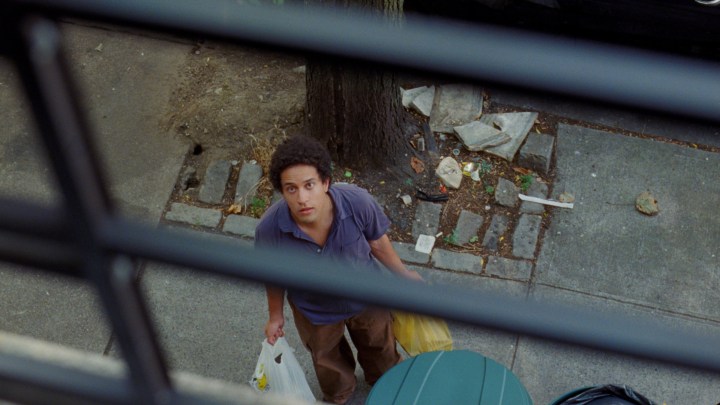
As the independent film landscape continues to embrace intimate, emotionally driven storytelling, producer Ellis Fox is emerging as a creative voice drawn to atmosphere, restraint, and emotional realism. His latest project, I’m Not Home, the Tribeca-bound short film from writer-director Elena Parasco, exemplifies that instinct.
Ellis Fox is emerging as a creative voice drawn to atmosphere, restraint, and emotional realism.
The film, starring Julian De Niro and Eli Brown, unfolds over the course of a single summer afternoon in Queens. Best friends Tilo and Rune reconnect after months apart, revisiting their ritual of collecting answering machine tapes from vintage stores across New York City. As they listen to strangers’ confessions, missed connections, and fragments of forgotten lives, unresolved emotions begin to surface within their own relationship.
Atmospheric and quietly haunting, I’m Not Home blends tactile nostalgia with emotional ambiguity, qualities that immediately resonated with Fox when he first joined the project during script development.
“The initial pull was really about continuing to work with Elena,” Fox explains. “I came aboard while the script was still being developed, which is always the most exciting place to join something, when it’s still alive and changing.”
Fox first met Parasco shortly after relocating to the United States in 2023, collaborating on a commercial that revealed the filmmaker’s unusual sensitivity with actors.
“She had a rare ability to pull something very real and very human out of actors,” he says. “It never felt manufactured.”
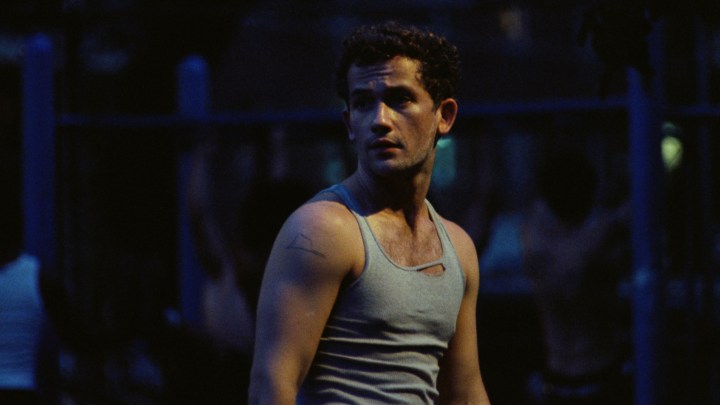
That emotional authenticity became central to Fox’s connection to the film. Drawn to stories rooted in vulnerability and contradiction, he saw I’m Not Home as a project willing to inhabit the unresolved spaces most films rush to explain.
Drawn to stories rooted in vulnerability and contradiction, he saw I’m Not Home as a project willing to inhabit the unresolved spaces most films rush to explain.
“I am drawn to stories about human flaws, those quiet, unresolved things we all carry in different ways,” he says. “This felt like a film built entirely out of that space. I knew Elena would approach it with honesty, not sentimentality, which made it an easy yes.”
Parasco’s short marks her narrative debut following a body of experimental and commissioned work for institutions including NYC Ballet, the Olympics, and the WNBA. Inspired by a tragic true story that once made headlines in New York City, I’m Not Home reflects her interest in identity, memory, and intimacy, combining tactile cinematography with sound design informed by her studies in neurocinematics.
For Fox, the project’s creative strength came from its simplicity.
“Short films ask a lot from everyone involved, so for me it’s always about keeping the recipe simple but using the best possible ingredients,” he says. “What stood out here was how deceptively simple the premise is. On paper, it’s very contained, but underneath, it’s doing something much more layered.”
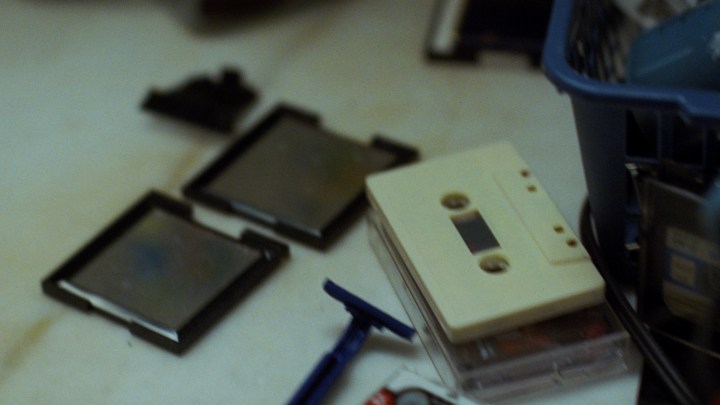
That subtle layering informed every production decision. Rather than packaging the short around commercial appeal or strategic casting, Fox and the team focused on finding collaborators who genuinely connected to the film’s emotional frequency.
“We did not really approach it as a package in the traditional sense,” he explains. “From the beginning, the goal was to find the right people for the film, across actors, crew, and everyone involved. It is such a personal story for Elena that it did not feel right to compromise that in favor of something more marketable on paper.”
Ironically, Fox believes that specificity became the project’s greatest asset.
“When something feels specific and honest, people want to be part of it for the right reasons.”
The producing team, including John Hinkel, Scott Aharoni, and Aaron Craig alongside Fox, built the film through extensive creative conversation, establishing a shared understanding of tone and emotional rhythm long before cameras rolled.
The producing team, including John Hinkel, Scott Aharoni, and Aaron Craig alongside Fox, built the film through extensive creative conversation, establishing a shared understanding of tone and emotional rhythm long before cameras rolled.
“Elena and I spent a huge amount of time talking through what the film actually is, not just in terms of plot, but tonally and emotionally, and what it should feel like to sit inside it,” Fox says. “That clarity becomes a kind of filter.”
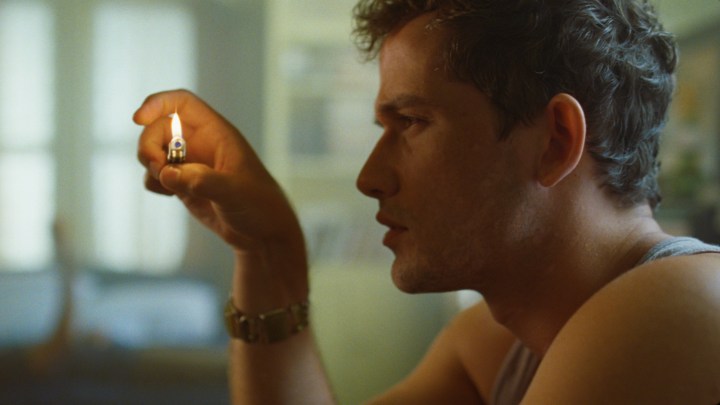
Production brought familiar independent film challenges, limited time, limited resources, and the unpredictability of a New York summer shoot. Yet Fox believes those constraints ultimately sharpened the film’s identity.
“We were shooting in New York in July, which brings its own challenges, and the film relies heavily on performance and atmosphere, which cannot be rushed,” he says. “There is always a version of this film with more days or more resources, but I think the constraints also shaped it in a positive way.”
Protecting Parasco’s atmosphere-driven vision became one of Fox’s primary responsibilities as producer.
“A lot of it was about protecting space, especially for performance, quiet moments, and allowing things to breathe,” he explains. “Practically, that means building a schedule that is not constantly working against the film.”
Fox credits the wider producing and post-production team, including Aaron Craig, Javier Gonzalez, Jack Birchler, and post-producer Gabrielle Lia, with helping maintain that balance between efficiency and emotional sensitivity throughout the process.
“Responsibilities shifted naturally, but the goal was always the same, protecting the film as it evolved,” he says.
For Fox, producing ultimately means translating artistic instinct into practical reality without compromising the emotional core of the work.
“A lot of producing comes down to translating between intention and reality,” he says. “It is about understanding what the director truly needs versus what is simply nice to have, and then finding ways to protect the former as much as possible.”
As audiences increasingly embrace intimate, emotionally ambiguous independent cinema, Fox believes I’m Not Homeconnects precisely because it refuses easy resolution.
“The film sits in a space that many people recognize but do not often see articulated,” he says. “Those in-between moments where relationships are undefined and people avoid saying the thing that actually matters.”
Rather than offering clear answers, the short trusts viewers to sit with uncertainty, and with the emotional weight of everything left unsaid.
“It does not try to resolve everything neatly,” Fox says. “It trusts the viewer to sit with ambiguity.”

