
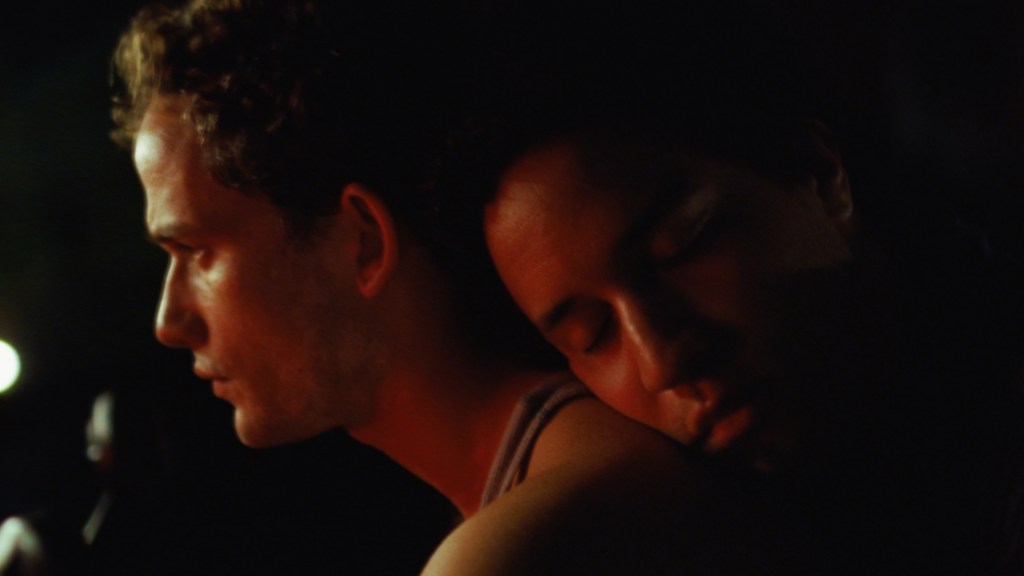
Writer-director Elena Parasco is making a notable arrival on the independent film landscape with I’m Not Home, the atmospheric debut short premiering at the Tribeca Festival. Starring Julian De Niro and Eli Brown, the Queens-set drama marks Parasco’s transition from experimental and commissioned work into narrative filmmaking, bringing with it a highly controlled visual language and a distinctly sensory approach to storytelling.
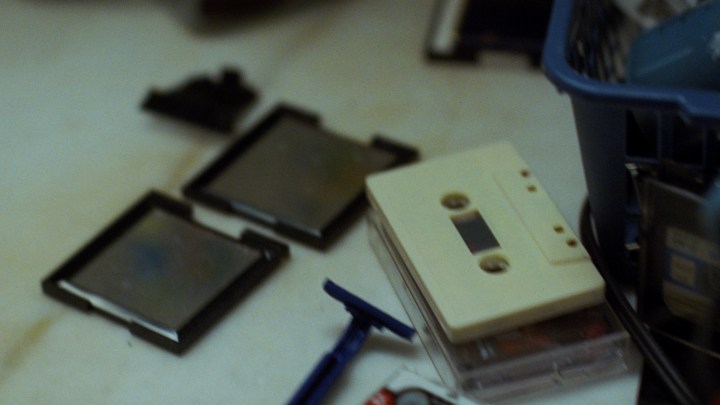
Set over the course of a single afternoon, I’m Not Home follows two longtime friends reconnecting through a ritual of collecting answering machine tapes from vintage stores across New York City. The recordings, fragments of strangers’ confessions, missed connections, and emotional residue, become an indirect mirror for the unresolved tension between the boys themselves.
The film arrives at a moment when the marketplace continues to reward highly authored, emotionally intimate independent cinema with strong festival identities. Strategically, I’m Not Home positions Parasco within a growing class of filmmakers prioritizing atmosphere, restraint, and formal specificity over conventional narrative architecture.
I’m Not Home positions Parasco within a growing class of filmmakers prioritizing atmosphere, restraint, and formal specificity over conventional narrative architecture.
“There was a very conscious decision to keep the film within this ‘unpunctuated, character study’ that resists resolution,” Parasco explains. “It was important to keep that intact without tipping into something overly art directed or ‘cool.’ I wanted it to feel observed.”
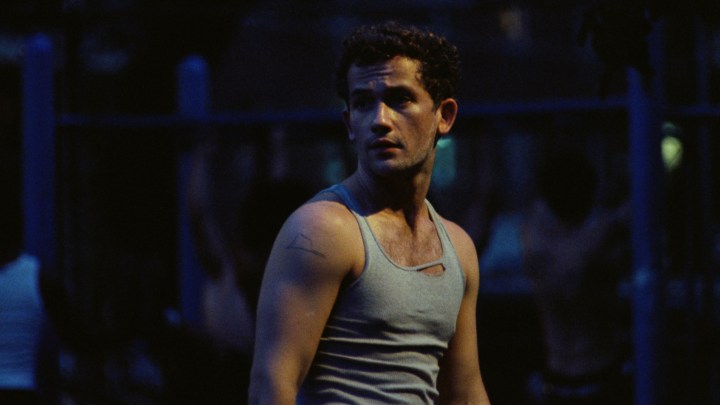
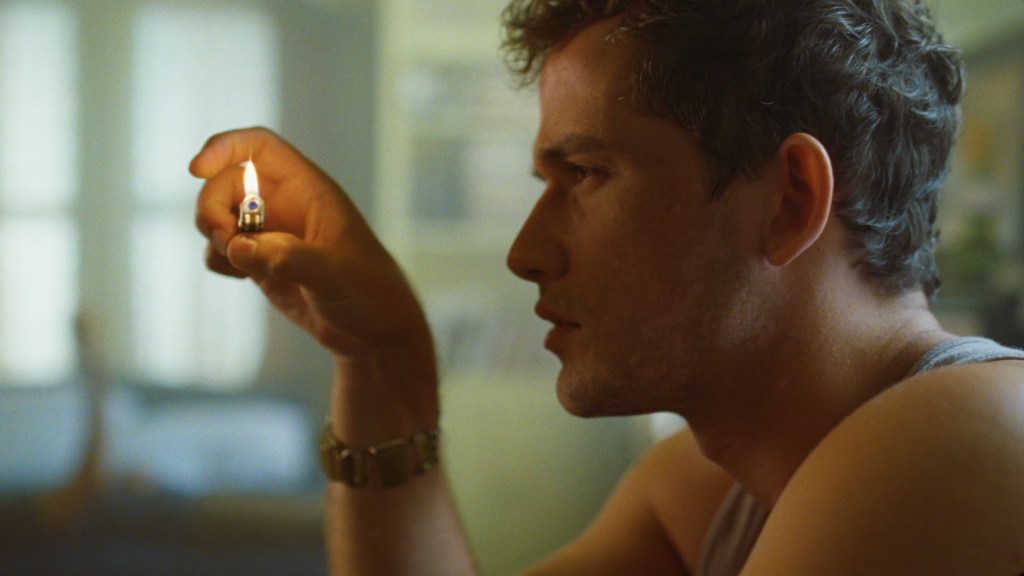
That commitment to restraint informed every stage of production. Early conversations with cinematographer Tim Curtin and production designer Pili Weeber centered on building a world that felt emotionally tactile rather than overtly stylized. Parasco drew visual inspiration from painters including Lynette Yiadom-Boakye, Egon Schiele, Henry Scott Tuke, and Salman Toor, creating a visual palette that feels both contemporary and difficult to place in time.
“We aimed to build a world that felt varnished, almost confusing in era, and just a bit painterly,” she says. “A world you miss after the film is over.”
Shooting on film became central to that strategy, reinforcing texture and softness while naturally imposing creative limitations that shaped performance and pacing. According to Parasco, those constraints ultimately enhanced the emotional immediacy of the project.
Shooting on film became central to that strategy, reinforcing texture and softness while naturally imposing creative limitations that shaped performance and pacing.
“Toward the end of one shoot day, we still had a major scene to film and were told we had only a few feet of film left for the entire shoot,” she recalls. “Rather than burning through takes, we really prepared Eli and Julian. When actors know they only have one or two takes, there’s a different level of presence.”
The film’s camera language similarly avoids overt manipulation. “We move with the boys, but we never impose,” Parasco says. “We get closer as they get closer.”
From a production standpoint, I’m Not Home benefited from unusually consistent creative alignment among its collaborators and producing team. Producers include Ellis Fox, John Hinkel, Scott Aharoni, and Aaron Craig, while executive producers include JR and Marco Gentile.
Parasco notes that the screenplay underwent minimal compromise as the project evolved.
“Honestly, not many [changes],” she says of the development process. “I was very lucky in that there was a strong level of trust in the vision from early on.”
That trust became especially important given the film’s unconventional narrative structure and emotionally internal storytelling style. Much of the project’s emotional architecture relies on silence, spatial tension, and sonic texture rather than exposition.
Much of the project’s emotional architecture relies on silence, spatial tension, and sonic texture rather than exposition.
Producer Ellis Fox proved instrumental in translating those abstract emotional ideas into practical production decisions.
“Ellis was my first call,” Parasco says. “I told him, ‘I’m not doing this film without you.”
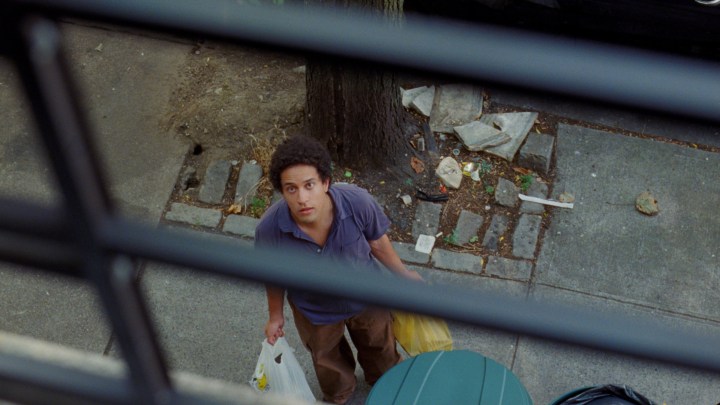
Because the film is so rooted in feeling and memory, Parasco says many creative discussions revolved around physical environments and sensory detail.
“A lot of it came down to translating feeling into physical space, the house, the stairs, how sound moves through the space,” she explains.
The answering machine tapes themselves became one of the project’s defining creative signatures. Inspired by personal experiences involving voice recordings shared with a close friend before her passing, the tapes evolved into a narrative mechanism that expands the emotional world without disrupting the film’s present-tense structure.
The answering machine tapes themselves became one of the project’s defining creative signatures.
“They’re less plot and more of a parallel thread,” Parasco says. “Running alongside what the characters can’t express.”
Although many of the recordings were written before production, the director describes post-production as a second phase of discovery.
“It became its own process,” she says. “Casting voices across the city, shaping tone, and finding what felt necessary. In a way, it felt like a second film unfolding.”
The film’s structure itself also evolved significantly during development. Initially spanning a much larger timeframe, the story eventually condensed into a single afternoon after practical production realities forced a reassessment of scale.
“At one point it spanned a summer, then 24 hours, before condensing into a single afternoon,” Parasco says.
Executive producer JR encouraged the filmmaker to embrace limitation rather than delay production waiting for expanded resources.
“JR pushed me to stop waiting, and to find a way to get the story out there, which shifted my approach entirely.”
Another pivotal creative decision came from Marco Gentile, who encouraged Parasco to eliminate flashbacks entirely and keep the narrative anchored in the present.
“That constraint became the language of the film,” she says. “Holding everything within one afternoon, while still letting it carry memory and unresolved emotion, created a tension that felt true to the story.”
For Parasco, premiering at Tribeca carries both strategic and personal significance. A New York filmmaker debuting a deeply New York story, she sees the festival as an ideal launch platform for a project rooted in emotional realism and regional specificity.
For Parasco, premiering at Tribeca carries both strategic and personal significance.
“As a first narrative project, it felt important to introduce the work in a space that values character-driven storytelling,” she says.
The film also arrives at a moment when the industry is increasingly embracing formally distinctive, lower-budget features that generate strong festival momentum and critical engagement through voice, atmosphere, and artistic vision rather than scale alone. With its painterly aesthetic, emotionally nuanced performances, and meticulously crafted sensory design. With I’m Not Home, Parasco emerges as a filmmaker of remarkable talent, demonstrating both originality and clarity in her storytelling.
“There’s a tenderness to the film that feels slightly unexpected for the city,” Parasco says of New York audiences encountering the work for the first time. “And I’m curious to see how that resonates here.”
James Langly for Film Business Magazine

