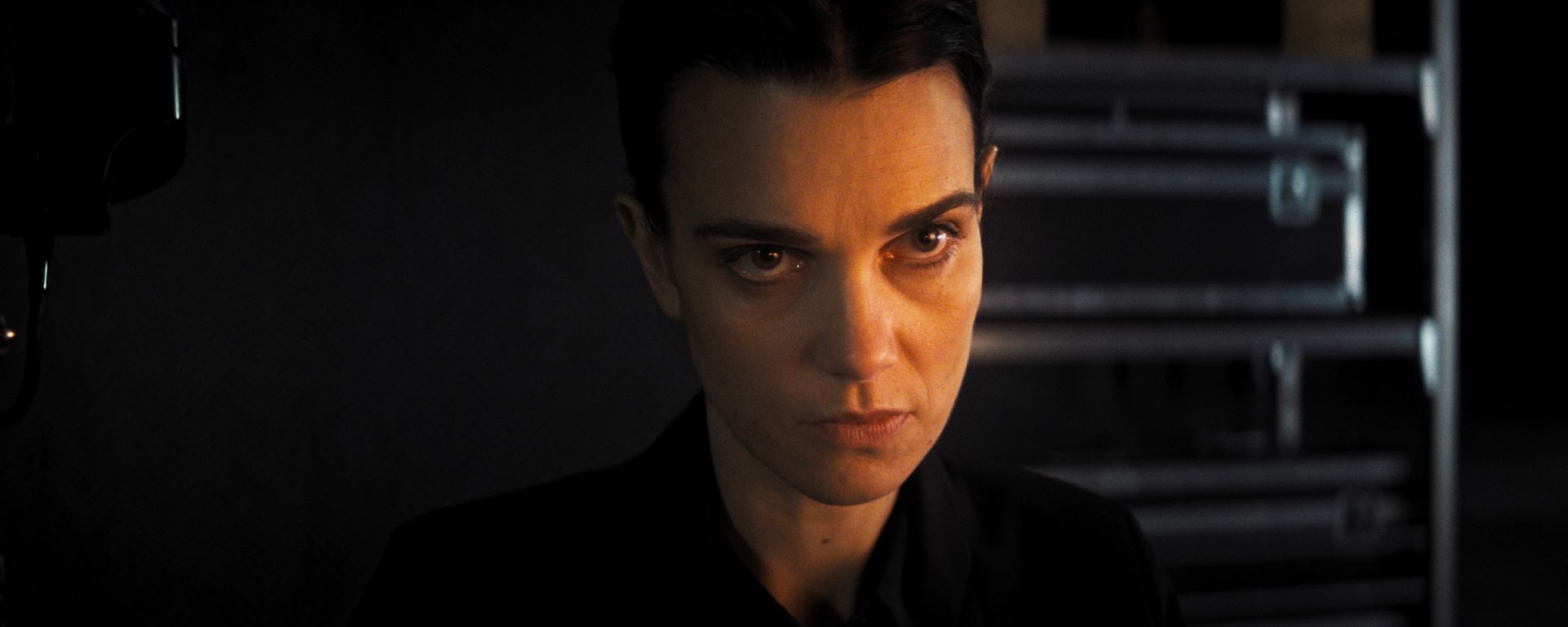
Katey Lee Carson’s THE SECRET ASSISTANTS is a sharply focused drama about power, ambition and the uncomfortable choices that arise when speaking up carries a personal cost. Written, directed and produced by Carson, the BAFTA-qualifying short places its central character in a situation where recognising that something is wrong is only the beginning of the dilemma. Camille Rutherford stars as Sophie, an ambitious novice whose interview with industry titan Henry Mann, played by Richard Hope, develops into a disturbing power play. As the encounter unfolds, Sophie is forced to weigh what is happening against everything she has to lose, including her livelihood, ambitions and future.
That tension sits at the heart of the film. THE SECRET ASSISTANTS is less interested in presenting complicity as a straightforward moral choice than in examining the circumstances that make speaking out difficult. Sophie understands the situation she is facing, but understanding it does not necessarily make the decision to act any easier.
The film explores the space between knowing something is wrong and deciding what to do about it. Fear, ambition and hierarchical structures become interconnected forces, creating an environment in which power can influence not only the people who hold it, but also those who depend on access to it.
Inspired by lived experiences on film sets, Carson’s film extends its subject beyond the entertainment industry. Its concerns reach into workplaces and institutions more broadly, examining how emotional abuse, coercion and complicity can exist within systems where professional opportunities and personal ambitions are at stake.
The film’s central question is therefore not simply whether someone should speak up. It asks what we realistically expect people to risk when doing so could threaten the future they have worked to build.
Richard Hope brings considerable screen and stage experience to the role of Henry. His television credits include Poldark, Broadchurch, Doctor Who, 1899 and Hijack, while his film work includes the BAFTA-nominated The Last Post and the Oscar-winning short See You at Wembley, Frankie Walsh. His theatre credits include War and Peace at the National Theatre and Anna Karenina. Hope was also awarded Best Male Actor at the 2026 European Film Festival of Lille for his performance in THE SECRET ASSISTANTS.
Alongside Rutherford and Hope, the film’s creative team includes German-born cinematographer Birgit Bebe Dierken BSC and editor Cyrielle Thélot. Dierken is a member of the British Society of Cinematographers and has worked across independent film, television drama and commercials, with credits including Midas Man, Sexy Beast, Origin, Bridgertonand Troy: Fall of a City. Thélot’s career spans fiction and documentary work across Germany and France.
The production itself reflects many of the questions explored within the story. Made for £14,000, the film paid everyone involved, from producer to runner, the same daily wage. Crew members were also given the option to anonymously reinvest their fee into the production, while any future profits will be divided equally among those involved.
That model gave the crew both a financial and creative stake in the project. With 65% of the production made up of women, the structure behind the film provides an interesting counterpoint to its examination of hierarchy, power and workplace dynamics.
Carson brings considerable experience to the project. Her debut short, The Washing Up, was selected for the Sundance Film Festival’s Ghetto Film School showcase when she was 20. A Berlinale Talents alumna, Carson has had her films screened internationally, with THE SECRET ASSISTANTS appearing at Busan International Short Film Festival, St Kilda Film Festival, HollyShorts and multiple BAFTA and BIFA-qualifying festivals.
Her professional experience also includes working as an assistant director on major international productions including Luca Guadagnino’s Queer and David Lowery’s Mother Mary. She recently directed second unit on Apple TV’s Berlin Noir.
That combination of filmmaking experience and subject matter gives THE SECRET ASSISTANTS a clear sense of purpose. The film is concerned with the realities of power within professional environments, but it also recognises that those environments are populated by people with ambitions, vulnerabilities and something to lose.
The result is a short that refuses to make its central dilemma comfortable. Sophie is confronted with a situation in which remaining silent has consequences, but so does speaking out. The film’s tension comes from that lack of an uncomplicated choice.
Its BAFTA-qualifying status adds another significant milestone to its festival journey, but the film’s most compelling quality lies in the question it leaves behind. When access to the opportunity you have been working towards depends on tolerating something you know is wrong, where is the line between ambition and complicity?
THE SECRET ASSISTANTS does not reduce that question to an easy answer. Instead, it asks audiences to consider the personal cost of resistance and the circumstances that allow unequal systems of power to endure.

