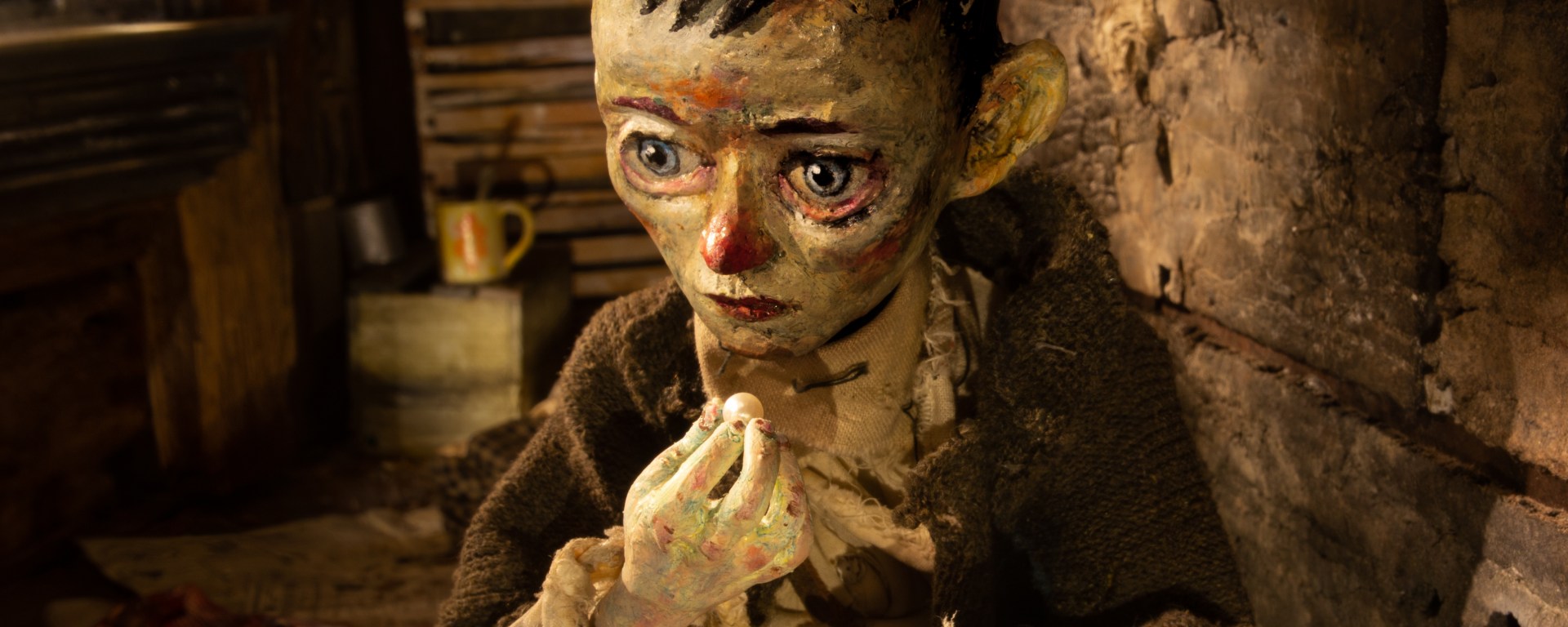
The Girl Who Cried Pearls is a darkly lyrical animated short that unfolds like a cautionary fairy tale passed down through generations, its beauty inseparable from its cruelty. Directed by Chris Lavis and Maciek Szczerbowski, the film tells a haunting story of grief and devotion, centred on a young girl whose overwhelming sorrow manifests in an extraordinary and unsettling way. Each tear she sheds becomes a pearl, a miracle that quickly draws admiration and desire, and ultimately exposes the corrosive pull of greed.
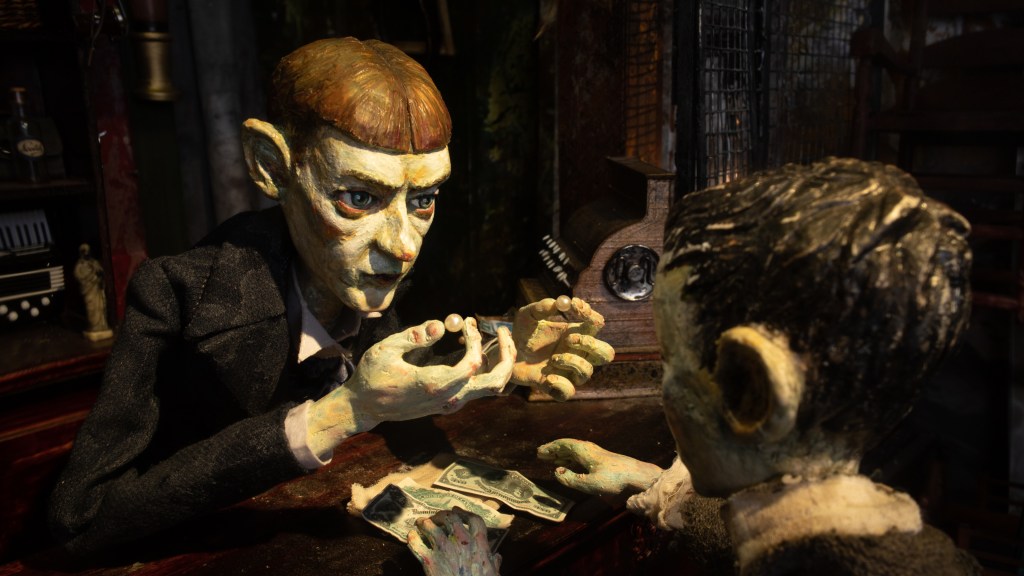
What begins as an intimate portrait of sadness slowly expands into something more allegorical. The girl’s pain is met with genuine love from a boy who wants only to ease her suffering, yet the world around them proves far less gentle. As the pearls accumulate, compassion gives way to exploitation, and the film carefully charts how even good hearts can be led toward wicked deeds when temptation takes hold. The narrative is spare and precise, allowing silence, gesture and atmosphere to carry emotional weight rather than relying on explanation.
the film carefully charts how even good hearts can be led toward wicked deeds
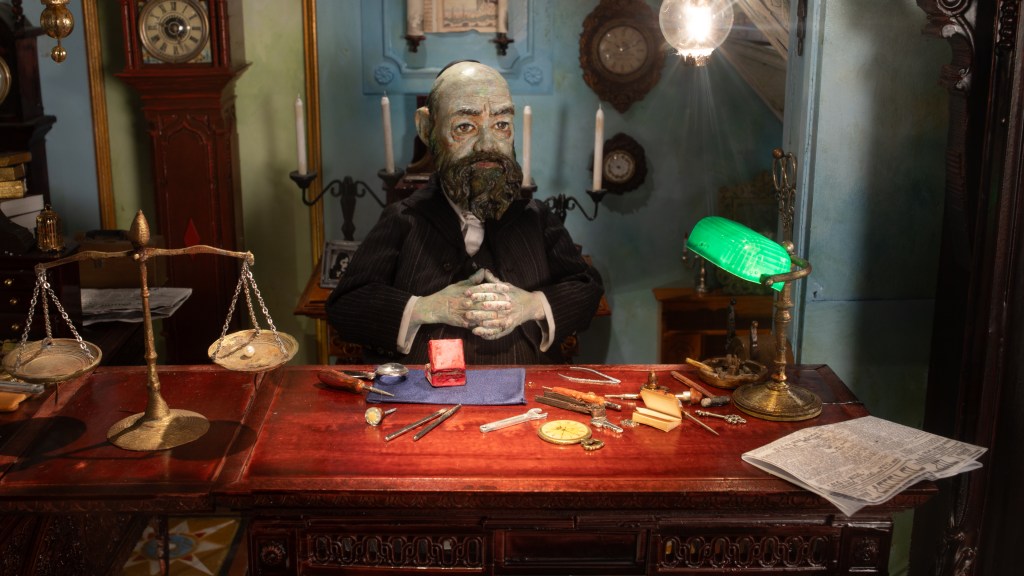
Visually, the film is rich and tactile, with an artisanal quality that feels deliberately handmade. Textures and shadows give the imagery a storybook gravity, while the muted palette reinforces the sense of melancholy that hangs over every frame. The animation style invites close attention, drawing the viewer into a world that feels both timeless and unsettlingly familiar.
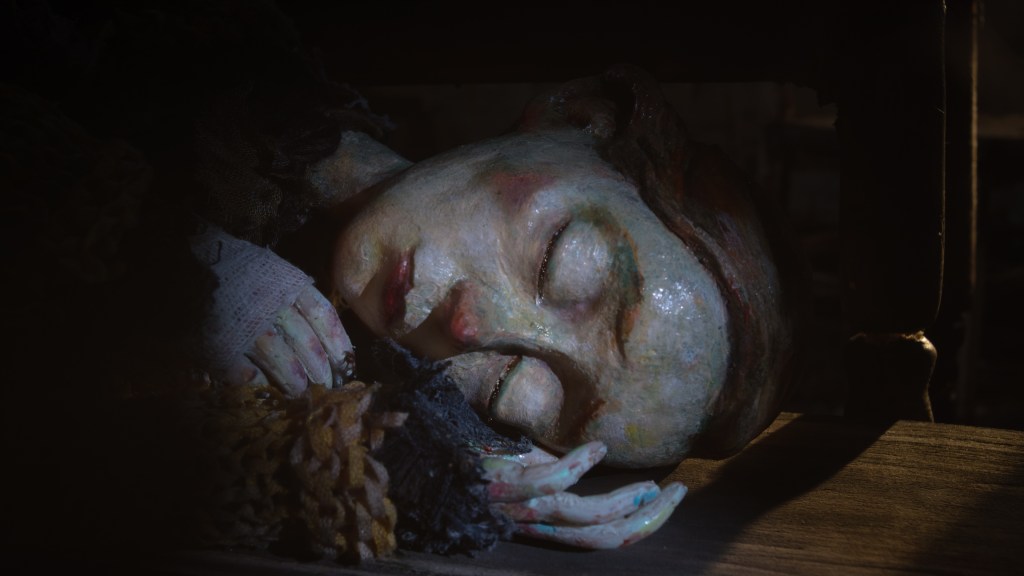
Produced by Marc Bertrand, Christine Noël and Julie Roy, The Girl Who Cried Pearls resonates as more than a simple fable. It is a meditation on grief, love and moral compromise, and a reminder of how easily suffering can be transformed into spectacle. Its Oscar nomination feels richly deserved, recognising a film that lingers long after it ends and asks difficult questions about empathy, desire and the true cost of turning pain into something precious.
The Girl Who Cried Pearls resonates as more than a simple fable. It is a meditation on grief, love and moral compromise, and a reminder of how easily suffering can be transformed into spectacle.
 FILM & TELEVISION BUSINESS