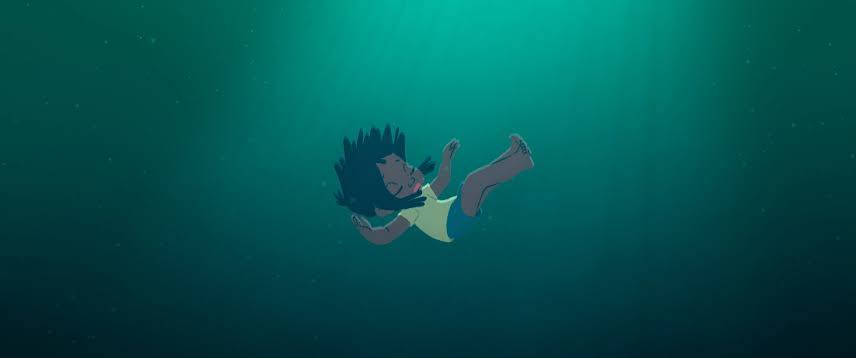
Their acclaimed film CAFUNE is hitting the next level of filmiatic achievement; qualifying for the 97th Academy Awards, now they have sat down with us to discuss their film and its socially important themes.
Carlos and Lorena, CAFUNÈ has been hailed as a breakthrough in animated storytelling. What specific challenges did you face in transitioning from your previous works to a deeply emotional short like CAFUNÈ? How did your experiences in video games and feature films influence this project?
C/L:
The biggest challenge was learning to contain rather than expand. We came from very different formats, video games, feature films, interactive projects, and what drives us most as creators is finding the exact format that serves each story best. We immediately felt that Cafunè belonged in animation, and specifically in a short: the story needed to be told with precision, delicacy, and emotional immediacy.
Here, everything had to live in tiny gestures, silences, and glances, a form of storytelling that’s almost surgical in its restraint.
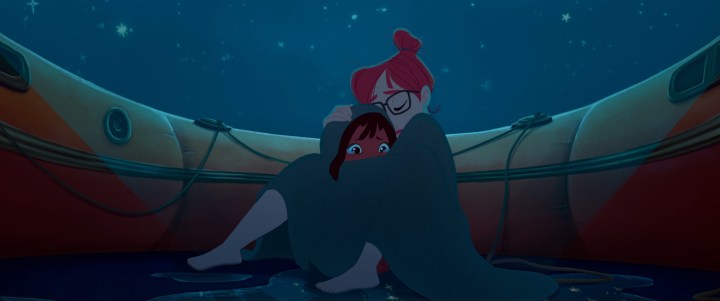
And above all, we learned to be vulnerable as directors. We had worked a lot in comedy, often laughing at ourselves, but here we wanted to create deep emotional impact, to truly reach the heart. We had to move the audience without verbalising, defining Alma and Luna only through how they inhabit their spaces. It was new territory for us, but also one of the most rewarding experiences we’ve had.
Animation can be a highly collaborative medium. How did the team dynamic play out between you two as co-directors, and how did you integrate contributions from other key collaborators like Carlos Grangel?
C/L:
Co-directing feels almost natural for us: we’ve lived and worked together for more than fifteen years, and over time we’ve developed a very particular synchronicy. We share taste, intuition, and an emotional compass, but we come from different angles. Lorena comes from animation and focuses on acting, rhythm, and character detail. Carlos thinks more in terms of staging: space, light, composition, and layers of meaning inside the frame.
That difference is what makes us complementary. Several projects coexist at the studio, so one of us often pushes a section forward while the other comes in later with fresh eyes. That rotation keeps the project alive and prevents us from “going blind” after many hours of work.
As for the team, Cafunè was conceived as an open-door project. When Carlos and Jordi Grangel joined -along with Carles Burgès for the production title- the artistic level rose, but so did the emotional commitment of the whole team. Their character designs set the tone for everything else. The same happened with Almu Redondo in production design; she brought cohesion and sensitivity.
For us, animation is exactly that: a well-tuned chorus, not a monologue. Our job as co-directors is to keep that harmony.
CAFUNÈ blends surrealism and realism in its animation style. How did you approach the visual language to capture Alma’s emotional journey? Were there any specific visual cues or design techniques that you found essential in conveying the story?

C/L:
From the beginning we knew the film had to move like a traumatic memory: it appears, dissolves, and returns without warning. That meant avoiding hard cuts and working with camera transitions, shifts in light, and soft movements that link past and present as if we were entering Alma’s mind.
Alma’s hair became a key tool, tied up when she feels safe, loose and chaotic when her inner world unravels. The color palette works the same way: bright blue for the pool (beauty hiding threat), deep violent blues for the sea, and warm oranges for Luna’s apartment, conceived as a protective cave.
We also used strong stylistic contrasts: in the warehouse and the shipwreck the secondary characters lean towards realism, and the lightning creates geometric, almost expressionist shapes inspired by Picasso’s Guernica, expressing the terror Alma cannot verbalize. In contrast, Luna’s spaces are soft, curved, and warm.
That balance between emotional realism and visual metaphor let us move between two worlds without breaking the viewer’s connection to Alma.
The success of CAFUNÈ at over 170 international festivals, including its Goya Award, speaks volumes about its industry impact. From a filmmaking perspective, what do you think made CAFUNÈ stand out among other animated films in the competitive festival circuit?
C/L:
Probably the point of view. Instead of telling migration through the journey, we focused on what remains afterward: trauma, memory, the wounds that linger. That surprised many programmers.
It was also the combination of elements: a deeply human story told through handcrafted 2D animation, but made with a top-tier team (Grangel, Almu Redondo, Mikel Salas) which gave the film professional polish without losing its sensitivity.
And something else: the film tries to look audiences in the eye, not point fingers. It isn’t political; it’s human. That position allowed very different audiences to connect with it.
With the film’s Oscar®-qualification and critical acclaim, what’s next for CAFUNÈ? Do you have any plans to expand this story into a longer format or potentially explore other media?
C/L:
Cafunè is part of a tetralogy that began with It Dawns the Longest Night, exploring the profound changes humanity is going through. Alma’s story feels complete in this format, though at one point we did explore a feature version. We even wrote an initial treatment expanding her world without stretching what already works in the short. We may revisit it someday, but our focus is now elsewhere.
We’re moving forward with our feature DinoGames and the next films in the tetralogy: SKIZO (in production) and TESLA (in writing). We also have two feature developments underway: SKIZO in its sci-fi/horror version, and Moss Dog, a very personal story from Carlos. All under the same idea: that animation can be poetry, memory, and consciousness.
 FILM & TELEVISION BUSINESS