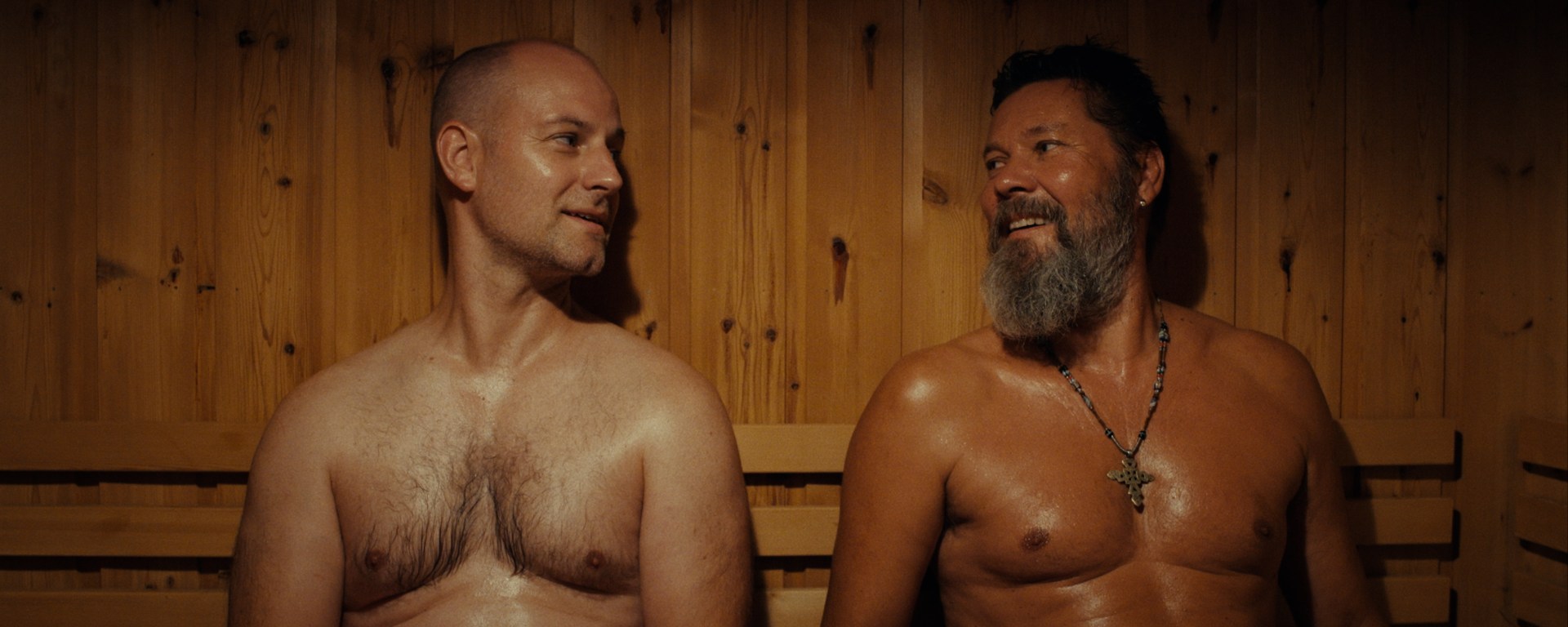

Following his Academy Award nomination for Night Ride, Norwegian filmmaker Eirik Tveiten returns with Camping in Paradise, a character driven short film set in the unlikely environment of a nudist campsite. The film, already recognized with Jury and Audience Awards at festivals across the United States, continues Tveiten’s fascination with stories where humor and discomfort reveal something essential about human vulnerability. Although the premise suggests lighthearted comedy, Camping in Paradise grew from a much more intimate impulse. Tveiten explains that the idea stayed with him for years, waiting for the right moment. “The nudist campsite became the perfect metaphor,” he says, “because it is a place where everything, literally and emotionally, is exposed. Shame, fear, the wish to be seen and understood, all of it becomes impossible to hide.”
He describes the film’s origin as a moment of curiosity about how people behave when the usual rules fall away. “I have always been drawn to humor that grows out of discomfort,” he says. “When people are embarrassed, when they are confused, when they suddenly do not know how to behave, they reveal themselves in ways that are both painfully honest and unexpectedly funny. The setting gave me a chance to explore that with warmth rather than ridicule.” Asked whether the film continues themes from Night Ride, he reflects that both films deal with exposure, physical or emotional, although this time the questions are more intimate. “It is about how we show ourselves in a relationship, how vulnerable we dare to be, and what happens when our partner sees parts of us we would rather keep protected.”
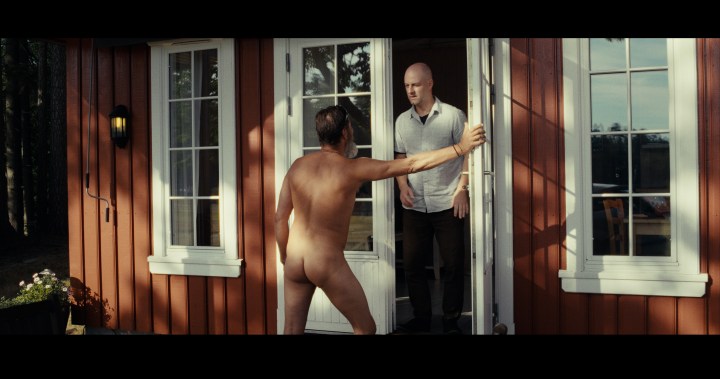
Tveiten emphasizes that nudity in the film is intentionally ordinary, treated without sensationalism. “Cinema often uses nudity for shock or provocation,” he says, “but I wanted it to be neutral, even mundane. Once the audience adjusts, they start paying attention to the real story, which is about the characters trying to navigate each other’s insecurities.”
Working closely with cinematographer Gisle Bjørneby, Tveiten developed a visual approach that would feel empathetic rather than voyeuristic. They chose a camera style that behaves like a quiet observer, close enough to feel present, never intrusive. Tveiten explains that this required constant conversation. “We had to be very aware of where the camera was placed, how it moved, and how it looked at the characters. The space demands respect. It also demands honesty.” The result is a visual tone that mirrors human perception, warm and naturalistic, allowing the actors’ emotions to take center stage.
The performances are central to the film’s impact, and Tveiten credits his acting background for shaping his process with the cast. “I know how vulnerable it feels to stand in front of the camera, fully exposed,” he says. “Because of the subject matter, the rehearsal process had to be built on trust and open conversation. We talked not just about what the characters were doing, but what they were afraid of.” This approach helped actors Espen Alknes, Mona Grenne, Oddrun Valestrand, and Stig Henrik Hoff create performances that feel unforced, grounded, and deeply human. “Nothing could feel pushed or artificial,” Tveiten adds. “If the performances were not completely natural, the whole metaphor of the film would fall apart.”
For producer Heidi Arnesen of Cylinder Production AS, creating a safe atmosphere on set was essential. “A nudist campsite brings unique ethical and practical challenges,” she says, “so we designed the production around clarity, safety, and respect. Everyone knew exactly what would happen in each shot. The crew was small, the communication was open, and the environment became surprisingly relaxed.” Arnesen’s background in both documentary and narrative filmmaking played a significant role. “Documentary work teaches you to protect people’s vulnerability, and narrative work teaches you how to shape a story. This project needed both of those skills.”
She notes that short films often rely on lean resources, and Camping in Paradise was no exception. The team navigated tight budgets and a compact crew with creativity and mutual trust. “Short films require flexibility,” Arnesen says. “But if you create the right atmosphere, the limitations can actually strengthen the film.”
Cylinder Production has become known for internationally recognized short films, and Arnesen explains that positioning them on the global festival circuit is a blend of strategy and intuition. “Shorts today can absolutely stand on their own as works of art, but festivals remain vital for visibility and potential distribution. What matters is understanding where a film fits, and which audiences will connect with it.” She believes that Camping in Paradise resonates widely because it feels honest. “People see themselves in these characters. The film is humorous, but it also touches on real, universal feelings, and that combination speaks across cultures.”
Tveiten admits that after the Oscar nomination for Night Ride, he felt both expectation and a sense of freedom. The experience taught him that audiences respond strongly to emotionally rich stories, and that understanding influenced how he approached this new film. He is now developing his first feature, and the lessons learned from short films continue to guide him. “Shorts demand precision,” he says. “They force you to understand what matters emotionally. That discipline carries into everything I do now.”
Looking ahead, both Tveiten and Arnesen see Norwegian short films gaining increasing international visibility. Arnesen notes that filmmakers are becoming bolder, more willing to take risks, and more focused on nuanced, character driven storytelling. Camping in Paradise fits neatly into that evolution, embracing vulnerability, humor, and sincerity in equal measure. As Tveiten puts it, “I hope the film invites people to think about how they see themselves and each other, and how humbling it is to be human. That is the heart of it.”
 FILM & TELEVISION BUSINESS