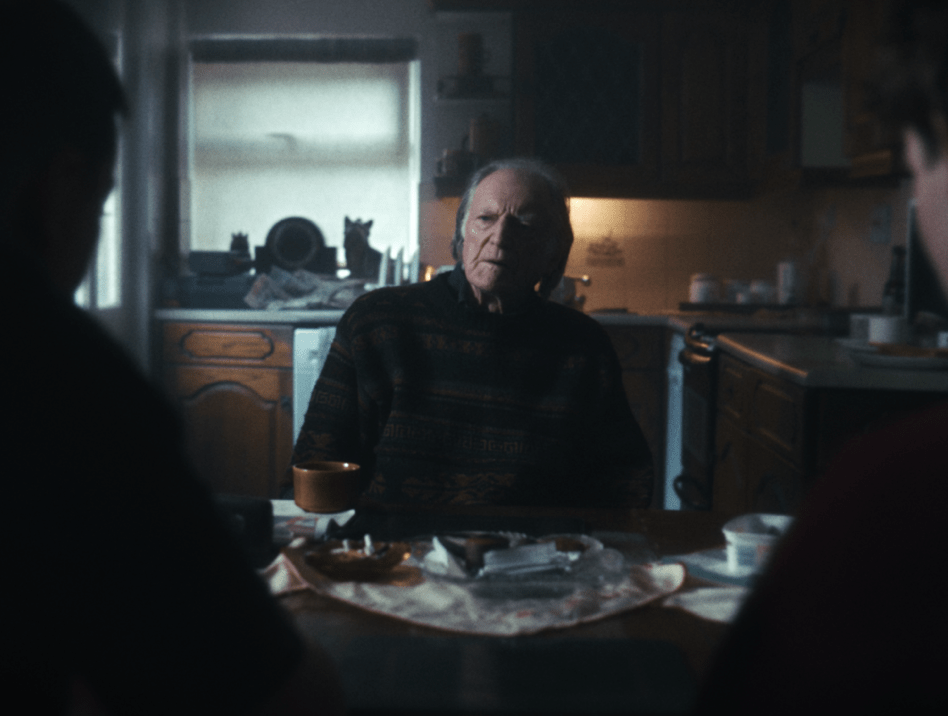
BAFTA Qualifying short film BROTHERS is a heartbreaking dance with morality. We sat down with filmmaker Ross Syner to break down his creative process for the prestige film.
INTERVIEW:
- BROTHERS explores grief and morality in an intensely intimate way. What first inspired this story, and how personal was it for you to tell?
During lockdown, Leanne and I came across a true-crime story that sparked a simple but unsettling question: what would you do if a family member confessed to a serious crime? Brothers isn’t based on that case at all, but that question stayed with us. We started asking friends and family how they’d react and the responses were wildly different. The contrast fascinated us. So that’s when we decided to write our own story that would leave the audience questioning their own morals by the end. Whilst it’s not a personal story in a literal sense, we did drop in a few relatable moments in the way of dialogue, demeanours and props.
- The film presents an impossible choice, one that most viewers will debate long after watching. How did you and co-writer Leanne Dunne approach writing moral ambiguity without offering easy answers?
We didn’t want to give any answers, the goal wasn’t to tell the audience what we think is right or wrong, instead it was to give them a scenario in which anyone could find themselves in, forcing them to ask themselves ‘what would they do’. Brothers opens the debate of morally right vs lawfully right. It’s in now way for us to provide the answers to this, it’s for the audience to discover where their own morals lie.
- David Bradley’s performance is extraordinary. How did he become involved, and what was it like directing such an iconic actor in such a restrained, emotionally charged piece?
I am so grateful David was a part of this project, in truth it could have only been him. Leanne and I wrote the part with him in mind, so you can imagine how ecstatic we were when we approached his agent and received such an enthusiastic response.
He loved the story, loved the writing and was attached to the project pretty much immediately. Naturally I was a little anxious leading up to the first day of filming knowing I was about to direct such an icon, as you say. However, that soon passed. He understood the emotional stillness we were aiming for and his instincts on set were remarkable. He gave everything to his role and the film, his attitude and generosity towards the project was incredible. Directing him was a joy, he trusted me and the material and together we sculpted his emotional rollercoaster of a journey.
- The visual style is stripped-back and deliberate. Can you talk about your approach to cinematography and how the camera became part of the storytelling?
Me and Lou Murrall, the Director of Photography both had exactly the same vision from day one, we wanted the camera to be an observer, not intrusive. We built the scenes around carefully blocked frames that allowed the actors to lead emotionally and narratively, rather than the camera forcing the story. Every movement, sound, and camera placement had a purpose. In many ways, the stillness of the camera mirrored the film’s quiet awkwardness and moral tension. It allowed the audience to sit within the uncomfortable spaces.
- BROTHERS feels both deeply British and universally human. How important was it for you to root the story in a specific cultural identity while making it resonate beyond that context?
As a British director, giving this story a British feel and identity was important as it allowed me to develop a story around a culture I know and can relate to. Knowing how most (not all) British men deal with situations using actions rather than words helped me key into the sparse, restrained emotions that would be present around this particular table of characters. But it was vital to ensure it would resonate beyond that. Love, regret, sacrifice, they’re all universal languages, you could set this story anywhere, and it would still hit the same nerve.
- As a filmmaker whose earlier work (Francois, Jack) also explores emotional honesty, how do you see BROTHERS marking a new stage in your evolution as a storyteller?
I think Brothers brought a new level of creative maturity to my filmmaking. In the past, I tried to generate emotion and tension through dialogue, camera movement, and structure. With this film, I stripped all of that back. I wanted to give the moments room to breathe, to let emotion and tension build naturally rather than manufacture them. It taught me to trust stillness, performance, and silence in a way I hadn’t before.
Check out our review on BROTHERS here!
 FILM & TELEVISION BUSINESS