
By Mary Salis

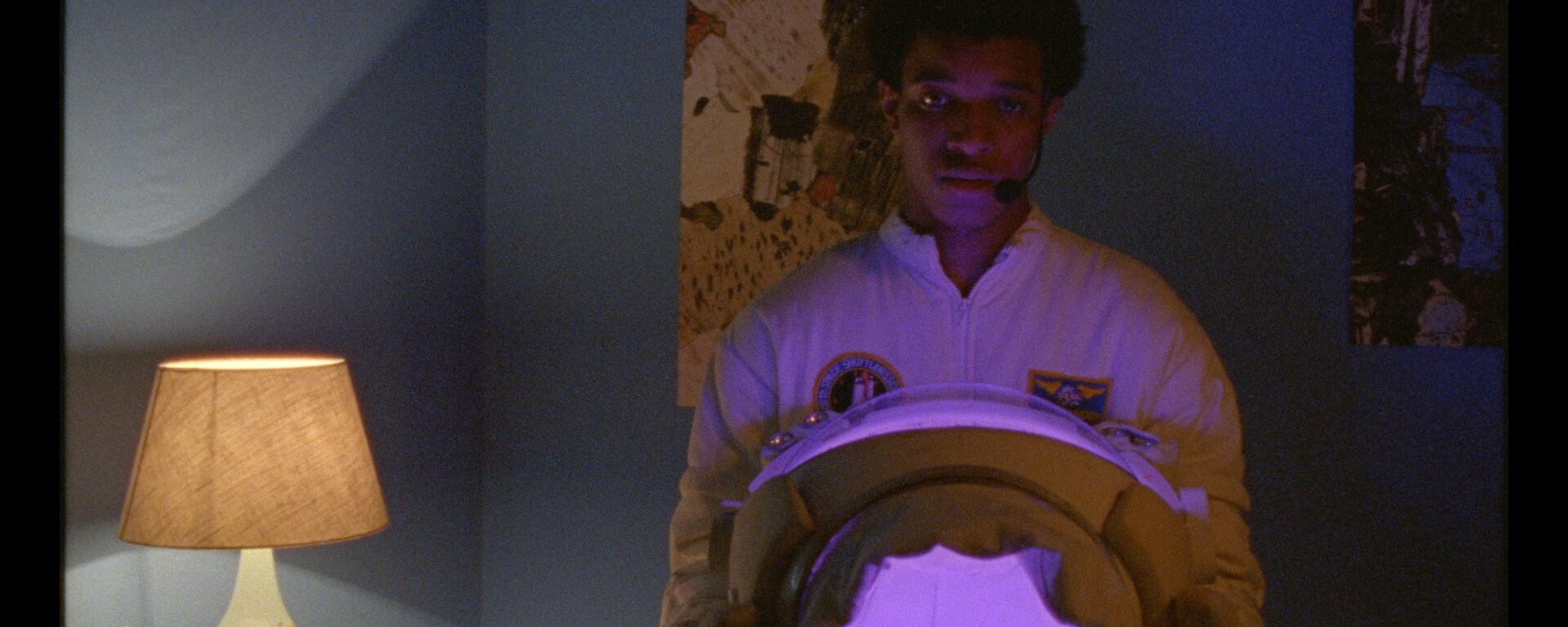
In her searing directorial debut, Highway to the Moon, Letitia Wright proves she is not only a formidable on-screen talent but a visionary filmmaker with an unflinching sense of purpose. Commissioned by WePresent and now making waves on the international festival circuit, including screenings at the BFI London Film Festival and an Oscar®-qualifying nod from HollyShorts, this genre-blending short is as emotionally resonant as it is technically accomplished.
What immediately sets Highway to the Moon apart is Wright’s masterful control of tone and texture. The film exists in a surreal near-future, yet its emotional core is achingly real. Wright handles this delicate balance with the assured hand of a seasoned auteur, weaving speculative fiction with grounded human pain. Her direction leans into dreamlike visual storytelling while never losing sight of the harsh realities the narrative addresses, youth violence, grief, and the spiritual scars of trauma.
Drawing inspiration from personal loss, the film was motivated by the tragic knife crime that took the life of a close family friend, Wright transforms pain into poetic cinema. Her ability to convey profound sorrow without sentimentality is a hallmark of great directing. She doesn’t simply point a camera at tragedy; she reimagines it through lyrical imagery, understated performances, and a clear, compassionate perspective.
Visually, the film is arresting. Wright and her creative team paint a speculative landscape that feels both intimate and otherworldly, using color, sound design, and symbolic framing to evoke liminality, the space between life and loss, hope and despair. Every shot feels purposeful, each cut emotionally charged. There’s a quiet elegance in her approach, a refusal to sensationalize violence or simplify grief.
The performances Wright draws from her cast, particularly, Trevor Etienne, Aboulaye Touray and Kenyah Sandy, are subtle and deeply felt. Under her direction, the mainly young ensemble conveys a haunting vulnerability that speaks volumes in silences and glances. It’s clear Wright understands not just how to tell a story, but how to create space for her actors to live in it.
What’s perhaps most impressive is how Wright uses genre not as a gimmick, but as a lens to explore healing. By situating her characters in a quasi-spiritual sci-fi landscape, she invites the viewer to engage with trauma in a way that’s reflective rather than confrontational. In doing so, she elevates the film beyond social commentary into something akin to modern myth-making, a fable for a fractured generation.
Highway to the Moon is not only a powerful piece of cinema, but also a social tool, with plans for nationwide screenings in schools and youth organisations. This outreach initiative underscores Wright’s commitment to using storytelling as a force for dialogue and change.
In an era saturated with surface-level content, Letitia Wright’s directorial voice arrives as a breath of much-needed authenticity. With Highway to the Moon, she doesn’t just tell a story, she opens a door to understanding. It’s an extraordinary debut that marks the emergence of a significant new director, unafraid to tackle pain, beauty, and hope in equal measure.
 FILM & TELEVISION BUSINESS