

The awards season is heating up, and among the standout contenders is a deeply affecting short film that has quietly become a festival favorite. With its poignant narrative, elegant direction, and a powerhouse performance from the legendary Lesley Ann Warren, OLIVE is more than just a film, it’s a meditation on love, memory, and the human spirit.
At the heart of OLIVE is filmmaker Tom Koch, a rising talent whose voice is as distinct as it is vulnerable. Koch not only directs but stars in the film, drawing on his own emotional insights and unique artistic sensibilities shaped by a transcontinental upbringing and early battles with chronic illness. With OLIVE now officially Oscar-qualified and racking up accolades on the international circuit, we sat down with Koch to discuss the film’s origins, its creative journey, and what it means to tell stories that live in the delicate space between memory and identity.
In this exclusive conversation, Koch opens up about working with Lesley Ann Warren, the collaborative powerhouse behind OLIVE, and how a personal fascination with resilience and imagination became the seed for one of this year’s most moving cinematic experiences.
OLIVE is deeply personal and emotionally layered. What inspired you to tell this story, and why through the lens of Alzheimer’s?
What inspired Olive was a quiet moment I witnessed in a New York museum. A grandmother and her grandson discussing a painting together, and I wondered: can art heal memory? At the same time, I was close to someone living with dementia. The days spent with them were full of humor, mischief, and life, not just pain, and I wanted to try to capture that part. In writing, I realized the twist that the story was about Sam, the “grandson”, and his need for healing. That shift let me explore how love, memory, and imagination intertwine across generations.
You’ve said you wanted to explore “how memory shapes who we are.” How did that idea influence your directing choices, visually, tonally, or structurally?
Memory really guided the directing choices. It was about which character we see the world through and when. We cast young Marie and created a brighter, more colorful version of the house, swapping all the props and outfits to the 80s. I wanted Sam to feel stuck in that time, when he first fell in love, almost unable to compute the present or see who his true love really is.
In the edit, through Lesley Ann Warren’s performance, I realized something even more powerful: Marie wanted to live in Sam’s world just as much as hers. That shaped the balance between reality and imagination in the film.
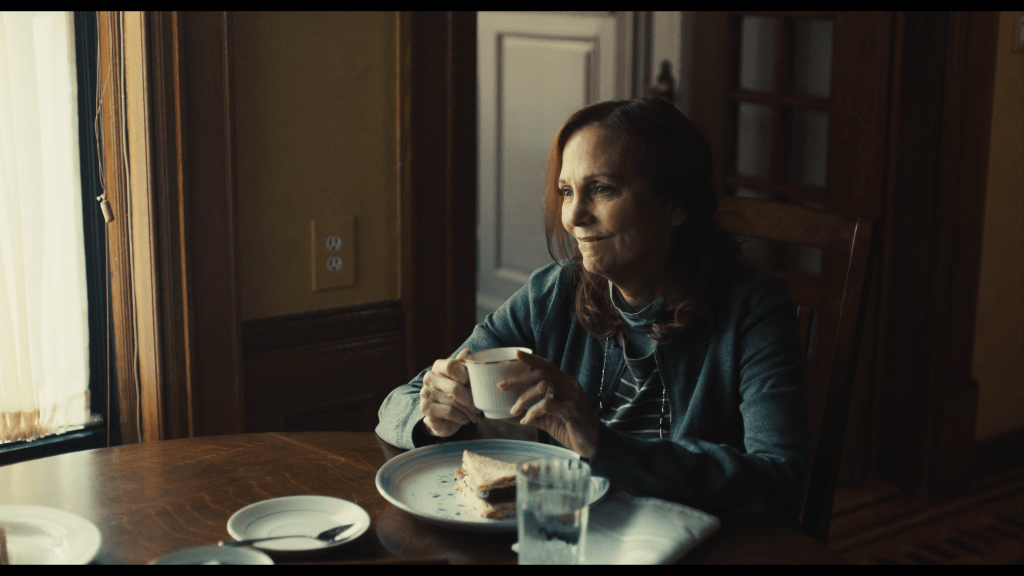
Lesley Ann Warren delivers such a powerful performance. How did you approach directing an actress of her caliber in a role so emotionally delicate?
Working with Lesley Ann Warren didn’t require a lot of directing in the traditional sense. It was more about conversations; talking through the characters, their wants, their needs. What mattered most was creating an energy where both characters want the same thing, which is to care, but they keep getting in their own way. Lesley brought such depth to that dynamic, and my role was to give her the space and trust to explore it fully.
Your upbringing between the South of France and London, and later your move to New York, seems to have shaped your creative voice. How do those influences surface in OLIVE?
My background has definitely shaped how I tell stories. From French cinema, I admire the delicacy in exploring very human stories where we get to contemplate real life. From American cinema, I love the craft of storytelling: the structure, the rhythm, the dynamic, the precision in performance and editing. And from my time in London, I carry a love for British theatre and acting, with its rawness and honesty. With Olive, I attempted to integrate all of these influences. The film is also tied together by a beautiful French soundtrack, which adds that final touch… Nostalgia for classics.
Collaboration is key in film,what was your working relationship like with producer Andrew Carlberg and the rest of your creative team?
I couldn’t have made Olive without the producers. What I loved most was how collaborative the entire process felt, from the early script stage to the set, and navigating festivals. Each of them brought their own strength, and together they gave the film the support and perspective it needed. I feel extremely lucky to have had that team around me.
OLIVE has already found recognition on the international stage. Looking ahead, what kind of stories do you feel most compelled to tell as a filmmaker?
I’m drawn to stories that are deeply human but told in unexpected ways. My next film, Golden, dives into the underground life of a boxer in New York. It’s very different in shape from Olive, but at its core, it’s still about people searching for connection and meaning. That’s what excites me! Taking real, raw experiences and giving them a cinematic twist, the way we did with Olive.
 FILM & TELEVISION BUSINESS