
In this interview, producer Hayder Rothschild Hoozeer, discusses his BAFTA-winning short ROCK, PAPER, SCISSORS, which recently screened at the 2025 HollyShorts Film Festival.
You have firsthand experience from time spent in Ukraine during active bombardment. How did that lived experience shape the way you produced this film?
I had been to Ukraine several times before the film, even before the 2022 invasion. One of my closest friends is from Donetsk, displaced back in 2014, so I already had a personal connection to the country. To me, Kyiv was always on par with Rome or Paris: rich in culture, history, and beauty. To then stand there in May 2025 under the sound of drones and missile strikes was shell-shocking. It hits differently when the city under bombardment isn’t some distant place on the news but a modern, metropolitan capital that feels close to home.
To feel even a fraction of what Ukrainians have endured for years—airstrikes, cruise missiles, the constant threat—was too much for me, even for a short time. I wanted out, but whilst I could leave after ten days, this remains the reality for millions who cannot. That truth became my driving force: to ensure the Ukrainian people aren’t forgotten once the headlines move on.
That sense of responsibility guided every decision on ROCK, PAPER, SCISSORS. From the start of my collaboration with Franz in 2023, we left egos at the door because authenticity was non-negotiable. I felt a duty not only to the film itself, but to the Ukrainian community. We worked closely with them to ensure their voice remained at the heart of the story. Many of our cast and crew were Ukrainian, with families still under bombardment. We created space for them to connect with loved ones, and when scenes became too heavy, we allowed time for care and recovery. Protecting their well-being was as essential as capturing their performances.
The result was a production atmosphere unlike any I’ve experienced. Everyone understood the assignment. People were inspired to give their best, not out of vanity, but because the film served as a vehicle for something larger: an act of witness and a gesture of solidarity with Ukraine.
As a BAFTA Kirsh Scholar and Toledo Scholar, you’ve had access to a global filmmaking community. How did those networks influence ROCK, PAPER, SCISSORS?
Being a BAFTA Kirsh Scholar and Toledo Scholar at the National Film and Television School connected me to a global network of filmmakers, mentors, and cultural leaders who see cinema as a force for impact. Their advice shaped how I approached ROCK, PAPER, SCISSORS and reinforced that film can extend beyond the screen.
For this project, Ukraine was always at the centre. The insight I gained from those communities helped me position ROCK, PAPER, SCISSORS to speak across borders—authentic to Ivan’s story while also part of wider cultural and political conversations.
Those scholarships gave me both guidance and belief, and they gave me the confidence to ensure the film carried Ukraine’s voice onto the world stage.
Your production company, WHO’S HERE? PRODUCTIONS, focuses on emotionally resonant, high-impact cinema. How does this film embody that mission?
WHO’S HERE? was founded on the belief that cinema should move people, ignite wonder, and leave something lasting behind. ROCK, PAPER, SCISSORS embodies that mission completely.
At its core, ROCK, PAPER, SCISSORS is about resilience and the human spirit under fire. It honours Ivan’s story not by sensationalising, but by bearing witness to the quiet courage of ordinary people caught in war. That truth creates emotional weight, and it also carries a sense of inspiration—showing that even in darkness, humanity endures.
For me, wonder is not only about spectacle, it is about revelation. It is the moment when audiences feel something shift inside them. ROCK, PAPER, SCISSORS aims to create that moment, reminding viewers that behind every headline is a heartbeat. That is the essence of WHO’S HERE? – Cinema that resonates deeply and inspires long after the screen fades.

Given the dangerous and sensitive subject matter, what were the biggest logistical and ethical challenges you faced during production?
One of the biggest challenges for us as non-speakers in making ROCK, PAPER, SCISSORS was the language. The film is entirely in Ukrainian, which was vital for authenticity, yet most of the team—including Franz and me—did not speak it. That choice brought logistical hurdles, but it was non-negotiable. We prioritised rehearsals in the schedule and budget so that Oleksandr Rudynskyi and the cast could fully inhabit the dialogue. Those sessions became the backbone of the process. The cast contributed directly, working with Franz and our script supervisor, Olha Petruk, to refine the dialogue, adjust phrasing, and perfect the delivery so that every line landed with impact and responsibility.
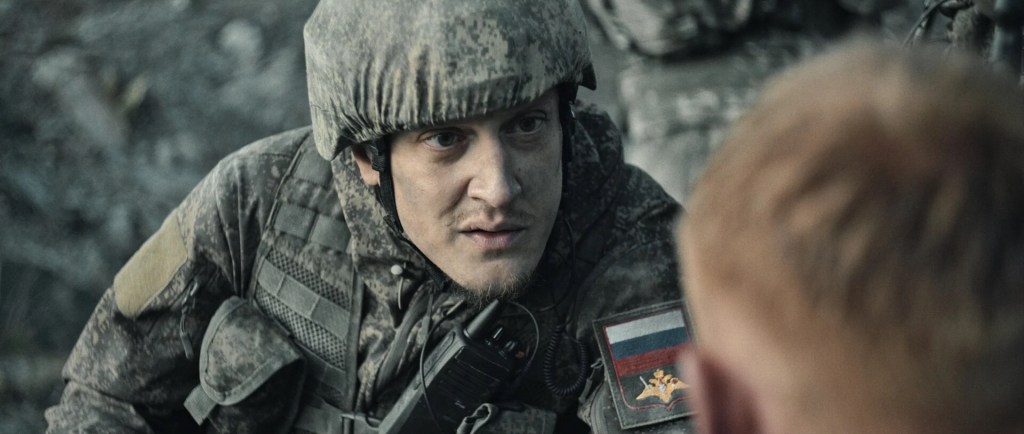
Another major challenge was sourcing the military uniforms. We needed both Ukrainian and Russian uniforms from the current-day conflict, which were impossible to find in Europe. The only place to source them was inside Ukraine itself. We negotiated and secured the uniforms there and managed to get them out over the land border during a nationwide no-fly order. This raised significant logistical and ethical questions: how to obtain them safely, how to transport them responsibly, and how to use them with the awareness that they carried the weight of an ongoing war. It was a risk, but it ensured that what audiences see on screen reflects the true textures of war, not fabricated versions of it.
Keeping the film in Ukrainian and sourcing real uniforms made production tougher, but ensured Ivan’s story was told with integrity and honoured the wider Ukrainian community living this reality.
The film is only 21 minutes long, yet it delivers an immense emotional punch. How did you approach budgeting and production design to achieve such cinematic scale in a short format?
With only 21 minutes, the challenge was to make something that felt big without losing intimacy. Our budget was £20,000, so every pound had to work hard. We negotiated for a lot of things in kind, and that discipline made the film stronger. It kept the focus on the story and stripped away the noise of over-dramatised war tropes.
The National Film and Television School gave us our core camera and lighting package along with crew, since it was their graduation project. Beyond that, people wanted to help because the film put Ukraine and the human cost of war at the centre. We brought in specialist kit through relationships, like rehoused lenses from Greig Fraser ASC ACS, and locations came at steep discounts. Those contributions lifted the film far beyond what the budget suggested. Design was all about authenticity. We shot in a Cold War–era facility that was operating as a brewery at the time, and our production designer, Shivani Bhawnani, turned it into a bunker. Her team researched real Ukrainian shelters and filled the space with distressed props, weathered textures, and practical light sources. We even used weapons from the current conflict, which carried their own complicated history of sourcing. On the screen, handheld cameras, a muted palette, and immersive sound design gave the film a scale rooted in realism.
The short runtime actually worked in our favour. By keeping every line, every prop, every sound precise, the film hits harder than its length or budget would suggest.
HollyShorts is an Oscar-qualifying festival. How does this selection fit into your strategy for the film’s awards campaign?
HollyShorts is one of the biggest short film festivals in the world, and the fact it’s Oscar-qualifying makes it a key step for ROCK, PAPER, SCISSORS. The film is already Oscar-qualified through the BAFTA win, but HollyShorts gives us a platform in Los Angeles, right on the doorstep of the Academy.
For us, the campaign is about visibility and positioning. HollyShorts puts the film in front of Academy members, industry tastemakers, and international press. It’s a chance to bring Ivan’s story and Ukraine’s reality directly into the room with the people shaping cinema’s global conversation.
It also builds momentum. Every festival adds weight, and HollyShorts strengthens that pathway toward the shortlist and, hopefully, the nominations. It’s a stage that frames Rock, Paper, Scissors not just as a short film, but as an international catalyst for dialogue and empathy.
Many filmmakers talk about the “responsibility” of telling stories about real-life tragedies. As a producer, how did you navigate that responsibility while still making compelling cinema?
Producing ROCK, PAPER, SCISSORS meant carrying a story that is still unfolding. This is not history. It is the reality millions of Ukrainians live with today. I did not expect to face that so early in my career, but once the story came to me I knew I had to take it as far and wide as possible.
The responsibility was putting Ukraine first. It meant making sure their truth and reality were given the respect and attention they deserve, while shaping a film that works as cinema. The task was to use craft in performance, sound, design and pacing to move people deeply without sensationalising war.
When accepting the BAFTA award in 2025 I said that “storytelling shapes how we see the world and each other. Its power reaches beyond the screen – It changes lives” That belief guided me here. If you hold onto it, you can shake the world, you can make people listen, and you can make them see.
The power of cinema as an advocate is proof of what storytelling can do, and that responsibility has never been lost on me. From the beginning it was clear how important this story was, and after we made the film it led to conversations with government bodies in the UK, the US, and directly with ministries and the Office of the President in Ukraine.
What was the most unexpected challenge you encountered while making this film?
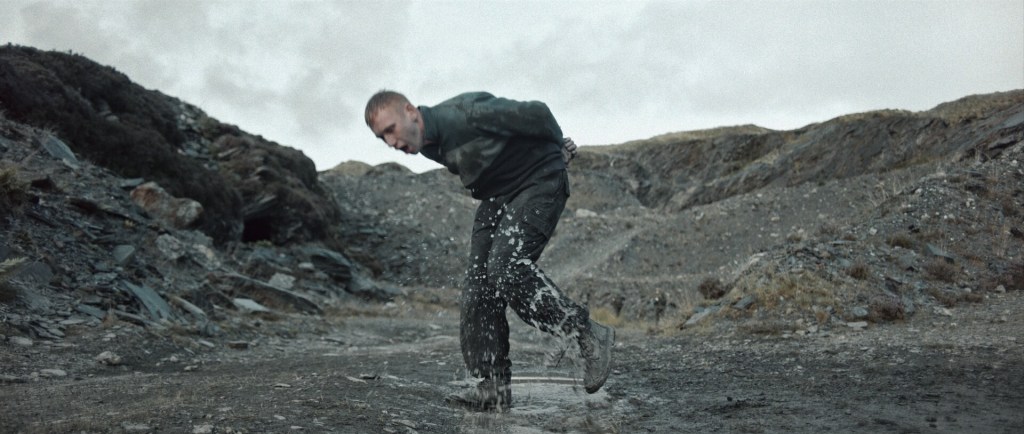
One of the most unexpected challenges was the locations. Since we couldn’t shoot in Ukraine, we had to find UK landscapes that could stand in for frontline villages. Franz worked closely with Ivan, sending photos back and forth and the production team scoured google maps and the UK Land Registry for plots of land ownership and landscapes to go and physically recce, until we landed on an exterior in North Wales and an interior in Watford that allowed us to depict Ukraine without taking the team into a war zone.
How did your collaboration evolve from development through post-production?
From the start, Franz and I connected on something personal—we both lost our fathers young—and that shared experience built a foundation of trust. We pushed each other with discipline and accountability, and it created real synergy. I’ve worked on big Hollywood sets and rarely seen a director manage a project with such professionalism and without ego. Franz’s confidence in his voice, always focused on what was best for the film, was something I deeply valued.
What really aligned us was our drive to use ROCK, PAPER, SCISSORS for the good of Ukraine. From development through post-production, we shared the conviction that the film was not just a short but a cultural instrument, one that could stand for Ukraine and carry weight internationally. Together, we led the team through that vision, into the BAFTA win, and now into the Oscars campaign for 2026. We’re side by side even now, and I believe that alignment is what carried the film forward and gave it the power it holds today.
The film’s title, ROCK, PAPER, SCISSORS, carries symbolic weight. What does it mean to each of you in the context of war and survival?
There are no winners in Rock, Paper, Scissors—and there are no winners in war. For everyday people on the ground, it feels as if someone far above is playing the game, and they are left to live with the outcomes. The title speaks to the randomness of survival: what begins as a children’s game becomes something darker, an allegory for chance, vulnerability, and impossible choices. In war, survival is arbitrary, like one element overpowering another with no logic or fairness. That fragility of life, dictated by violence and power, is exactly what we wanted the film to capture.
What has been the most moving or memorable audience reaction you’ve received so far?
At the St. Louis International Film Festival, the reaction in the theatre was unforgettable. The audience was a vibrant mix of ages and backgrounds, and they were vocal throughout the screening—gasping, exclaiming, responding in real time to the intensity on screen. What struck me most was that the majority were not Ukrainian, yet they connected so deeply with a film entirely in the Ukrainian language about the current conflict. To feel that impact ripple across a room of strangers was inspiring and affirmed the power of cinema to cut through barriers. If non-Ukrainian audience can connect with this story, so can world leaders and policy makers when assessing the support for Ukraine.
With the film now in the spotlight, what’s next for both of you creatively?
With ROCK, PAPER, SCISSORS in the spotlight, our focus is on carrying it through the Oscars campaign and making sure Ukraine’s story is heard on the biggest stage. Creatively, we are both developing new projects that carry the same DNA: bold, emotionally charged stories with the ability to resonate globally. For me, it’s about building WHO’S HERE? PRODUCTIONS into a home for films that combine wonder with impact, and for Franz, it’s about directing work that fuses discipline with truth. And while Franz prepares to shoot his debut feature at the end of 2025, there is already something in the works for the two of us to return to together on the other side.
 FILM & TELEVISION BUSINESS