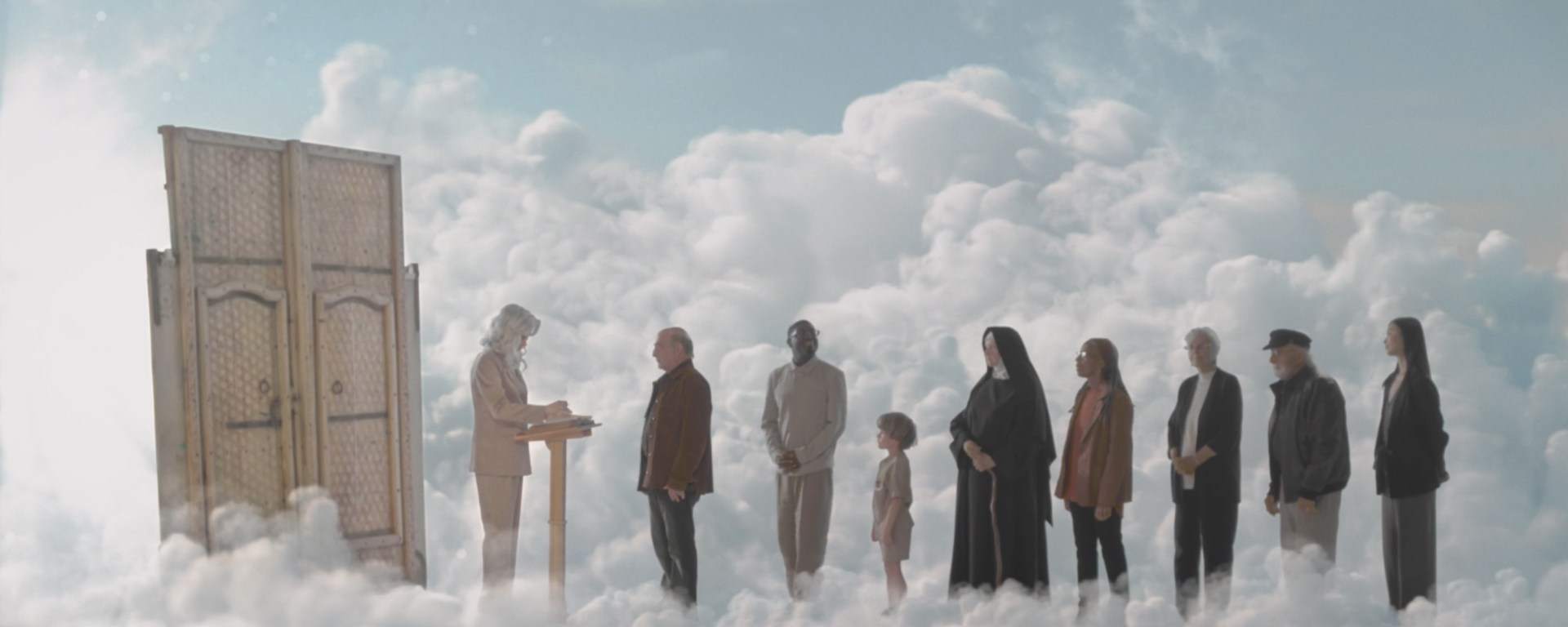
- What was the original spark behind TOO GOOD? Was there a specific moment or idea that led you to imagine the afterlife as a cosmic HR office?
My work tends to focus on feelings that are right under the surface, bringing them to consciousness. I realized that something I ask myself a lot is: “Am I a good person?”. While I try to be the best person that I can, I’m definitely not perfect. So that begs the question – Do the tiny selfish/inconsiderate acts we do tarnish the goodness within us? What is good enough? The idea of what happens after we die fascinates me. People have many different theories/beliefs of what happens so writing a version that subverts expectations is a lot of fun.
- The tone walks a tightrope between biting comedy and emotional depth. How did you calibrate that balance in the writing and directing process?
When you give an uncomfortable topic a humorous twist it can help people connect with parts of themselves they might otherwise avoid. What I was going for is making people laugh and squirm at the same time.
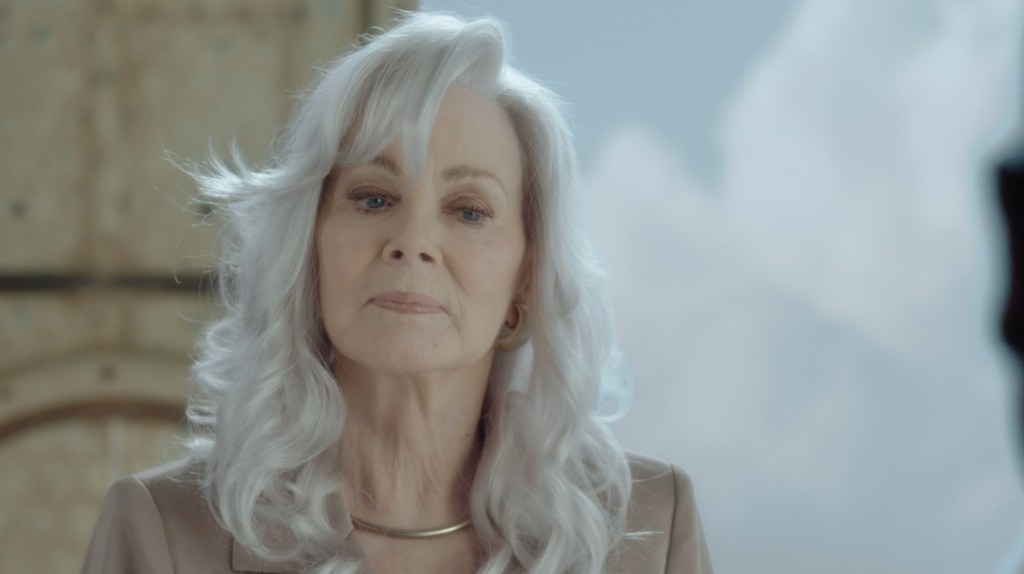
- Did you always envision God as a woman – and specifically, as this jaded, sarcastic, emotionally complex character? How did that version evolve as you developed the script?
Yes, she was always a jaded, sarcastic God! God is such a fun character to write – in my version, she’s a bit of a bureaucrat. She’s standing at her podium all day processing people, reading in her big Book of Life about all the “bad” things people are doing. She kind of had enough of us humans, but she’s also still rooting for us.
- Jean Smart as God is both hilarious and disarming. What made her the perfect choice for this role?
Jean was at the top of my list for GOD and we were ecstatic when she actually agreed to do it. First of all she has the BEST judging face – if you watch Hacks you know. But much more than that – she has an amazing combination of comedy, warmth and edge that was just perfect for this God.

- The story seems to reflect a very modern exhaustion with binary morality. Was that intentional?
Yes! We live in a time, especially with social media, when people like to judge and point fingers at others. I hope this is a reminder that no one is in fact perfect. We’re all work in progress.
- How did you visually design the afterlife setting to feel liminal yet strangely familiar? Was it intentional for a minimalist production design to operate so that our attention is focused on the characters and their dynamic?
First of all I wanted it to be colorful, positive and fun – so you feel comfortable and welcomed just as God starts grilling you with her uncomfortable questions. In terms of production design, we added the Heaven setting in VFX. We are a small indie production so there was only so much we could spend on creating an extensive background but I think the minimal approach ended up working great.
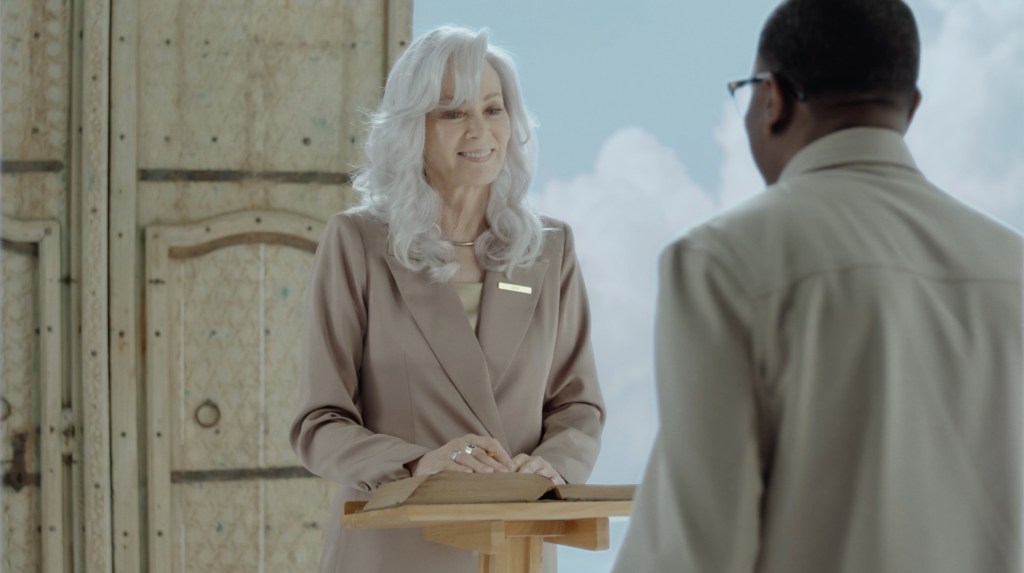
- What kind of conversations or reflections do you hope TOO GOOD sparks in audiences after watching?
I hope we send people out debating questions like: if there is a God up there keeping score, what does She REALLY care about? Is redemption always possible? Do my mistakes define me more than my best moments?
- Did writing and directing this film shift your own views on morality, redemption, or judgment in any way?
It made me softer in my judgment and more convinced that redemption often lives in the small, unglamorous moments, not just the grand gestures.
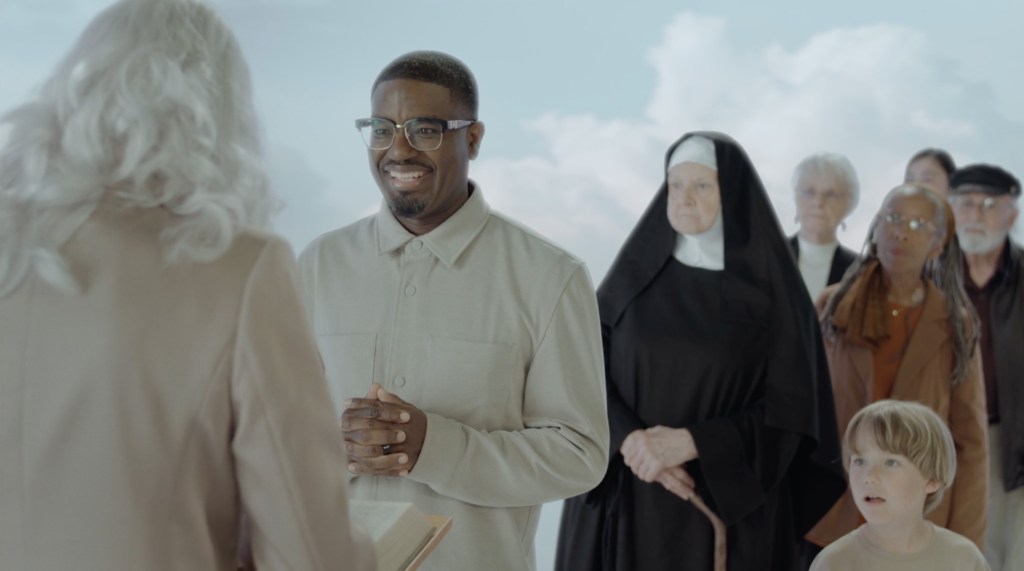
9. Does this film connect thematically or emotionally to your previous work, like ANXIOUS?
My work often starts with a personal excavation of feelings that are right at the edge of consciousness. I try to make sense of them to better understand myself, and then hope that there is insight there for other people as well. In ANXIOUS – it was the feeling of anxiety and helplessness around climate change. In Too Good it’s about goodness, morality, guilt and redemption. Other topics I write about include: monogamy, sexuality, class and inequality, spirituality and more.
 FILM & TELEVISION BUSINESS