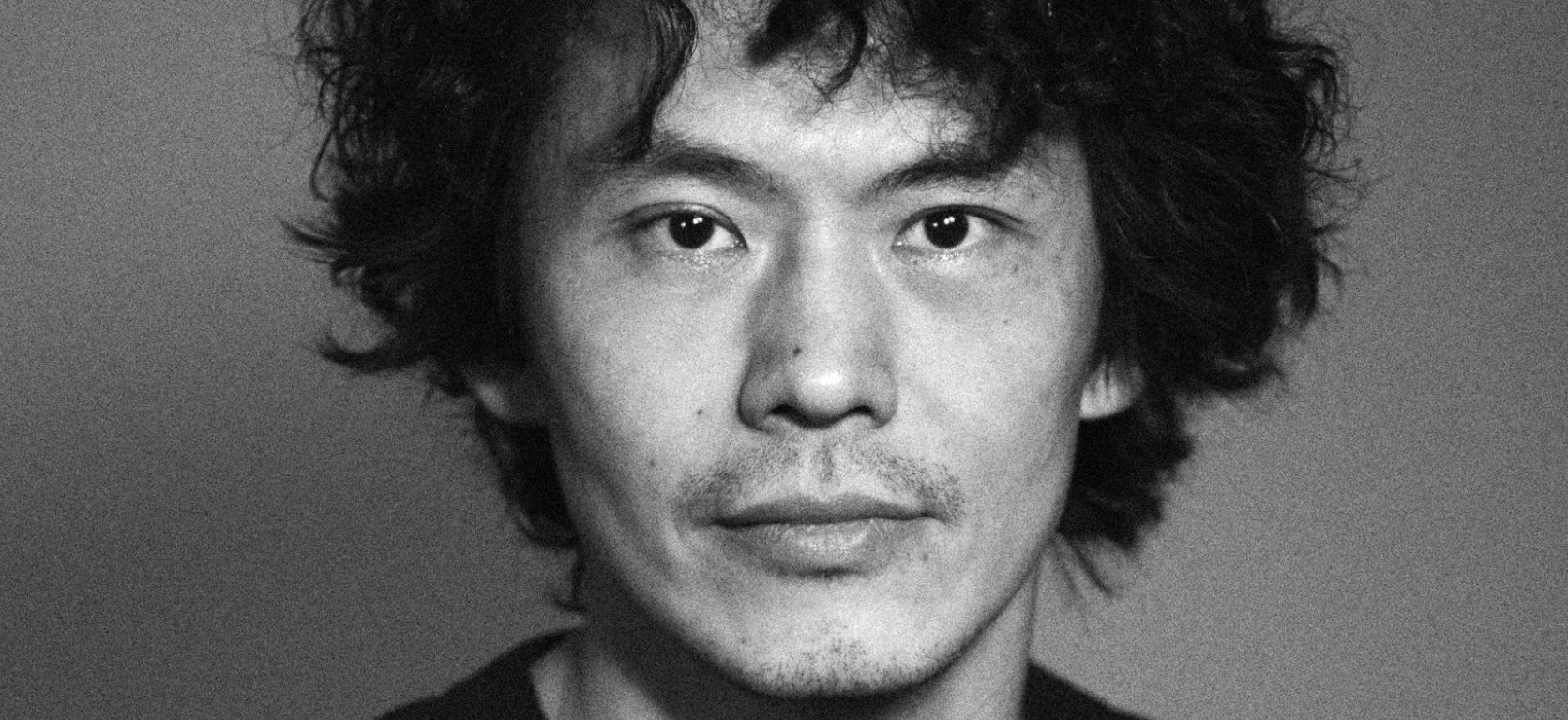
We caught up with WE ARE KINGS director Frank Sun, to talk about this remarkable short ahead of its Tribeca screening. Writer/director Frank Sun brings a tale of after-school mischief that becomes a powerful snapshot of identity, family heritage, and the search for acceptance. Two first generation young immigrant teenagers, Lin (Kenny Ridwan) and best friend Walid (Mahi Alam), sneak into Lin’s mother’s Chinese restaurant to burn pirate DVDs they can sell at school. Lin is caught off guard when his high school crush walks in and is soon drawn into her world of rebellion. Frank Sun captures the weight of cultural assimilation through a coming-of-age lens, offering a quiet, tender look into the young immigrant experience of trying to fit in.
WE ARE KINGS is in contention at the prestigious OSCAR qualifying Tribeca Film Festival in NY.
Frank Sun is a filmmaker and cinematographer based in New York City, whose work is shaped by a life lived between cultures. Born in China and raised in the American South, his storytelling draws from the complexities of identity, assimilation, and belonging—experiences that continue to inform his unique voice. Frank began his career shaping raw, emotionally charged narratives on CBS’s Survivor, where he honed his instinct for story in unpredictable environments. Since then, he’s brought his distinct visual style—an elegant balance of raw intimacy and cinematic polish—to commercial work for brands like Peloton, Ralph Lauren, Lexus, and NYFW. Now turning his focus to original narrative work, Frank is developing a slate of short films and a debut feature that explore ambition, abandonment, and cultural tension.

The scene in the restaurant feels like such a charged, intimate space. How did you design the setting to reflect both family legacy and teenage rebellion?
We scouted many Chinese restaurant locations in New York to capture the tone of North Carolina, and So Far So Good immediately felt like the kind of restaurant I knew growing up. My mother, who worked as a dishwasher and server when we first moved to the United States, imprinted some of my earliest memories of that setting on me. The restaurant displayed characters of assimilation, creating a quirky environment. The space played into what a Chinese restaurant owner might think Americans would expect a Chinese restaurant to look like. This often results in a juxtaposition of elements that are at odds with one another—contradictions. I was sold on this location when I spotted a Marilyn Monroe poster by the bathroom, right next to a bamboo space divider and Chinese lanterns. This cultural juxtaposition and contradiction flows throughout the film, symbolizing both assimilation and preservation, creating tension. It sets the backdrop for our performers, where the space becomes both a place of comfort and discomfort.
What was the initial spark that led you to create We Are Kings? Was there a personal memory or experience that inspired the story?
This film is my adolescence in a nutshell. I grew up in low-income student housing in Raleigh, North Carolina, surrounded by immigrants from all over the world. We were all learning what it meant to be Americans, teenagers, and friends. We were also learning how to be children, as our parents didn’t know what to expect from us in this foreign environment. They had no clearer idea of what it meant to assimilate than we did; they were too busy just surviving. The kids in our neighborhood found comfort in both our similarities and our differences. We stuck together when violence broke out between two warring gangs on opposite sides of our neighborhood, we consoled each other after 9/11, and, most of all, we were there for each other after school, which often felt like a different world to us.
I grew up in low-income student housing in Raleigh, North Carolina, surrounded by immigrants from all over the world
At its core, the film is about adolescent kids going through the late 90s and early 2000s, experiencing all the generational shifts in culture, technology, and hormones. This story is a collection of memories and feelings that collide into a few pivotal moments. The short film is an excerpt pulled from a feature, where we dive deeper into this unique, strange, and formative moment in time and place.
At its core, the film is about adolescent kids going through the late 90s and early 2000s
The concept of “belonging” is very subtly handled in We are Kings. What does belonging mean to you personally, and how did you want the audience to feel about it after watching the film?
Belonging is a core theme of the film. Home, comfort, loyalty, and friendship all play subtle roles in shaping that sense of belonging. But belonging also has its counterpart. The film seeks to capture the feeling of wanting to belong to something that isn’t necessarily part of you. For me, as I’ve learned over time, belonging is really about belonging to oneself. Spaces, people, and culture are only as comfortable as you feel internally. Belonging can be found everywhere, but the one place that is grounded is within ourselves.
Belonging is a core theme of the film
I think, for immigrants, we start off in America as visitors, with the sense that we don’t belong here. Overcoming that mentality has been a longer journey for me. It took me a long time, and I’m still working on it, to find the internal comfort where I feel like I belong in the rooms I walk into.
Lin, in the film, has yet to learn this, and is on his quest to find that space to belong to. I hope the audience walks away with more empathy. I hope they feel that we can all be a little kinder to the people who love and accept us. I hope we can all embrace the awkwardness of our experiences and find the tenderness in the messiness of growing up as we figure out who we are.


You portray assimilation and identity so delicately through Lin and Walid’s misadventures — how did you approach balancing humor, tenderness, and cultural tension?
I am a big fan of dramedy. Life is really funny and strange. I found the TV show Beef to be a great example of how culture can be subtly communicated through both comedy and drama.
Life is really funny and strange
I wanted to make sure that beneath the humor, there was enough subtext of tenderness and cultural tension to break through in the performance. The tenderness really comes through the internal conflict of the main character, Lin. Lin, while understanding that his actions are wrong, is deeply conflicted between his internal values and his external actions. His rushed efforts to navigate his cultural discomfort reflect back on the humor of the film, creating strange behavior and tension throughout.
Humor often becomes a coping mechanism when we’re faced with discomfort. Lin’s journey is a mix of missteps and realizations, and humor serves as a bridge between his vulnerability and his struggle. The tension between his desire to fit in and his reluctance to fully embrace certain aspects of his own culture is where I find the comedy.
Humor often becomes a coping mechanism when we’re faced with discomfort.
Were there any specific visual influences or films that you looked to while crafting the aesthetic of We Are Kings?
As I was writing the final revision of the film, I was in Shanghai watching Zhang Yimou’s To Live – that film absolutely floored me. It’s rare for a film to give me such a deep understanding of my roots through both laughter and tears through multiple generations. I was deeply inspired by the aesthetics of that film, especially the way the restaurant scene was filmed and how Zhang Yimou used color palettes throughout the film. I also loved how each character had so many layers, no one’s action is truly good or bad, they just are.
Stefan Nachmann, the cinematographer, Starr Jiang, the production designer, and I communicated much of the look of the film through the texture of To Live.
You’re developing a slate of shorts and a feature — can you hint at how the themes explored in We Are Kings might echo or evolve in your upcoming work?
I just finished filming a short called Fabric, based on my years of experience working as a NYFW photographer. Thematically, it also explores the element of belonging, but we dive deeper into adulthood as we explore the transactional nature of our world and how we perceive value in the chaotic world of fashion and beyond. The film stars b (from Netflix’s You) as Mack, a photographer, and Kate Pittard (from MAX Sweethearts) as Vanessa, a model.
I just finished filming a short called Fabric, based on my years of experience working as a NYFW photographer.
I’m also finishing the rewrite of two feature films. The first is the feature version of We are Kings, and the second takes place in the world of professional wrestling. This wrestling feature explores cultural displacement, identity, and corporate dysfunction within a Japanese-American father/daughter relationship. I’ve been a wrestling fan since my teenage years and have run a wrestling news publication since 1999, with about 2 million readers each month.
If you could describe We Are Kings in three words for someone about to watch it, what would they be?
Love your mother.
Working alongside seasoned producers like Scott Aharoni and Alex Constantin, how did their experience shape the production or your vision for this short?
My EPs, Scott and Alex, took an early interest in the film after reading the script. Scott took on a producer and creative focused role, while Alex took on the financing focused role. Scott, a friend and collaborator, helped me refine the script, particularly enhancing the thematic elements of the film. He also played a key role in sourcing the crew, casting, negotiating contracts, and overseeing the production. Alex, a close friend of mine for many years, comes from both a finance and film background. He raised money for the film through his company, Streamwork Ventures, and has been championing the project through funding, friendship, and overall support of the vision.
I also want to shout out to my other two producers, Lou Wang-Holborn and Sam Katz— I couldn’t have done it without them.
 FILM & TELEVISION BUSINESS