
In this interview, director Colin Ludvic Racicot discusses his heartfelt animated short Where Rabbits Come From, a poignant tale of love, loss, and resilience.
Where Rabbits Come From is a deeply emotional story told without dialogue. What was your thought process behind making this a silent film, and how did you approach communicating such strong emotions through visual storytelling alone?
The decision to make the film silent was deeply inspired by my love for silent cinema, particularly works like Faust and German Expressionism, as well as musical films like Fantasia. These films hold a nostalgic and ethereal quality unique to cinema, and I wanted to create a short film that captured that same magic—a story both deeply personal and universally resonant.
My experience as a father also played a significant role in shaping this approach. With young children, much of your communication happens through actions rather than words—drawing together, playing, or simply being present. That mode of connection felt perfectly aligned with the story I wanted to tell: a bond between a father and his daughter as they navigate their grief over the loss of a beloved mother.
Without dialogue, the focus shifts entirely to the experience itself. The visuals, the sound design, and the musical score become the primary tools for storytelling. The score, beautifully composed by Benoît Charest, serves as a thread weaving through the narrative, reflecting the characters’ unspoken emotions and inner world.
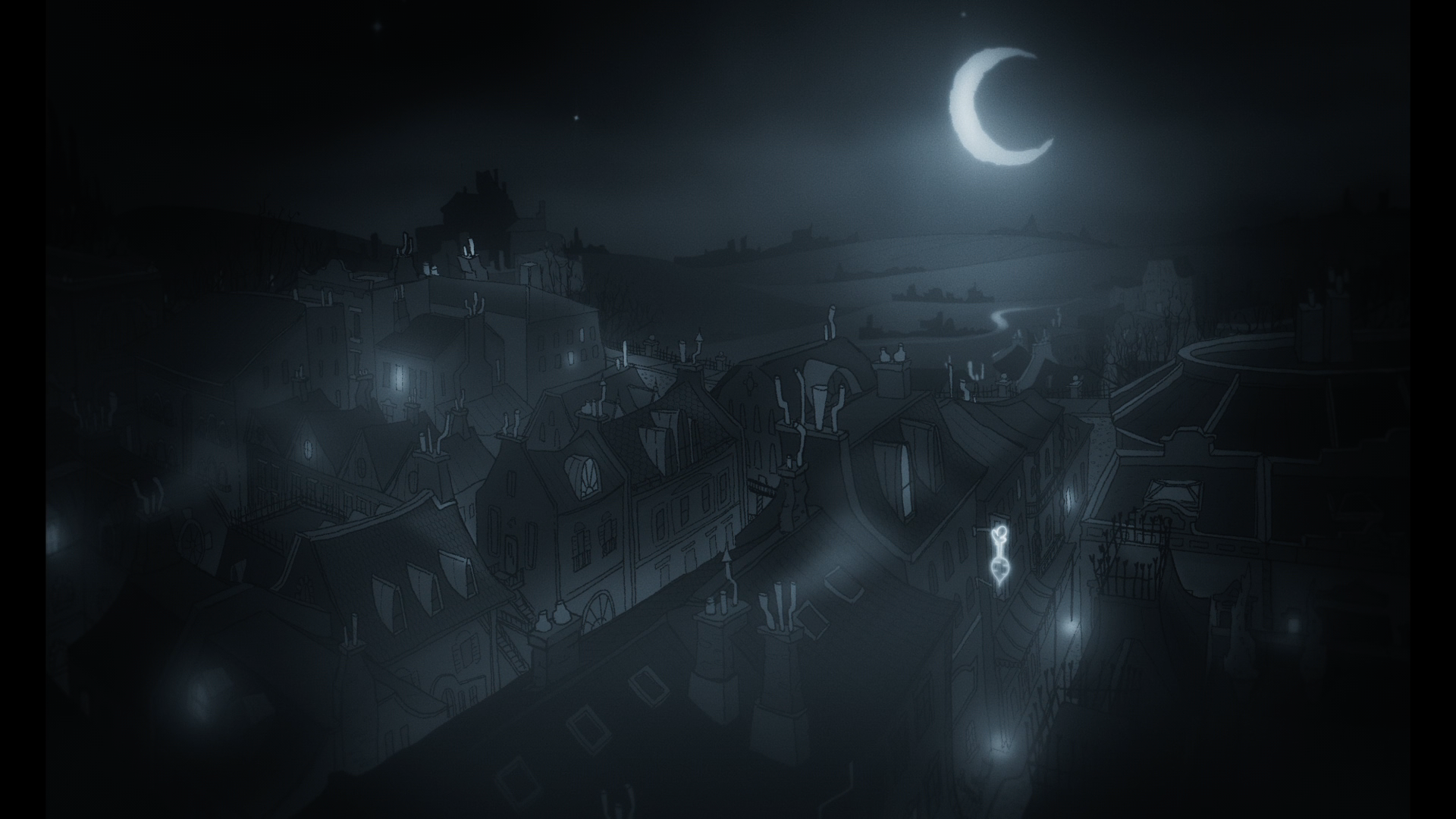
I also wanted to create a dark, somber world—a kind of creative playground for me as an artist. This setting allowed me to tell the story through actions, nuanced acting, moments of slapstick, and rich visual depth. It gave me the freedom to explore the characters’ emotions in a way that words never could, letting the imagery and music take center stage to evoke a powerful emotional response.
Where Rabbits Come From relies heavily on its score to convey emotion, given the absence of dialogue. How did you approach composing a soundtrack that would capture the film’s emotional essence?
I’ve always been deeply inspired by film scores, particularly the works of legendary composers like Ennio Morricone, John Williams, and Joe Hisaishi. To me, music and film are inseparable as art forms. In Where Rabbits Come From, the story revolves around the struggle to bound and cope in a somber, joyless world. The music became the voice of the characters, articulating their unspoken emotions. Through the animation, sound, and score, we followed their journey, with each note serving as an echo of their hearts.
Collaborating with Benoît Charest, whose work on Les Triplettes de Belleville I’ve long admired, was a dream come true. Watching him bring our story to life through music was incredibly inspiring. The score was recorded in Bologna, Italy, with an extraordinary group of musicians. I encouraged Benoît to draw from Morricone’s rich, emotional style, and he embraced that vision beautifully. The resulting soundtrack is powerful, deeply evocative, and continues to resonate with me profoundly to this day. Short films should never have small ambitions when it comes to music. On the contrary, their brevity offers an opportunity to create something grand and unforgettable—why not make every moment count and leave a lasting impression?
The theme of loss and grief is central to the story. How did you approach conveying these emotions visually, especially given the absence of dialogue?
It’s tempting to say that images speak louder than words, but what truly represents my film is this: Silence isn’t empty; it’s full of answers.
As a young father, I’ve experienced firsthand the profound connection that can exist between two people—one that doesn’t rely on words but is built through shared actions like drawing, laughing, and playing together. In crafting this story, I envisioned a world where the absence of spoken communication would emphasize the bond between the father and daughter—a world where imagination, rather than words, becomes the ultimate tool for connection.
This mirrors the challenges of everyday life, where we navigate struggles in silence, often relying on internal strength and unspoken understanding. I wanted the audience to feel this struggle and hope, conveyed through a dark yet magical imaginary world where the source of happiness comes from within. While the outside world may seem full of promises, the film reminds us that true joy and connection are rooted in ourselves and our relationships.I hope my animated short brought a true sense of joy and wonder to the audience, and will do so for years to come!

Where Rabbits Come From presents a bittersweet story of survival and hope. How do you hope your audience will interpret the final moments of the film?
The closing moments of the film underscore a lesson that’s been central to my own life: the importance of sticking together with family and loved ones during times of struggle. This message is at the heart of the story—holding onto hope for a brighter future, even when faced with life’s toughest challenges.
In reality, there’s no divine intervention to solve our problems; we must rely on ourselves and each other. Films and animation allow us to create worlds and tell stories that inspire and move us. If this story can bring a tear of joy or warm someone’s heart, then I’ve achieved what I set out to do.
Finally, what is next for you?
I’m currently in the early stages of developing my next animated short film. One of the things I’ve come to cherish about working in animation is the slow-moving pace of the filmmaking process. It allows me to fully immerse myself in each stage, appreciating the artistry and challenges along the way. More importantly, it’s a journey of personal growth—a chance to evolve as both a storyteller and an individual. To me, that’s the most rewarding aspect of filmmaking.
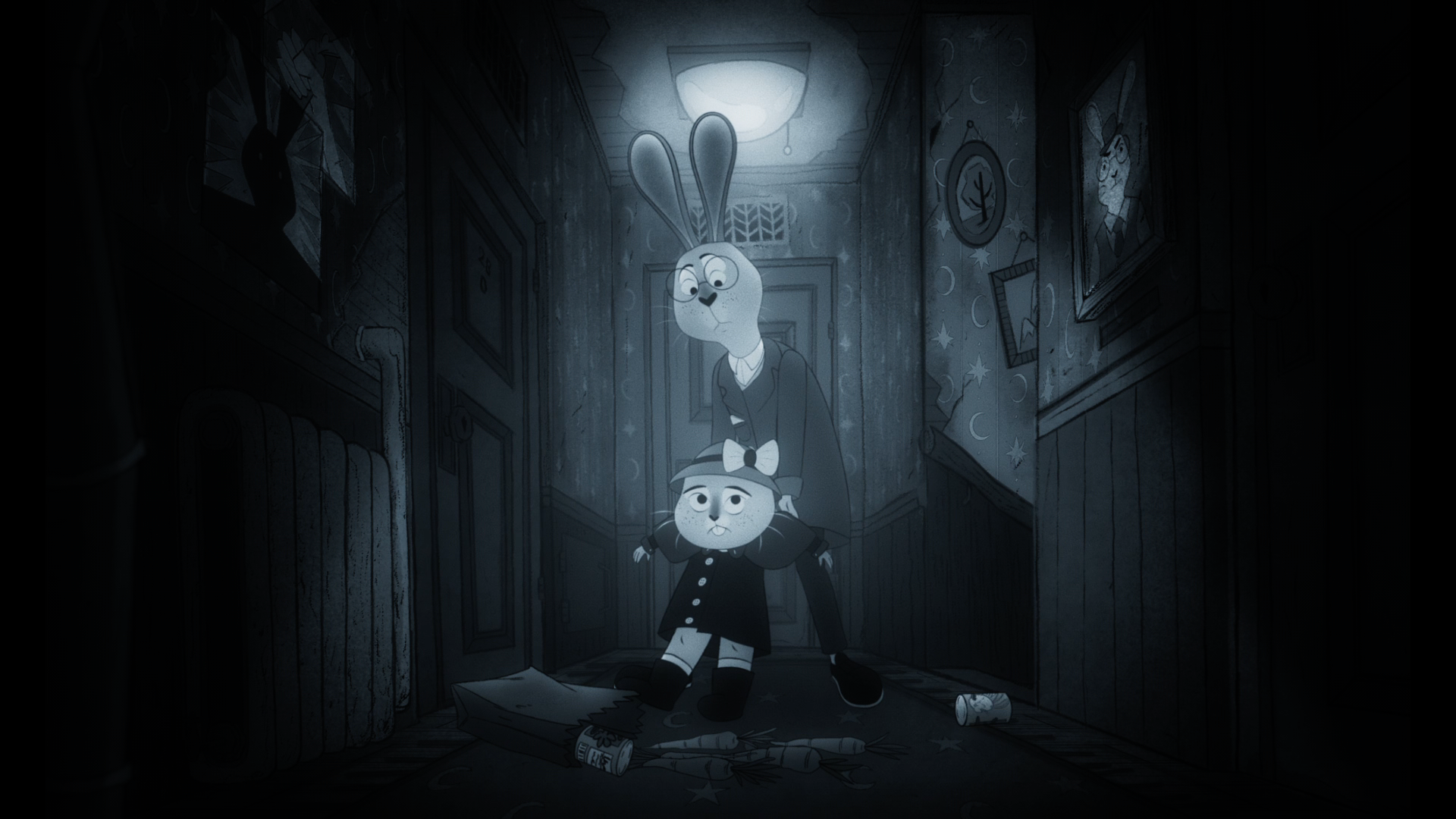
WHERE RABBITS COME FROM has qualified to be considered for the 2025 Oscars®. The short animation is now available on public release. Click here to watch.
 FILM & TELEVISION BUSINESS