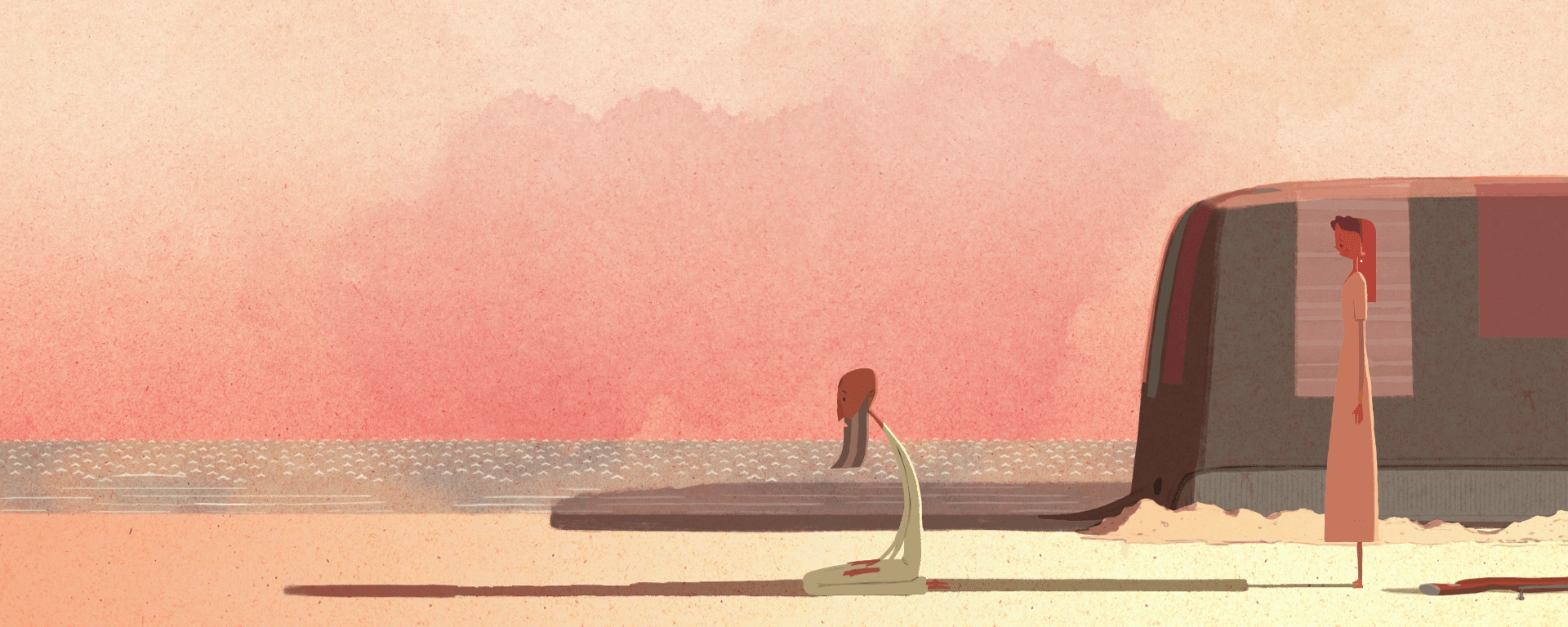
The short animated film In the Shadow of the Cypress written and directed by Hossein Molayemi and Shirin Sohani has received many international awards so far, including four Oscar-qualifying Best Animation prizes from Tribeca, Animayo, LA Shorts, and Spark Animation.
What inspired the story of In the Shadow of the Cypress? Was there a particular experience or moment that led you to explore the theme of PTSD in such a personal and intimate way?
In fact, the main source of inspiration was our personal lives and experiences, For example Shirin’s father is a war veteran and he lost one of his eyes during the Iran-Iraq war in 1980s; he also has a shrapnel fragment left in his skull from that war which sometimes makes him behave violently and abnormally. Hossein also always had a tense relationship with his father, and they have never gotten along well. These personal experiences helped us a lot in creating the characters and their relationship in the film.
Other than our personal lives, in general, veterans from Iran-Iraq war who are still suffering from PTSD, had an important role. For instance, the moments when the father bumps his head against the mirror on the wall, was directly inspired from one of our experiences when we were at a special hospital for war veterans. While visiting the hospital, we saw one of them was hurting himself which was really tragic.
Since our government consistently downplays the number of Iran-Iraq War casualties, PTSD veterans in Iran has always been boycotted and censored by our national and official media. So we really felt a responsibility to give them a voice in our film.
It needs to be mentioned that, we held several two-person sessions for developing the story within the first year of working on In the Shadow of the Cypress and we came a long way from initial steps to the final script. Big changes occurred during these sessions. The script underwent significant revisions, with many ideas being removed and new ones introduced. First of all and before starting to write the scenario we had decided to choose “family” and “parent-child relationships” as the main theme of the film; then we changed the location of the story from a land-locked western province in our country, to the northern shores of Persian Gulf located in the south of Iran. There, big changes happened; new elements such as the whale, the ship, the motor boat and war entered into the story and granted us new dramatic possibilities and potentials which dramatically changed the course of the film.

Can you walk us through the collaborative process between the two of you? How did you divide responsibilities as co-writers and directors, and what did each of you bring to the table?
Well, co-directing has always been prone to challenges and troubles; but for us, it worked very well. Of course, we sometimes had minor disagreements about certain aspects; but, making a high quality animated film, was our main goal and each of us who came with a better idea about any aspects of the film in terms of story, visuals, animating, etc, tried to persuade the other one, using rational reasons and usually that idea was easily agreed on. We didn’t intend to compete with each other, so if we agreed that an idea wasn’t the best, we didn’t stubbornly insist on it; that’s why we could get along well and worked smoothly and efficiently with each other. Additionally, it should be mentioned here that the fact that we share very similar artistic tastes, had a big role in reaching to agreement without serious disputes.
As for dividing the responsibilities, we did the directing and writing the script together after having hundreds of sessions with each other. In addition to that, each of us did some other tasks in the film based on our interests and abilities. Shirin was responsible for background design, specifying the color keys, compositing process and supervising the coloring team and Hossein was responsible for character design, storyboarding, layouts, supervising the animators and editing the film. Needless to say that sometimes we collaborated in each other’s territories, if necessary.
PTSD is often portrayed in films with a focus on action or physical violence, but here it’s depicted in quieter, more introspective ways. What was your intention behind showing PTSD through smaller, everyday moments rather than dramatic confrontations?
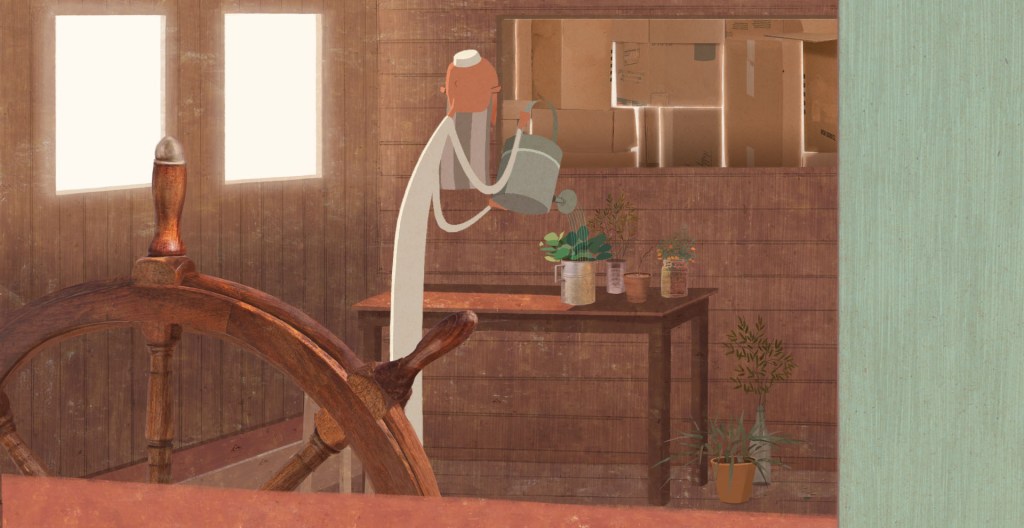
Although we included some scenes of physical violence, our intention wasn’t to create an action film. We wanted to focus more on what is happening inside the father’s heart, prioritizing the story of love, loss, connection, and hope over exciting and adrenaline-fueled scenes. To achieve this, we required the atmosphere of the film to be minimal, quiet and isolated.
What do you hope international audiences take away from the film?
While writing the film, we didn’t know exactly how it would end; but we were certain about one thing: we wanted to depict love and hope beneath the film’s painful surface. By delving deeper into the inner layers, we hope the audience feels the warmth of love, care and delicate human relationships. We hope watching our film will provide a form of catharsis for the audience.
Another goal was to allow the audience to feel the lives of individuals suffering from PTSD and their families with their whole being. Also it should be mentioned that we enjoy hearing the viewers’ personal interpretations of the film’s symbols and metaphors.
What’s next for you both as filmmakers? Are there any upcoming projects or themes you’re particularly excited to explore in future work?
We’ve always been interested in making a feature animated film and we would like to write and direct it together again; Actually, it’s quite an ambitious project and requires a lot of support. We both have reached an agreement regarding the subject and the theme of our next film and we are really eager for it. The success of ‘In the Shadow of the Cypress’ at the Oscars, whether it’s a win or a nomination, could significantly help us secure producers and financiers for our next project. We should mention that regardless of what will happen for our current film at Oscars, we are thinking about alternative ways to find financial support for our first feature animated film.
 FILM & TELEVISION BUSINESS