
In the Shadow of the Cypress is a powerful and emotionally charged animated short film that explores the delicate intersection between trauma and healing through the lens of a father-daughter relationship. Directed by Hossein Molayemi and Shirin Sohani, this Oscar-qualified short offers a poignant narrative about a former captain living in isolation by the sea with his daughter, struggling to cope with the heavy burden of post-traumatic stress disorder (PTSD). The story unfolds in a way that is harrowing and tender, making it not only a beautiful piece of animation but also a significant exploration of mental health.
The film’s narrative centers around a former captain who, while living in seclusion, begins to spiral under the weight of his past. His trauma, a constant presence in his life, is represented in subtle yet striking ways—through his increasingly erratic behavior and his strained relationship with his daughter. The arrival of a whale stranded on the beach becomes a pivotal moment in the story, acting as both a trigger for his past memories and a catalyst for potential healing. The juxtaposition of chaos and calm brought on by this whale symbolizes the unpredictable nature of trauma itself—the way it disrupts life and yet, in rare moments, offers a path to reconnection and peace.
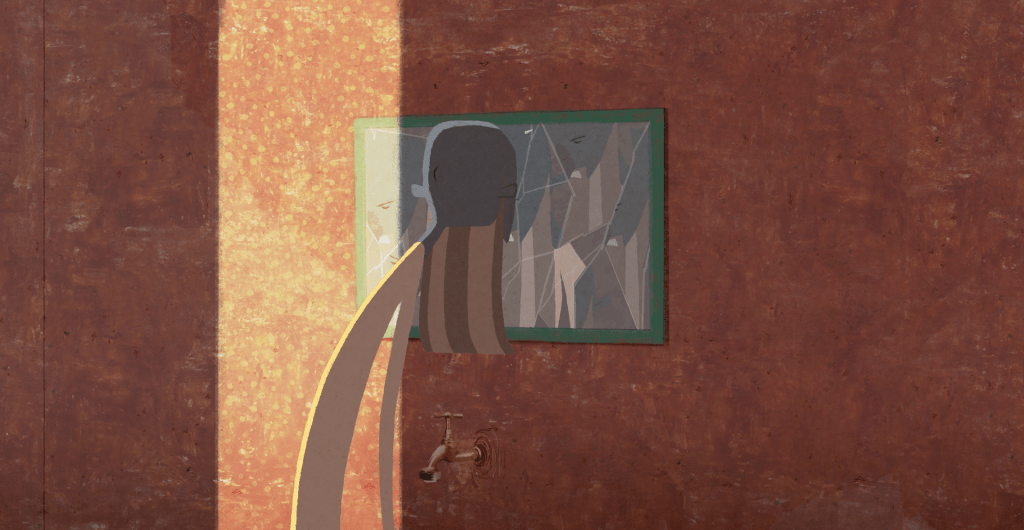
The animation in In the Shadow of the Cypress is breathtaking. The visual design is both simplistic and striking, utilizing the natural beauty of the seaside environment to contrast with the internal turmoil of the protagonist. The palette of muted oranges, reds, blues and grays sets the tone for the film’s somber narrative, while moments of warmth, especially in the father-daughter scenes, offer a glimpse of hope and vulnerability. The sea itself, both a literal and metaphorical force in the story, is as much a character as the people in the film, mirroring the captain’s internal state—stormy and turbulent one moment, calm and serene the next.
The film’s pacing is deliberate and contemplative, allowing the audience to fully absorb the emotional weight of each scene. There are no rushes to resolve the characters’ struggles. Instead, the filmmakers take their time, allowing the relationship between father and daughter to evolve naturally, much like the healing process itself. The whale’s role in the story is not just symbolic but also represents the possibility of reconciling with the past, as it is both a victim of circumstance and a source of reconciliation.

In terms of emotional depth, In the Shadow of the Cypress does not shy away from portraying the harsh realities of PTSD. The trauma the captain faces is depicted not through overt scenes of violence or conflict but through the subtle, everyday moments that reveal the depth of his suffering—his avoidance of the outside world, his hypervigilance, and his difficulty in connecting with his daughter. This approach makes the story feel all the more authentic and relatable, giving voice to the silent struggles many face in the wake of trauma.
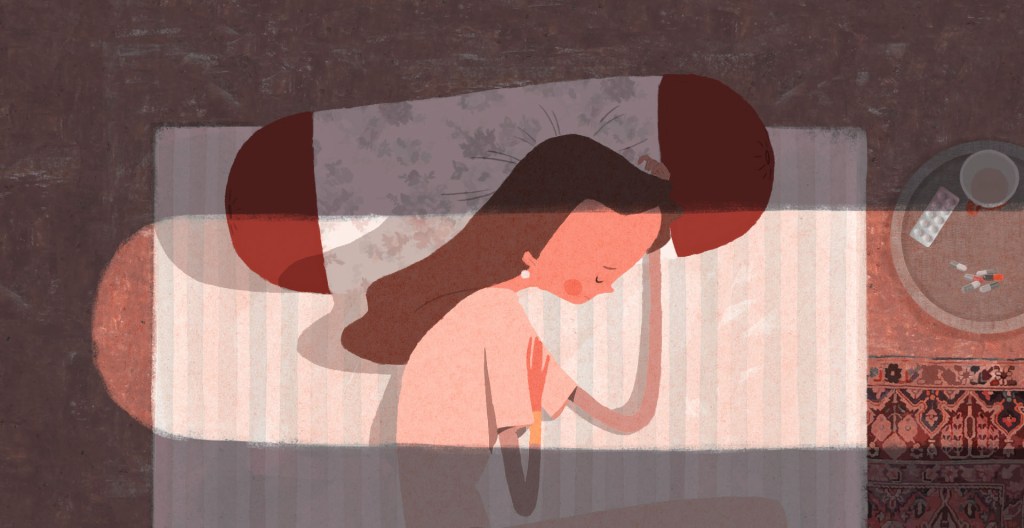
The score, composed by Afshin Azizi, complements the film beautifully, enhancing the emotional impact without overwhelming the viewer. The music mirrors the film’s ebb and flow, punctuating moments of tension and release with a delicate balance that underscores the emotional and thematic weight of the narrative.
In the Shadow of the Cypress is not just an exploration of PTSD but also a meditation on human connection, the effects of trauma on familial bonds, and the quiet moments of healing that often go unnoticed. It is a film that respects the complexity of mental health, offering no easy answers but instead an honest portrayal of the struggle—and the hope—that comes with living with and recovering from trauma.

The film has rightfully garnered attention from prestigious festivals like the Venice International Film Festival, Annecy, and Tribeca, and its qualification for the 2025 Oscars® is a testament to the strength of its storytelling and emotional resonance. It is a must-see for those who appreciate animation as a powerful medium for storytelling, as well as for anyone who has experienced or is interested in understanding the long-term effects of trauma and the fragile journey toward healing.
 FILM & TELEVISION BUSINESS