

1. What inspired you to write this story?
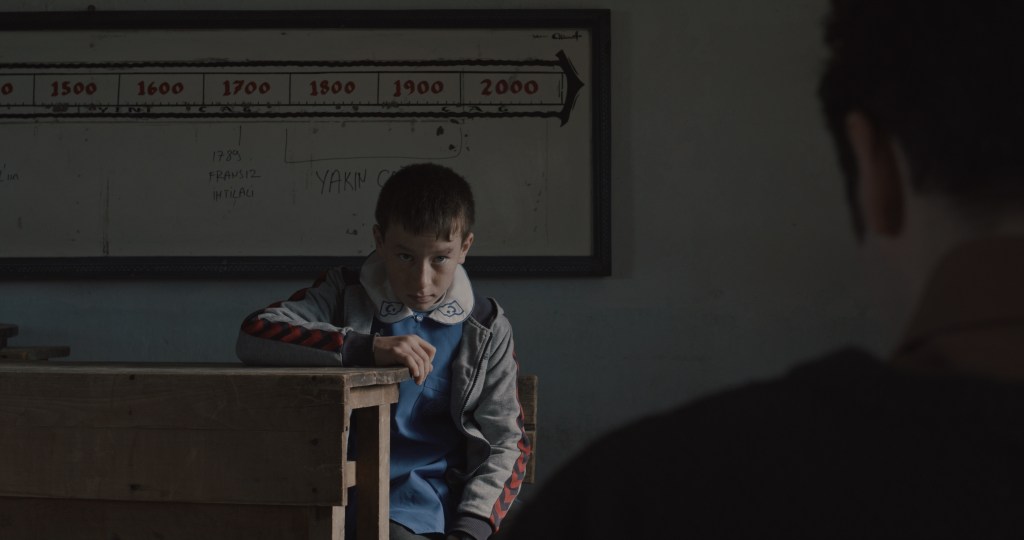
Our main issue in this story, in which we travelled in the depths of the human soul, started with the question “How do we struggle with evil?”. While discussing the issues of good and evil with Muhammed Furkan Daşbilek, the screenwriter of our film The Moisture, we put forward the argument that every human being can contain both good and evil. Many different stories and characters emerged around this idea. We had to make a decision. Then, with the note of the story of a missing girl, our story began to take shape. Our scenario emerged around geography, fate, class issues, the isolation of the countryside and the issues of good and evil. The main backbone of the story is the conflict between a teacher doing his compulsory duty in the Anatolian region, on the one hand, the child custody problem with his recently divorced wife, and on the other hand, the conflict with a mischievous student who causes the darkest sides of him to come to light. On the axis of this conflict, we can say that our main inspiration was to show how the way people struggle with evil changes the fate of many issues.

2. What reaction would you hope to provoke in an audience watching this?
Regardless of language, religion, or culture, watching a film by a person in a different part of the world experiencing the same feelings and having them ask questions at the end of the film can be the best reaction we can get. I remember the comments of an American actor who saw the film twice during the American premiere of The Moisture: “Something touched my heart. Am I missing something or is this feeling real? What happened to this boy? Or is there something more important?” She started asking herself half of the questions we wanted the audience to ask related to the film. And after thinking about it for a while, she slowly started to find her answers. That moment was an incredible experience. That is the power of cinema. It can bring strangers together around the same feelings.
3. Did you base any of the characters on people in your life?
None of our characters are based on anyone in our own lives. But it was an interesting school official I observed during a school visit that determined the profession of our caretaker character. I talked to Furkan and said: “There is such an interesting character in this school. Why shouldn’t we use him in our story?” He was a man with a lot of grey areas. This situation helped shape the character of Siracettin. Yusuf’s mischief in the classroom and hitting his friends by blowing paper was a memory from Furkan’s childhood 😊.

4. What part of the film did you find the most challenging?
The most challenging part of shooting the film for me was, of course, the snow scene. The atmosphere we wanted for the whole film was overcast and foggy. Unfortunately, even though we were working between the mountains in February, the weather was sunny. But when we moved to the scene in front of the school, according to our schedule, it suddenly started to snow. We were totally unprepared. Within half an hour everything had turned white. We were in a hurry to shoot the scene in the schoolyard because we did not want to disturb the continuity of the snow after we had started the scene. When the snow started, we hoped it would not continue, and when we started the scene, we prayed it would not stop.

5. What is next for you?
First of all, to complete the road to Oscar for The Moisture 😊 After that, we are working on the project “Boys Do Not Take Advice”, a modern adaptation of Cain and Abel, which I will produce and which will be written and directed by Muhammed Furkan Daşbilek. This project will be our team’s first feature film. Sibling rivalry, food crisis and middle-class conflicts, which are some of today’s problems, are the universal qualities of the film. We also have an eight-part series project for digital platforms such as Amazon, HBO and Netflix.
 FILM & TELEVISION BUSINESS