
We got the chance to talk with the Olivia Levine who stars in LET LIV and Erica Rose who directs this important short film during TRIBECA film festival where the film was selected.
Starring Olivia Levine (Tallulah, I Hate Kids), Christine Taylor (High Desert, Zoolander, Search Party), Rosaline Elbay (Kaleidoscope, Ramy), Jordan Carlos (Everything’s Trash, Black Mirror, Broad City), Monica Wyche (The Sinner, Five Days at Memorial, The Path), Sarah Herrman (Mutt) and Abdu Garmazi (FBI Most Wanted).
This important short touches on generational addiction and the effect that it can have on families. This live action short film was picked from over 8000 entries to premiere in contention at the OSCAR-qualifying Tribeca Film Festival. Levine and Rose are Brooklyn natives and LET LIV was shot with the beautiful backdrop of New York.
A young alcoholic woman agrees to attend an AA meeting with her partner. When she unexpectedly runs into her estranged mother, she’s forced to confront demons from her past.
Congratulations on getting into Tribeca Film Festival! Your film shares a portrayal of a family with generational addiction, why was it important for you to cover this subject?
Erica: As many of us know, addiction, and its complex ramifications, isn’t usually an experience that stays isolated to one person. Often addiction plagues families intergenerationally, which makes the journey to healing ever more complicated. What drew me to Olivia’s script initially was this concept of intergenerational addiction and how alcohol was both the tool that brought Liv and her mother Judy together, and also caused their greatest rupture.
As many of us know, addiction, and its complex ramifications, isn’t usually an experience that stays isolated to one person.
Olivia: I have a lot of friends and family that did or presently do struggle with addiction, and I have been to AA meetings to support folks. I grew up rather immersed in the world of AA and in the lexicon of AA, and I loved the idea of a short story that takes place at a meeting because it is such a rich space. I also think that addiction is so complicated and never the same for any one human or group or family, and I wanted to tell a story kind of questioned our assumptions about addiction and recovery.
What does it mean to you to be playing in Tribeca during pride month?
Erica: Well, as a professional filmmaker and a professional lesbian, I am exhausted, but I wouldn’t want it any other way. It’s great to be celebrated as a queer filmmaker during this month. One element I’m really cherishing is that our film isn’t specifically about being queer. Our characters happen to be queer and that’s an essential part of LGBTQ representation, just letting queer characters have all the complexities that we afford heterosexual characters.
Well, as a professional filmmaker and a professional lesbian, I am exhausted, but I wouldn’t want it any other way.
Olivia: It is so very thrilling. I am very vocal about queerness, and I love incorporating that aspect of my identity into my work. I am very grateful for the platform Tribeca has afforded us. That said, queer stories need to be platformed and celebrated every month of the year, and I hope that Erica and I can have at least a small part in continuing to make that happen.
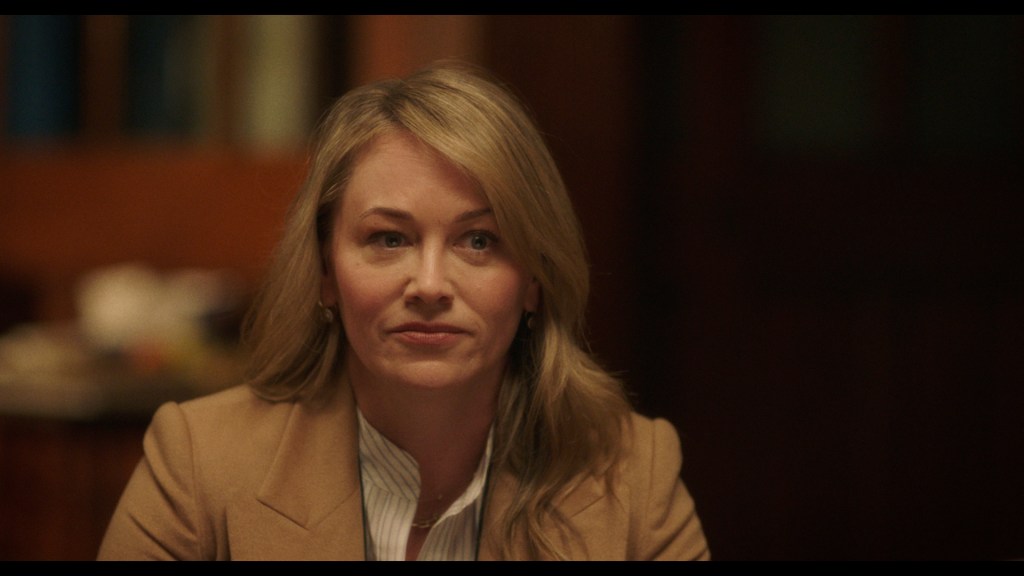
The scene in the AA meeting is both heart wrenching and moving, why was it important for you to show this as part of the film?
Erica: One thing that was important to me and Olivia was to showcase the range of emotions that exist within an AA meeting. Yes, it’s heart wrenching and moving, but it’s also funny and spontaneous and unexpected. Dramatically, the AA works well within the confines of a short film. It forces our characters to confront uncomfortable truths and puts them in unforeseen positions that help expose deep desires or fears.
Olivia: I think that showing what a meeting is like was always important to me. Folks get AA meetings wrong in films and tv like 98% of the time. I am not saying we nailed it or anything, but I think we did a lovely job of depicting some of what can happen at an AA meeting. And, to Erica’s point, it is a great setting for a short. You can create a sense of community and then claustrophobia all within a few minutes. It’s a rich space.
Folks get AA meetings wrong in films and tv like 98% of the time.
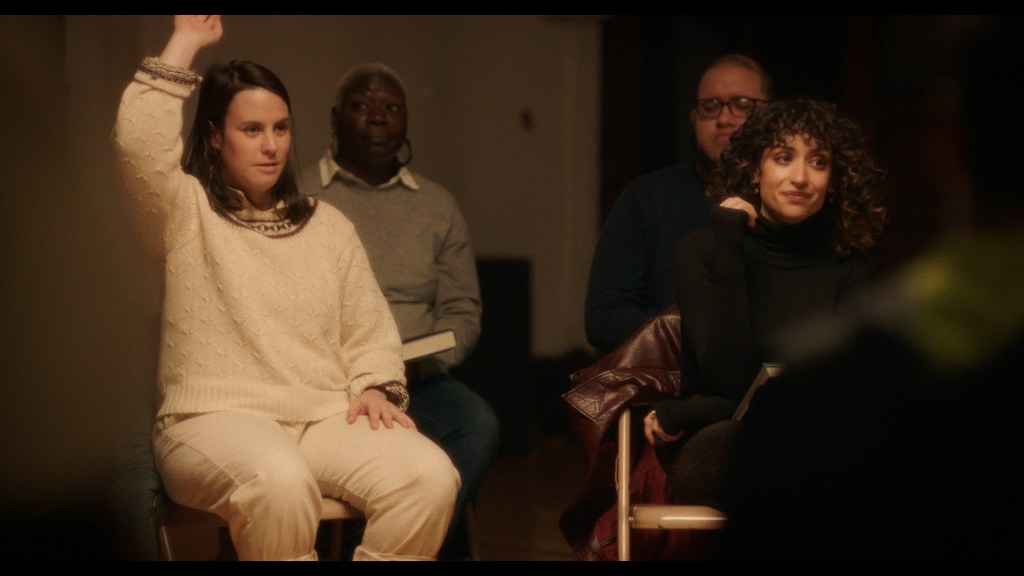
What was it like to see your film in screen?
Erica: The most rewarding thing in the world for a filmmaker is to watch a packed audience watch your film. There’s nothing better. This is what we live for.
Olivia: Oh, I was so nervous. I couldn’t watch half of it! I honestly dissociated a bit. But it was also very rewarding getting to share it with family and friends, and I was thrilled with the responses!
What would you like audiences to take away from the film?
Erica: People way wiser have told me that the opposite of addiction is connection. To me that’s the heart of this film. Healing is complex and nuanced. There’s no right way to begin the process, but we don’t have to do it alone.
Olivia: I think that I want folks to walk away from the film not knowing totally how to feel about what went down between mother and daughter. I think that, at the heart of the film is this big question about what it means to take care of yourself, and how that comes up against taking care of other people that mean a lot to you. I want folks to really think about what it means to take care of oneself in the context of addiction and codependent relationships.
I think that, at the heart of the film is this big question about what it means to take care of yourself, and how that comes up against taking care of other people that mean a lot to you.
With such a deep story we can see it working as a feature, is this something you have thought of or planned?
Erica: Yes! Olivia and I are currently developing the feature script!
Olivia: What Erica said 🙂
What is your creative background, and how/when did you get into filmmaking?
Erica: I’ve been working professionally as a filmmaker for the past 10 years, but I’ve been making movies and telling stories since I was a kid. My dad is a huge Scorsese fan, so I grew up watching Mean Streets, Goodfellas, and Raging Bull, but quickly found my own cinematic passions with Pedro Almodovar, Wong Kar-wai, Jane Campion, Mira Nair, etc. I basically devoured everything I could, was mostly self-taught and then got into NYU Tisch. There, I held nothing back, made the wildest student films, refined a bit, but mostly just stayed true to myself. I love doing this. I love telling stories and I have the best job in the world.
Olivia: I come from a big theater and comedy background. I studied theatre in college at Barnard, studied theatre abroad in London at RADA, and then did a conservatory program at The Studio/NY post college. In terms of my comedic background, I did a lot of sketch and improv in college, and then started doing standup. Presently, I perform standup a lot around the city. Film came later for me. My father became a film producer when I was 15, so I was around it a lot, but I didn’t start to really write things for film and tv until the pandemic. I wasn’t able to perform at the beginning, obviously – at least not live – so I really turned my attention to writing pilots and shorts and features. And here we are!
For you both, what is your creative process?
Erica: I always start with story and character. What is the film about? Where does our character begin and end? What obstacles do they face in their journey? What does our character want versus what do they need? Once I figure those essential questions out, I build my visual world. For me, the visuals need to always be connected to the central character’s inner world and the tone of the film. I pull a lot of references and have a lot of creative brainstorms with my department heads. For Let Liv, I knew I wanted the film to have a New York timelessness. I wanted to embrace a color story that helped distinguish the dual timelines. There’s subtlety with the variances of camera movement that’s all motivated from Liv’s connection and feelings to what’s happening around her. We’re a bit stiller and calmer when she’s embracing the other people in the room. The camera becomes handheld and wilder when Judy comes in and disrupts it all.
Olivia: Normally something in my life – an event, an exchange, a person – will inspire an idea or premise. From there, I like to build out that premise; I will explore different directions for where the story could go, entertain certain character traits, etc. I actually tend to flesh out some plot points before I delve super deep into character stuff – that said, I usually start with a strong idea of who the protagonist is. Sometimes I will come up with lines of dialogue for characters even before I realize other things about them. Like I will hear something out in the wild or my mind will come up with something and I am like, OH that character says THIS.
Is there anything you wish you had done differently?
Erica: That’s a dangerous question for any creative person. We’ll always say yes. But, I’m so proud of this film and I can’t wait to show it to the world.
Olivia: I, too, am so proud of what we did. It exceeded my expectations. I think, process wise, I honestly would’ve just relaxed a bit more. Going forward, I really want to trust the process and realize that, so long as I keep my head down, do the work, and know that the cards never fall as you expect, things generally turn out just fine!
What part of the film are you most proud of?
Erica: I’m so proud of this film and I’m just proud that all these brilliant people came together to make this story come to life.
Olivia: I am proud of my acting work, honestly. It had been a long time since I had acted in anything, and it was just really such a gift to be able to step back into that role. I was proud I was able to balance the responsibilities of writer, producer and actor rather well.
What is next for you?
Erica: Olivia and I are developing the feature version of Let Liv. I’m also working on another feature script with comedian Ali Clayton. I’m doing the first international episode of my show The Lesbian Bar Project docu series this summer.
Olivia and I are developing the feature version of Let Liv
Olivia: Yes, feature version! I can’t wait! I am also developing another feature right now, as well as some episodic projects! Also trying to find a longer term home for my solo show 🙂
 FILM & TELEVISION BUSINESS