
Salvatore Scarpa and Max Burgoyne-Moore’s LARGO is a film of haunting beauty and unflinching empathy, one that dares to tell the story of displacement not from the vantage point of policy or politics, but from the fragile, determined heart of a child. At just under 20 minutes, LARGO manages to feel emotionally expansive, focusing on what displacement feels like when you’re young, alone and still clinging to hope.
At its core is Musa, played with extraordinary depth by newcomer Zack Elsokari. A young Syrian refugee living on the British coast, Musa is suspended in a kind of purgatory – awaiting the arrival of parents who may never come. He lives under the care of Grace (Tamsin Greig, in a quietly aching performance), a well-meaning but emotionally distant sponsor who struggles to bridge the space between responsibility and genuine connection. Around them, a small seaside town simmers with unspoken tensions, where kindness can vanish as quickly as it arrives.
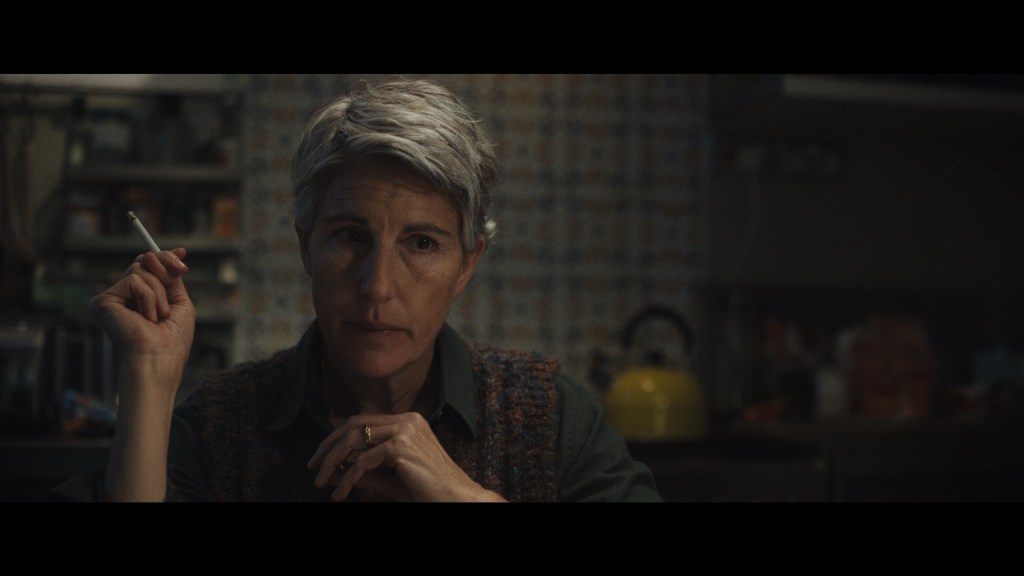
But LARGO is crucially not a film about adult life. It is a film filtered entirely through the eyes of a child – a crucial choice that transforms what could have been a grim procedural into something far more profound and anchored in humanity. When Musa, spurred by a betrayal that shatters the illusion of safety, decides to build a boat and return to Syria to find his parents, the film enters a register that’s part magical realism, part psychological survival. The title itself, “Largo,” a musical term meaning to move at a slow tempo, is a fitting metaphor for Musa’s inner rhythm – deliberate, mournful, yet resolute.

Scarpa and Burgoyne-Moore direct with lyrical restraint, refusing to sentimentalize or flatten Musa’s journey. The cinematography by Rick Joaquim is powerful: wide, grey horizons dwarf the smallness of Musa’s figure, evoking the vast loneliness of exile. Interiors feel either claustrophobically close or eerily distant – never quite comfortable, never quite home. Stuart Hancock’s original score is subtle and haunting, echoing the film’s undercurrent of sorrow and dreamlike resolve.
Yet what truly sets LARGO apart is its unwavering trust in the audience’s emotional intelligence. There is no exposition dump, no moral underlining. The film demands that we sit with discomfort: the casual racism, the bureaucratic indifference, the child’s gradual realization that adults do not always tell the truth. Zack Elsokari’s performance as Musa carries the film not through expressive melodrama, but through a kind of internal stillness that feels painfully real. His quiet belief in the possibility of a home, despite how the local community shuns him, stands as the film’s most powerful and heartbreaking illusion.
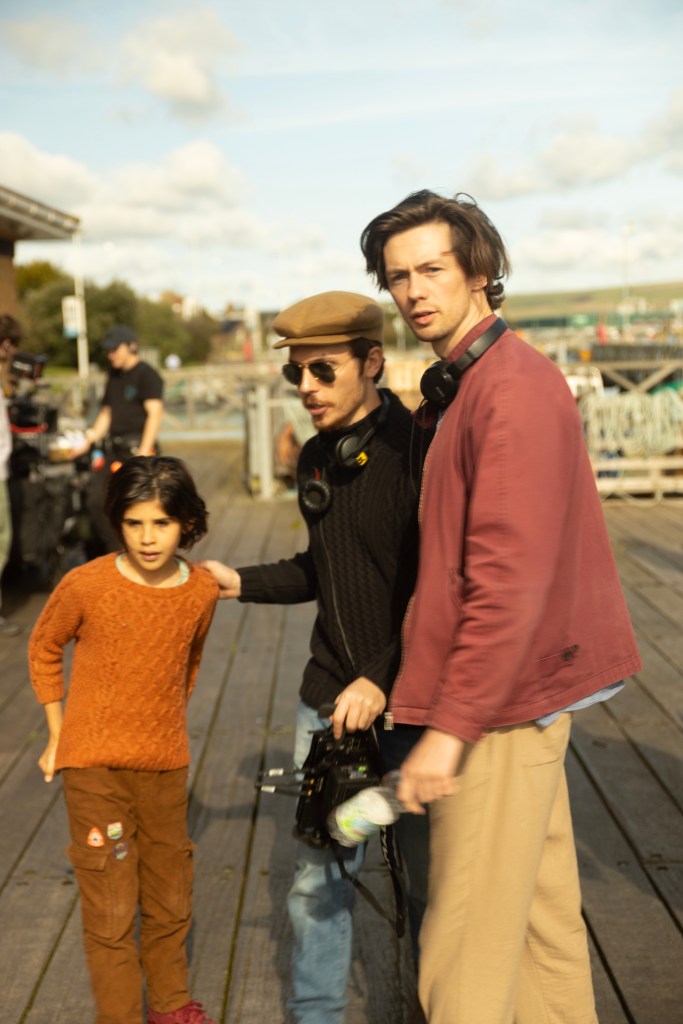
Behind the camera, the production reflects a strong ethical commitment alongside artistic accomplishment. From an apprenticeship program for displaced creatives, to classroom outreach that uses LARGO as a springboard for empathy-based education, the filmmakers clearly view cinema not just as storytelling, but as social responsibility.
Executive produced by Oscar® winners Chris Overton and Rebecca Harris-Turner (The Silent Child), and supported by the Refugee Council, LARGO is well-positioned for awards recognition. But perhaps its greatest achievement lies in its refusal to simply speak about refugees, and its choice instead to actively listen with them – an act of empathy too often missing from the way refugee stories are told.
Following its world premiere at Indy Shorts International, LARGO will be making its Los Angeles debut on August 15th at the Oscar®-qualifying HollyShorts Film Festival, 2025, in the UK Spotlight Category.
 FILM & TELEVISION BUSINESS